REVIEW · BALI TOURS
Bali: Making Canang Sari Make Offering for Ritual Bali
Making Canang Sari feels like a secret Bali superpower. In Ubud, this 90-minute class brings you close to daily Balinese Hindu rituals, and you learn the meaning behind each element before making your own Canang Sari offering to take home. It is practical, calming, and way more personal than a typical sightseeing stop.
The only real drawback is that this is hands-on, so you should expect to get a little flower and leaf on your hands, and you will be actively participating rather than watching from the sidelines.
In This Review
- Key Points I Think You Should Care About
- Canang Sari 101: the daily offering you see everywhere in Bali
- Meeting at Pondok Petak in Ubud: getting oriented before you start
- The hands-on class plan: building your Canang Sari step by step
- What you learn about symbolism, not just the craft
- Wearing the sarung and working with natural materials
- Bringing your Canang Sari home: timing and handling tips
- Price and value: what $25 really buys in Ubud
- Who this Canang Sari class is best for
- Quick practical advice before you book
- Should you book the Canang Sari class in Ubud?
- FAQ
- How long is the Canang Sari making class?
- What is included in the price?
- Is food included?
- What language is the instructor?
- Do I need to bring anything?
- What should I avoid during the activity?
- Is there an age or health restriction?
- What is the cancellation policy?
Key Points I Think You Should Care About
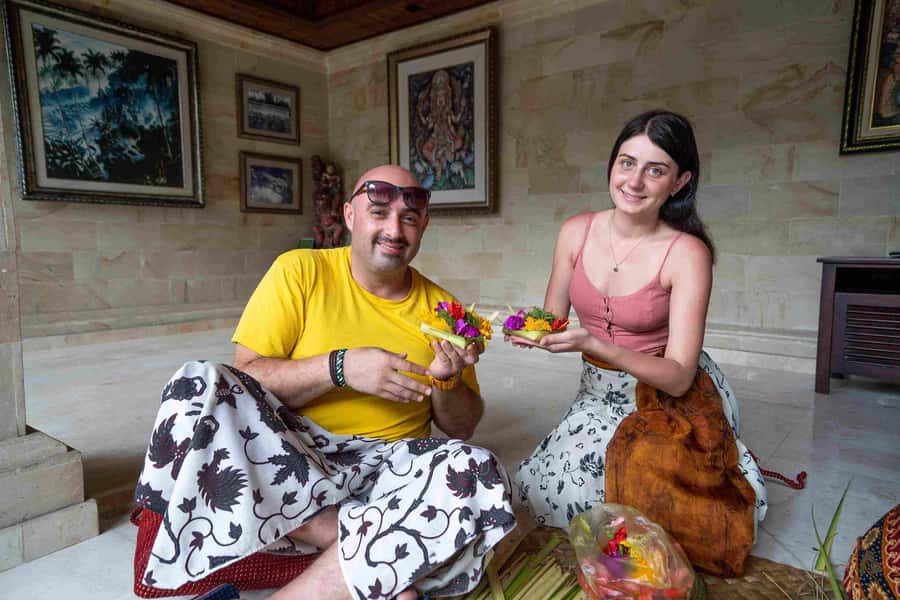
- English instruction from a local teacher, so the symbolism actually makes sense
- You create your own Canang Sari, with equipment and supplies provided
- Symbolism-focused teaching, so you are not just copying a craft
- Sarung and Balinese clothing included, which helps you feel in the right rhythm
- A neighborhood cultural-center setting in Ubud, like Pondok Petak, instead of a tourist-only setup
- Men are welcome to participate, not just women who traditionally make offerings at home
Canang Sari 101: the daily offering you see everywhere in Bali
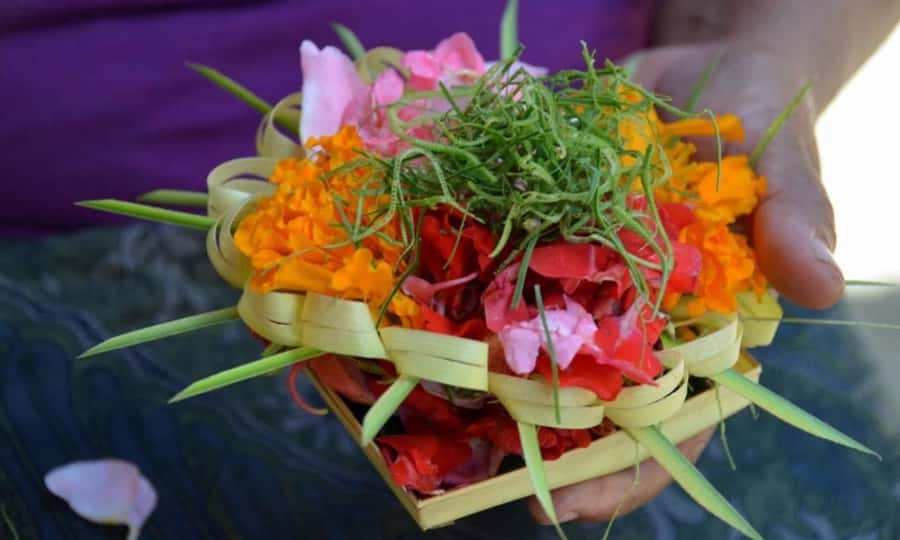
Canang Sari is one of the first things you notice in Bali once you start looking for it. Little baskets of flowers and plant materials show up at temples, outside homes, and in other sacred spaces. The idea is simple and powerful, it is a daily offering tied to gratitude and devotion in Balinese Hindu ceremonies.
What makes this class worth your time is that you do not only learn what it looks like. You learn what each part is meant to represent. That turns a background detail you usually walk past into something you can recognize and understand right away.
You also learn the basic build concept. Canang Sari are typically made from natural materials, mostly flowers, plus fruit and other symbolic items. The overall offering is crafted with care and intention, which is why this activity feels less like making a souvenir and more like practicing a small ritual.
A few more Bali trips to compare
- Bali: Sunrise Mount Batur Guided Hike with Breakfast
★ 4.8 · 9,660 reviews - Bali: Mount Batur Sunrise Guided Hike and Natural Hot Spring
★ 4.8 · 9,284 reviews - Bali: Full-Day Instagram Highlights Tour
★ 4.8 · 7,817 reviews
Meeting at Pondok Petak in Ubud: getting oriented before you start
This class runs about 90 minutes total, with 1 hour set aside for the hands-on making. You are asked to arrive 15 minutes early, which is smart. It gives you time to settle in, meet your instructor, and get dressed.
Dress matters here. You are provided a sarung and Balinese clothing, which helps you show respect and also makes the experience more comfortable for working with flowers. It also keeps you from worrying about what to wear when your tour day suddenly turns into craft time with real ritual materials.
In this setting, instruction is led by local teachers, and English is available. In one experience I valued a lot, the communication felt warm and unhurried, with real conversation about Balinese life. Names that come up in classes include Tutnick and Mama MeiMei, and people describe a mother-daughter style teaching approach that makes the session feel intimate rather than rushed.
If you are the type who likes to get your bearings fast, this is a good choice. The pace gives you time to ask questions, and the setting feels like a working part of the community, not a stage.
The hands-on class plan: building your Canang Sari step by step
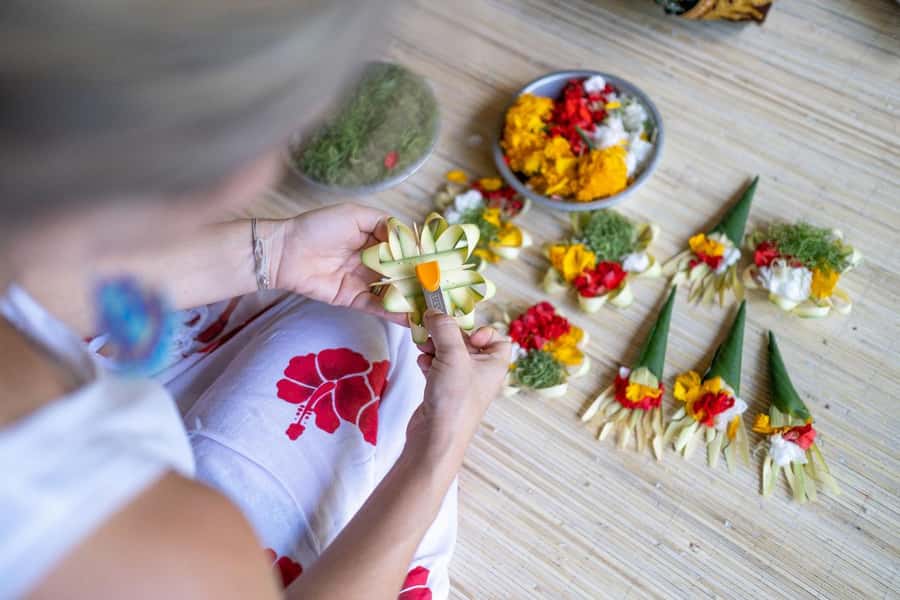
Your main focus is the 1-hour Canang Sari making session. The rest of the time is for arrival, getting oriented, and wrapping up with your finished offering.
Here is how it typically feels in practice:
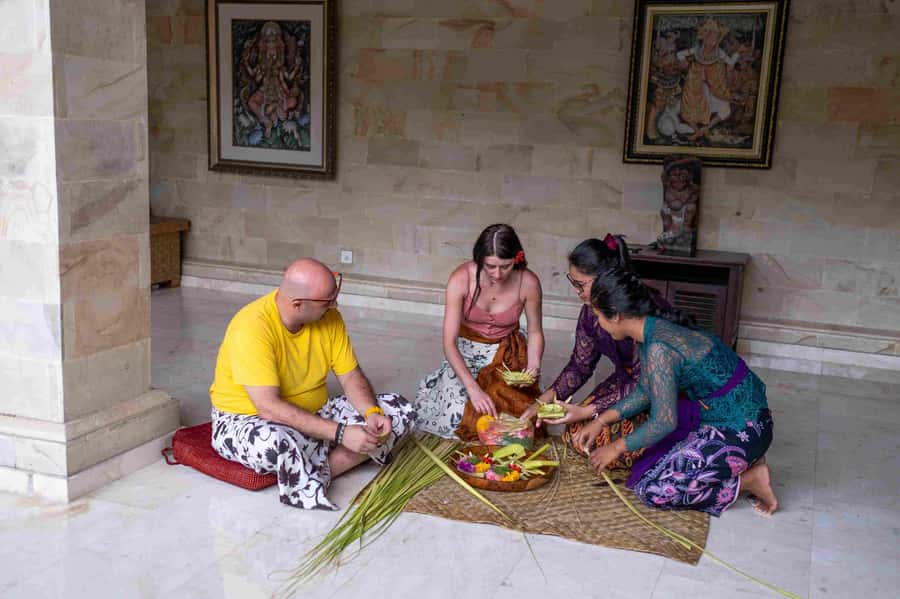
First, you get an introduction to what Canang Sari is and where it fits in daily spiritual life. Then your instructor guides you through the materials. You do not just receive an instruction sheet. You learn what you are holding and why it goes where it goes.
Next comes the actual build. You create your own Canang Sari using the equipment and supplies provided. You will work through the process at a comfortable pace, with an instructor showing the steps and helping you correct details as you go.
One detail I appreciated is that the class is designed for everyone. Even though offering-making is traditionally associated with women in many households, men are encouraged to participate. So if you are traveling as a couple, or you are a solo traveler who wants something cultural and meaningful, this is not a closed-door activity.
You finish with your own offering, which becomes your takeaway. It is a handmade reminder you can bring home, and it also gives you something tangible to compare against what you see on the streets of Ubud and beyond.
What you learn about symbolism, not just the craft
A lot of Bali activities teach you a technique and stop there. This class goes further, and that is where the value lives.
You learn the significance of each element you use in the offering. That matters because Canang Sari is not random decoration. The components are symbolic, tied to the worldview behind the ritual. When you understand that, your offering becomes more than a pretty basket.
This also changes how you experience the rest of Bali during your trip. After a class like this, you start spotting the choices being made in real time. You are more likely to notice the specific plant materials, how the offering is arranged, and that it is placed with intention, not just tossed down.
In at least one class experience, people were even given the chance to participate in a small offering moment, such as placing their Canang Sari in a family temple setting. Even when that is not part of every session, the overall tone is the same: you are not only making, you are participating in the meaning behind making.
Another side of Indonesia:
- Bali/Nusa Penida: East & West Highlights Full-Day Tour
★ 4.7 · 6,263 reviews - Ubud: Waterfall, Rice Terraces & Monkey Forest Private Tour
★ 4.9 · 4,894 reviews - Bali: Ubud Gorilla Face ATV and Ayung Rafting Trip with Meal
★ 4.8 · 4,765 reviews - Bali/Mount Batur: Private Sunrise Jeep Tour & Hot Spring
★ 4.8 · 3,528 reviews
Wearing the sarung and working with natural materials
One of the subtle reasons this class feels good is the comfort level of the workflow. You are given the sarung and Balinese clothing, and you work with natural materials that are part of everyday ritual practice. This helps the activity feel grounded.
Your instructor also keeps the session practical. You are shown what to do, then you do it. That hands-on structure is ideal if you learn best by doing.
Still, be realistic about what hands-on means. Flowers and leaves can be delicate. They can shed. They can stain slightly. If you are traveling with white clothes or you hate the idea of getting a little messy, plan to wear something you do not mind.
That is also why comfortable clothing is listed as a bring. A camera is encouraged too, so you can document the process. Just keep your camera handling simple, because your focus will be on your offering.
Bringing your Canang Sari home: timing and handling tips
You will take your Canang Sari with you, which is part of the appeal. But because it is made from fresh natural materials, treat it like a living craft.
A few practical things help:
- Keep the offering flat and supported while moving. Crushed flowers lose their look fast.
- Avoid heat if you can, especially if you are traveling between locations by car in the afternoon.
- If you are photographing, do it early, before the materials start to shift.
If you want a cleaner experience, ask your instructor how they recommend transporting it. The class provides equipment for making, but every person carries it differently once you leave. A quick recommendation from the teacher can save you stress.
This is also why the class is a great choice for people who want a “do something meaningful” day rather than another checklist of stops. You leave with an artifact that reminds you of what you learned, not just photos.
Price and value: what $25 really buys in Ubud
The price is listed at $25 per person, and that figure is tied to a few things you would normally have to pay extra for in other experiences.
You are getting:
- An English-speaking local instructor
- Equipment and supplies for making your offering
- Sarung and Balinese clothing included
- About 1 hour of guided making time inside a 90-minute session
When you add that up, the cost feels reasonable for a cultural workshop where the materials are part of the teaching, not an extra add-on. The biggest value, though, is how directly it connects to daily Balinese life. After this class, you understand something you would otherwise see as background.
Is it worth it if you only want entertainment? Maybe not. If you are looking for big sights, shopping time, or a long temple visit, this is not that. But if you want hands-on cultural understanding and a take-home memento with meaning, $25 is a fair trade.
Also, the class is built for everyone, including men, so you are not paying to join an activity that feels gendered or awkward. It is a practical cultural experience with real instruction.
Who this Canang Sari class is best for
This works especially well if you:
- Want a calmer activity that still feels meaningful
- Like learning symbolism and not just following steps
- Prefer small, personal teaching over group lectures
- Are curious about the daily spiritual routines in Bali
You might reconsider if you:
- Do not like hands-on work with natural materials
- Have mobility concerns, because it is an active craft session
- Are pregnant, have an infant under 1 year, or are over 95 years, since the operator lists the activity as not suitable for those age or health categories
If you travel with a partner, this is also a nice “shared practice” activity. You both make something, ask questions, and take home the same kind of reminder that you can compare later.
Quick practical advice before you book
A few basics will make this smoother:
- Bring a camera and comfortable clothes
- Avoid alcohol and drugs, since they are listed as not allowed
- Arrive about 15 minutes early, so you start without rushing
- Wear footwear you can manage easily, because the session is hands-on and you will be moving around your work space
If you are a first-timer in Bali, this class is a smart place to start. You see Canang Sari everywhere, and learning the meaning early makes the rest of your trip more rewarding.
Should you book the Canang Sari class in Ubud?
Book it if you want a cultural activity that feels real, practical, and personal. For $25, you get real instruction in English, the materials and clothing are handled for you, and you leave with something handmade that reflects a daily Balinese ritual.
Skip it only if you are looking for a passive sightseeing day. This is a make-and-learn experience, not a show. If that sounds like your kind of travel, you will likely love how quickly the symbolism clicks and how connected you feel to what you see around Bali afterward.
FAQ
How long is the Canang Sari making class?
The activity lasts about 90 minutes total, and includes a 1 hour Canang Sari making class.
What is included in the price?
You get the 1 hour Canang Sari making class, a professional local instructor, Canang Sari equipment, and sarung/Balinese clothes.
Is food included?
No, food is not included.
What language is the instructor?
The instructor provides instruction in English.
Do I need to bring anything?
You should bring a camera and comfortable clothes.
What should I avoid during the activity?
Alcohol and drugs are not allowed.
Is there an age or health restriction?
Yes. It is listed as not suitable for pregnant women, babies under 1 year, and people over 95 years.
What is the cancellation policy?
Free cancellation is available up to 24 hours in advance for a full refund.
Just added around Bali
- Private Tour: Bali UNESCO World Heritage Sites★ 5.0 · 62 reviews
- Bali ATV Ride with Waterfall Dragon Cave and Lunch by Penidago★ 4.5 · 7 reviews
- Foodie Tour Bali★ 5.0 · 7 reviews
- Mount Batur Jeep Sunrise by 4WD with Breakfast★ 5.0 · 18 reviews
- The Three Temples of Bali Half Day Private Tour★ 4.0 · 5 reviews
- Mount Agung Sunrise Trekking Private Tours★ 5.0 · 11 reviews
- Private Departure Transfer: Hotel to Bali Airport★ 3.5 · 14 reviews
- Pure Bali Village Experience, Cooking & Jamu Class+VIP Transfer★ 5.0 · 16 reviews
Bali Tours, compared.

Sunrise Mount Batur Guided Hike with Breakfast
Read our review →

Bali/Nusa Penida: East & West Highlights Full-Day Tour
Read our review →
Waterfall, Rice Terraces & Monkey Forest Private Tour
Read our review →
Ubud Gorilla Face ATV and Ayung Rafting Trip with Meal
Read our review →
Bali/Mount Batur: Private Sunrise Jeep Tour & Hot Spring
Read our review →
Besakih Temple & Lempuyang Temple Gates of Heaven Tour
Read our review →