
REVIEW · HIKING & TREKKING
Sidemen Trekking: A Walk from a Different Perspective
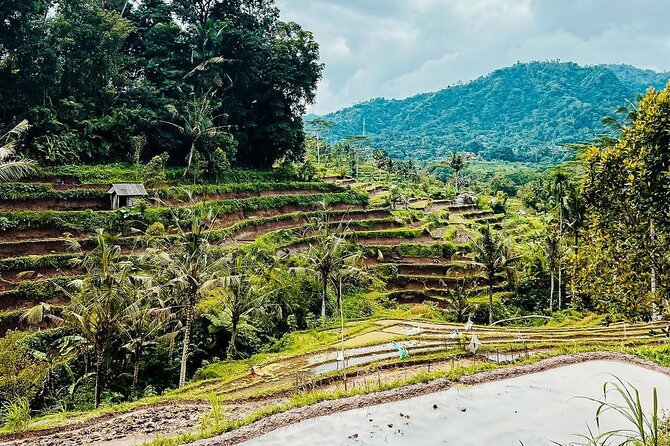
Sidemen has a way of slowing your mind down fast. This trek takes you from the market into rice terraces and village paths with real farmland scenes, plus viewpoints toward Mount Agung. What I like most is the way you see the fields from different angles, and how the guide points out daily work, not just pretty scenery.
The one thing to plan around is the physical reality of the route. It is designed as a one-way walk with narrow, sometimes slippery paths, and it is not for sandals or for anyone with low mobility.
In This Review
- Key things that make this Sidemen walk special
- Sidemen trekking with Mount Agung views and working farms
- The 2-hour rhythm: small group, one way, no stopping the world
- Finding your starting point: Pasar Sidemen and the Upa Boga shop
- Food-market to farmland: the hidden gem photo stop
- Yellow bridge over Tukad Yeh Unda: short crossing, big atmosphere
- Dukuh village and a place for prayer
- Subak of Ogang irrigation and how the fields keep going
- Babakan Dukuh rice terraces: narrow paths and best-value photos
- Finish at Warung Ume Anyar in Ogang Village
- What to pack and what to wear so you stay comfortable
- Who should book this, and who should skip it
- Value check: $13 for a guided walk through real farming life
- Should you book Sidemen Trekking?
- FAQ
- Where is the meeting point for the Sidemen trekking tour?
- How long is the trekking tour?
- Is hotel pickup and drop-off included?
- Is the tour guided and in English?
- What is included in the price?
- What should I wear or bring?
- Is the trek one-way or do you return on the same path?
- Who should not join the tour?
Key things that make this Sidemen walk special
- Pasar Sidemen start point, with a quick food market stop before the trail
- One-way route through changing plantations, with no walking back the same path
- Jembatan Kuning (Tukad Yeh Unda), a wooden bridge that also fits motorbikes and humans
- Subak of Ogang irrigation passing, so you understand how water supports the fields
- Village and temple stops, including places local villagers use for prayer
- Babakan Dukuh rice terraces viewpoints, designed for photo moments and big valley views
Sidemen trekking with Mount Agung views and working farms
If your Bali plan includes just beaches and temple selfies, Sidemen is the antidote. This walk moves through countryside that feels less staged, because you are walking through farmland that people rely on every day.
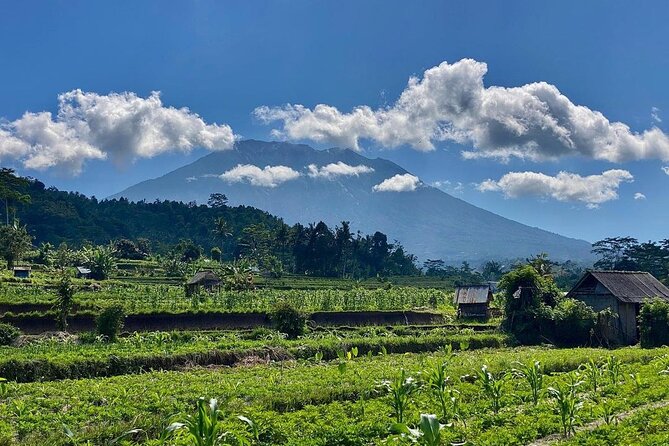
You will get classic Balinese rice-terrace scenery, but what makes it better is the variety. Along the way, you pass areas with different crops and mixed plantations, not one single scenic picture. And your guide keeps bringing it back to daily life, from what farmers are doing in the fields to how the water system supports growth.
One more plus: several guides mention the valley and even Mount Agung as you climb and pause. Even if the mountain is partly hidden at times, the higher viewpoints still give you that sense of scale you do not get in the flatter tourist zones.
A few more Sidemen Village trips to compare
- Sidemen rice terraces trek and local village walk
★ 5.0 · 41 reviews - Bali: Sunrise Mount Batur Guided Hike with Breakfast
★ 4.8 · 9,660 reviews - Bali: Mount Batur Sunrise Guided Hike and Natural Hot Spring
★ 4.8 · 9,284 reviews
The 2-hour rhythm: small group, one way, no stopping the world
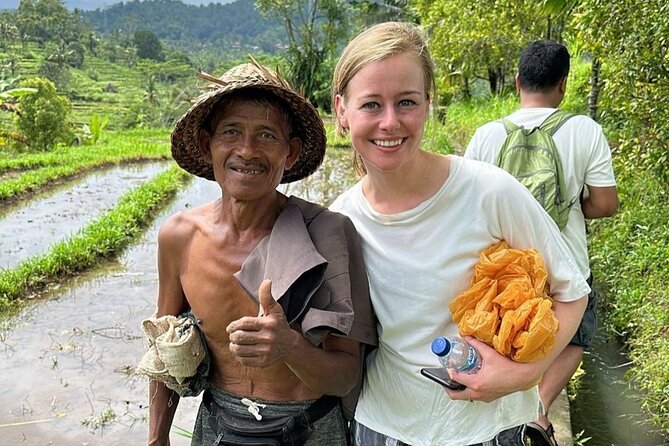
This is a 2-hour trekking experience with a small group cap of 10. That small number matters. It keeps things from feeling like a long conga line, and it makes it easier for your guide to adjust the pace and take time at photo points.
The route is planned as one way. You will experience a continuous path with changing scenery and plantation mixes, and you will not return on the same trail. This is great for variety, but it also affects logistics. After you finish, you are finishing at a restaurant in Ogang Village, so you will want transport lined up instead of assuming you can just walk back easily.
A few practical timing notes that make the walk smoother:
- You start in the Sidemen area at the main market street.
- You should expect both up-and-down walking as you move between village lanes and rice paddies.
- You will hit multiple stops, including viewpoints and photo breaks, so it feels active but not rushed.
Finding your starting point: Pasar Sidemen and the Upa Boga shop
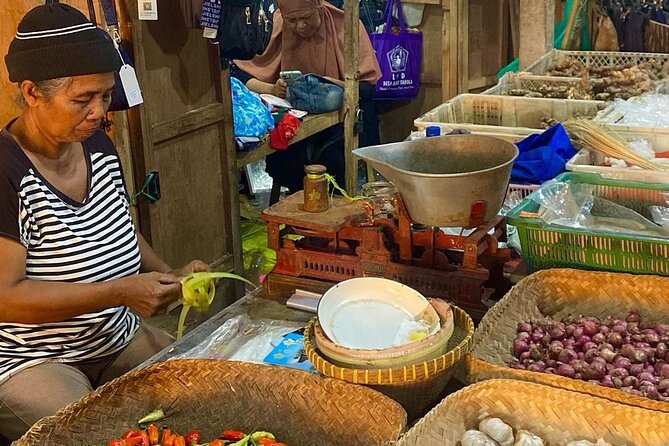
Your meeting point is Pasar Sidemen, on the main street. Look for the shop sign Upa Boga. The trek connects to a nearby shop location listed as Toko Upa Boga Pertenunan, so if you see that brand near the market, you are in the right spot.
There is also a market element built into the experience. The food market visit is about 10 minutes, which is long enough to get a feel for what people are buying and selling without dragging the whole group into a long shopping stop.
If you want more market time, you can also go earlier on your own. Pasar Sidemen is open from 5:00 AM to 10:00 AM, and the idea is simple: book a morning session if you want extra exploration before the trek starts.
Food-market to farmland: the hidden gem photo stop
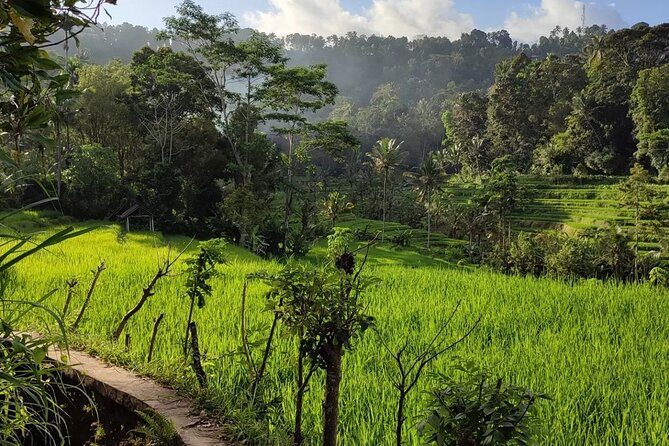
Once you leave the market area, the first longer segment is a “hidden gem” stop. It is about 35 minutes on the way to your next highlight, with guided walking, scenic stops, and photo moments.
This is where you start feeling the geography change. The ground transitions from village streets toward areas where farming dominates. As you move, the route is directed toward Mount Agung, so your viewpoints gradually open up and give you that layered valley feeling.
A good tip here is to keep your eyes on where the water goes. The walk is not only about looking at rice terraces. It is also about learning how farming is supported by irrigation, which starts to make more sense as you walk.
Another side of Indonesia:
- Bali: Cooking Class with 5 Balinese Dishes
★ 4.9 · 178 reviews - Bali: Traditional Villages, Salt Farm & Tirta Gangga Tour
★ 4.9 · 31 reviews - Bali: Hands-On Silver Jewelry Making Class in Ubud
★ 4.9 · 21 reviews - Bali Silver Artistry Class: Create Unique Jewelry in Sidemen
★ 4.7 · 17 reviews
Yellow bridge over Tukad Yeh Unda: short crossing, big atmosphere
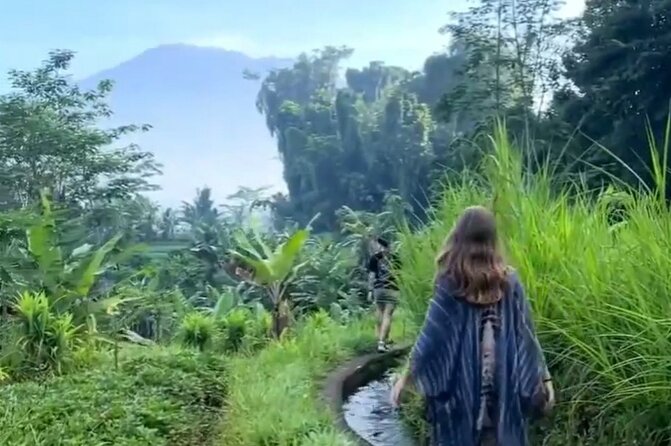
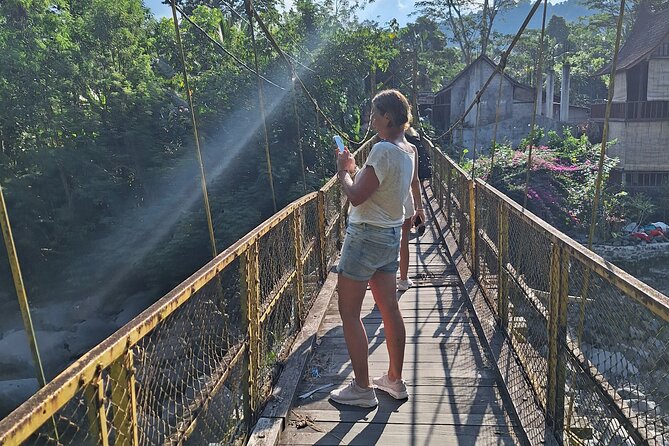
One of the most memorable physical moments is the stop at Jembatan Kuning Tukad Yeh Unda. It is about 10 minutes, with time to visit and take photos.
This is a wooden bridge built for both motorbikes and humans, which makes it feel more connected to real village life than a purely tourist bridge. In practice, you should expect a bridge that feels springy or lightly wobbly, especially if the group is bunching up for photos. Take it slow, keep your balance, and let your guide guide the timing.
Even if you come for rice terraces, this bridge is what gives the walk its “I am actually somewhere” feeling. It is a lived-in route, not an engineered sightseeing loop.
Dukuh village and a place for prayer
After the bridge, you move into Dukuh village for about 25 minutes of guided exploration and walking through lanes and passing village points.
This part of the trek matters because it breaks the farmland-only vibe. You get a look at daily settlement rhythm: houses close to working fields, paths connecting community spaces, and temple areas used by locals for prayer.
There is usually a contrast in people’s body language here. In the fields, you see work in progress. In the village, you see everyday life, movement, and the slower pace of places where people gather. It makes the rice terrace views feel earned, not just decorative.
Subak of Ogang irrigation and how the fields keep going
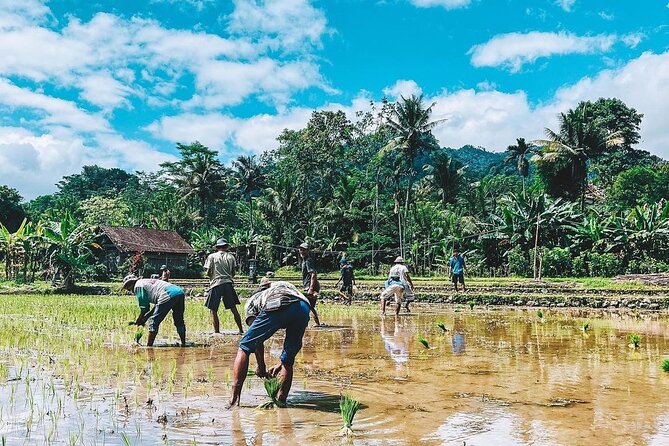
One of the most praised parts of this trek is the explanation side, especially around irrigation. You pass the Subak of Ogang, and the guide explains the irrigation system as part of the walk.
So what does that mean for you on the ground? It changes how you look at everything. Instead of only seeing green steps on a hillside, you start noticing channels, water flow, and the logic behind where crops grow and when. It also helps you understand why the terraces are built the way they are, because water management is the real engine.
This section also includes the “working farm” feel that keeps showing up in guide-led comments. You may see people working through different stages, like:
- plowing
- cultivating
- planting seeds
- harvesting
Even if you do not catch every step every day, the route is built to put you near enough farming activity to make the explanations feel grounded.
Babakan Dukuh rice terraces: narrow paths and best-value photos
Next comes the longer terrace segment, about 45 minutes, centered around the Babakan Dukuh Rice Terrace area. This is your big viewpoint block, with photo stops, sightseeing along the way, and walking through sections where the rice fields sit close to your feet.
The key thing to know before you get excited: some of these footpaths are narrow, and they can be slippery. That is why the footwear rules are strict. Non-slip shoes are not a suggestion. They are the difference between enjoying the walk and worrying about your footing.
From a photo perspective, this is where you get multiple angles. You see terraces from different distances, and you get “valley depth” views when the paths lift slightly. If you brought your hat and sunscreen, this is also when you will appreciate them most.
Finish at Warung Ume Anyar in Ogang Village
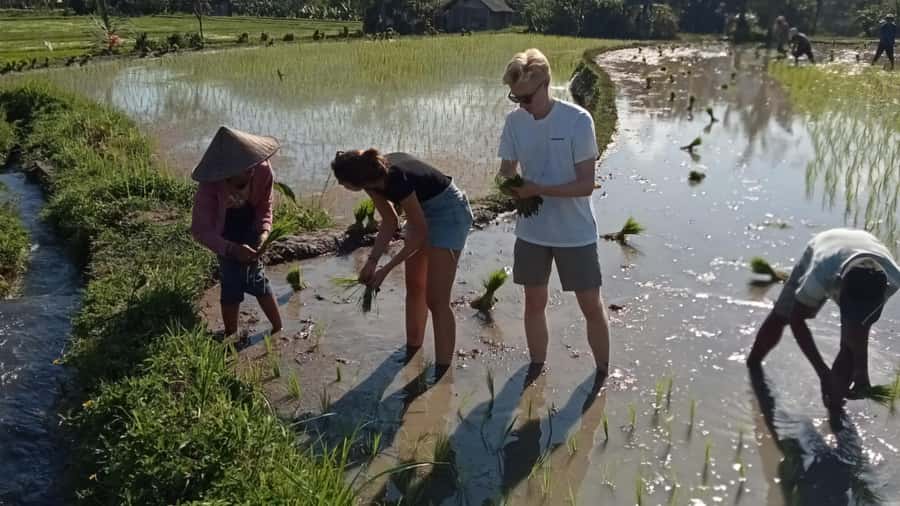
The trek ends at Warung Ume Anyar Restaurant, located in Ogang Village. That matters because the walk ends where you do not just pop out back to the market street.
Plan for a realistic pickup window. It is recommended that you arrange transport around 2 to 2.5 hours after the trek starts, especially if you have a driver. If you rely on app rides, note that Grab is not recommended because some hotels do not allow Grab drivers to pick up from hotels. Drop-off only can be an issue, so it is smart to coordinate.
If you truly need to walk back, the option is there. The walk back to the start point is around 3 km, or about 30 to 40 minutes along the main road. It is not free, but it is doable if you want independence at the end.
What to pack and what to wear so you stay comfortable
This walk is outdoors, often on uneven ground. It is also sun-heavy, because terraces mean exposure once you are out of the village.
Bring:
- Sunglasses
- Hat
- Sunscreen
- Hiking shoes or sports shoes
Not allowed:
- Sandals or flip flops
A practical add-on based on what people experience: long pants help if the route includes high grass and insects. And because rain can happen, I like traveling with a light rain layer for this kind of trek.
One more practical move: keep your pace steady. A slow, calm rhythm helps on narrow trails and makes it easier to pause for photos without holding up the group.
Who should book this, and who should skip it
This trek is a strong fit if you want:
- authentic Sidemen village and farmland views
- a guide to explain the irrigation and farming stages
- a walk that feels off the main Bali crowd route
It is not a fit for everyone. The activity is not suitable for:
- children under 5
- pregnant women
- people with heart problems
- people over 60
- people with low level of fitness
If you are in good walking shape, you can make this tour enjoyable. If you are recovering from an injury, or if you struggle with balance on slippery surfaces, you will likely find the terrace paths uncomfortable.
Value check: $13 for a guided walk through real farming life
At $13 per person for a 2-hour guided trek, the value is strong, especially because it is not just a scenic stroll. You get:
- a live English guide
- bottled water
- guided stops at market areas, bridge viewpoints, village areas, and terrace viewpoints
You are also getting a kind of context that is hard to replicate without a local guide. Multiple guides highlighted in the experience history, such as Wayan, Komang, Daria, Adidas, Adi, and Gede Darya, tend to connect what you see to how farming works and what daily life looks like in Sidemen.
Is there any catch to the value? Yes, the catch is effort. This is not a paved, stroller-friendly walk. The paths can be narrow and slippery, and because the route is one-way, you need to plan your end-of-trek transport.
But if you want a meaningful look at Sidemen beyond postcards, this is one of the most reasonable prices you can pay for a guided rural experience.
Should you book Sidemen Trekking?
Book it if your goal is to see Sidemen as a working place, not just as a photo backdrop. You will likely enjoy it most if you like walking through rice fields, watching daily farming scenes, and understanding how irrigation supports the terraces.
Skip it if you want an easy, flat route, if slippery footing worries you, or if you fall into the activity’s not-suitable categories. Also, if you are hoping for round-trip convenience only, remember it finishes at Warung Ume Anyar in Ogang Village.
If you book, do one simple thing: bring the right shoes and plan transport for the finish. Then show up with a calm pace and an open mind. Sidemen rewards that kind of traveler.
FAQ
Where is the meeting point for the Sidemen trekking tour?
The meeting point is at Pasar Sidemen on the main street. Look for the shop with the sign Upa Boga, and your guide will meet you there.
How long is the trekking tour?
The duration is about 2 hours.
Is hotel pickup and drop-off included?
No. Hotel pickup and drop-off are not included.
Is the tour guided and in English?
Yes. There is a live tour guide, and the tour is offered in English.
What is included in the price?
The price includes a guide and bottled water.
What should I wear or bring?
Bring sunglasses, a hat, sunscreen, and hiking shoes or sports shoes. Sandals or flip flops are not allowed.
Is the trek one-way or do you return on the same path?
The trek route is designed to be one way, so you do not return on the same path.
Who should not join the tour?
The tour is not suitable for children under 5, pregnant women, people with heart problems, people over 60, and people with low fitness levels.
Just added around Sidemen Village
- Sidemen Silver Artistry Class: Create Unique Jewelry in Bali★ 5.0 · 6 reviews
- Sidemen Silver Class: Craft Balinese Jewelry★ 4.8 · 10 reviews
- Sidemen rice terraces trek and local village walk★ 5.0 · 41 reviews
- Sidemen activities (silverclass,tourwaterfall)★ 4.7 · 5 reviews
- Scenic Cycling Tours Through Bali’s Sidemen Countryside★ 5.0 · 5 reviews
- Pedal Through Paradise: Bali Wanderlust Sidemen Cycling Tour★ 5.0 · 4 reviews
- Forge Your Silver Story: Ubud Jewelry Making Class★ 5.0 · 7 reviews
- Bali: Traditional Villages, Salt Farm & Tirta Gangga Tour★ 4.9 · 31 reviews
Hiking & Trekking, compared.

Sunrise Mount Batur Guided Hike with Breakfast
Read our review →
Mount Batur Sunrise Trek With Guide and Breakfast
Read our review →
Mount Batur Sunrise Hike and Natural Hot Spring Option
Read our review →
Mount Batur Sunrise Trekking Private All Inclusive
Read our review →
Mount Batur Sunrise Trekking Private Tour with Breakfast and Hotel Transfer
Read our review →Browse the lists this tour appears in