REVIEW · SEMINYAK TOURS
Traditional Tempeh Making & Cooking Balinese Cuisine
Tempeh here is made, then eaten, not staged. In Seminyak, you learn the Balinese role of tempeh and cook vegan-friendly Indonesian dishes with Ayu and Ngurah, ending with lunch in a cozy home garden. I especially like the small-group setup for real attention while you work, and the fact you make tempeh from scratch. One consideration: the class requires good weather, so outdoor parts can be adjusted or rescheduled if conditions are poor.
This morning class runs about 3 hours, starting at 9:30 AM and finishing by 12:30, with lunch included. You’ll spend time in an open-air kitchen studio, then eat seven dishes family-style outdoors, with tea, coffee, water, and a light snack provided during the class. There’s also a private group option available on request, which can be nice if you want a calmer pace or more direct Q and A.
In This Review
- Key points to know before you go
- Getting started at Canang Sari Homestay
- Why tempeh matters in Balinese cooking
- The tempeh-making process, step by step
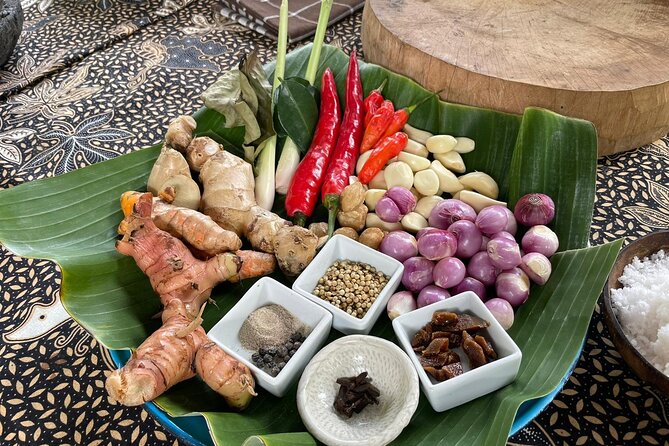
- Spice training for real Indonesian flavor
- Cooking Balinese lunch at the open-air kitchen studio
- The garden lunch, seven dishes, one cozy family vibe
- Private upgrade: when a smaller group helps
- Price and timing: is $39 good value?
- Who should book this tempeh and Balinese cooking class
- Should you book this tempeh making and Balinese cuisine class?
- FAQ
- What time does the class start and finish?
- How long is the experience?
- Is this cooking class vegan-friendly?
- What dishes will I make and eat?
- How big is the group?
- Where does the class meet?
- What happens if the weather is poor, or I cancel?
Key points to know before you go
- Tempeh from scratch, plus the how and why: you’ll learn the history and the making process, not just follow recipes.
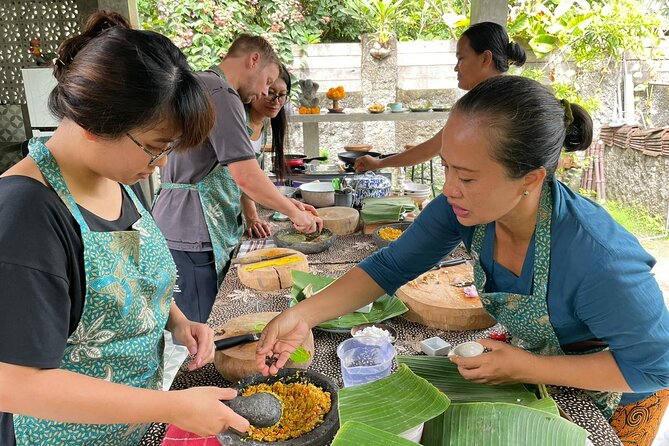
- Ayu and Ngurah guide you closely: the group size is kept to a maximum of 10 for hands-on help.
- Balinese lunch with multiple tempeh dishes: including sayur urab, a greens-and-beans mix with grilled grated coconut.
- Vegan-friendly with flexible add-ins: some dishes can include chicken and tuna, or be skipped for vegan menus.
- Garden lunch after cooking: you’ll eat your work in a homey, outdoor family atmosphere.
Getting started at Canang Sari Homestay
Your morning begins at Canang Sari Homestay, located at Gg. Kaswari No. 6, Dangin Puri Kaja, in North Denpasar (Bali 80234). The class starts at 9:30 AM and runs until around 12:30 PM, and it ends back at the meeting point.
Two practical things I like about this kind of setup. First, it keeps the whole experience tight, about 3 hours, so you’re not losing a half day to transit and waiting. Second, this is a mobile ticket class, so you’re not dealing with paper tickets or complicated exchanges.
With a maximum of 10 travelers, you should expect more personal attention than you’d get in the big, bus-and-buffet style classes. That matters when you’re making something as hands-on as tempeh.
A few more Seminyak trips to compare
- Bali Full-Day Traditional Village Sightseeing Trip All Inclusive
★ 5.0 · 3,069 reviews - Experts Bali Driver : Best Bali Private Driver for Tour in Bali
★ 5.0 · 1,339 reviews - Bali Hai Sunset Dinner Cruise
★ 5.0 · 1,173 reviews
Why tempeh matters in Balinese cooking
Tempeh is at the center of this class, and not just as a trendy vegan protein. You’ll learn its background and why it’s such a staple in Indonesian cooking, including Balinese traditions.
The story you’ll hear starts in Java, where tempeh is described as an Indonesian original known since the 1600s. It’s a food for everyone, and it’s valued for protein and many nutrients. In other words, tempeh isn’t a side note here, it’s a core ingredient.
For your cooking mindset, this helps. When you understand why something is important locally, you’re more likely to pay attention to texture, seasoning, and how the ingredient behaves in a recipe. And because this is vegan-friendly, you’ll also see how Balinese flavors can feel complete even when meat is left out.
The tempeh-making process, step by step
The main highlight is learning the tempeh making process. The class isn’t framed as a quick demo. You’re taught how to make tempeh from scratch, and you also learn about the history of tempeh as you go.
One detail that stands out in the guide style here is how much they emphasize process, not only outcomes. From the teaching you’ll get, you should come away understanding what each stage is trying to achieve, so you can make it again later at home.
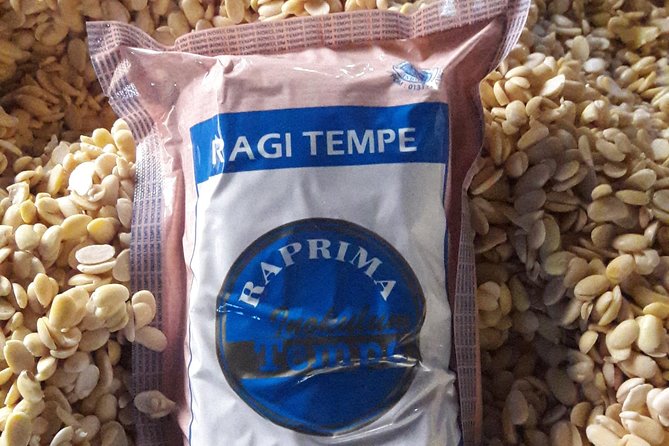
Also, you’ll want to listen closely because there’s an actual take-home angle mentioned by past participants, with a guide to help you make tempeh yourself at home. That’s a big difference between a class that ends the moment you wipe your hands, and one that gives you a real starting point for repeating the recipe.
Spice training for real Indonesian flavor
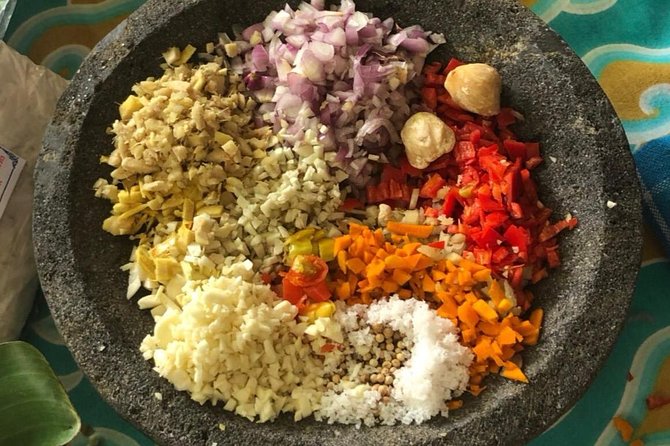
After the tempeh focus, the class shifts to cooking, and spices are a big part of it. You’ll discover how Indonesian cooking uses a wide range of spices, and you’ll be working with fresh plant-based ingredients while you cook from scratch.
Here’s what I find useful about this structure. When you’re dealing with lots of spices, it’s easy to think you need more and more ingredients. But good Indonesian home cooking is often about proportion and timing, plus knowing when to adjust taste. A class like this gives you a chance to learn what you should be aiming for as flavors build.
This matters most when you’re making dishes like sayur urab, which depends on a mix of greens, beans, and grilled grated coconut. Coconut adds richness, but it has to be balanced by seasoning. If you only memorize a spice list, you miss that balancing act. If you watch how they season during cooking, you can copy the results better.
Another side of Indonesia:
- Mount Batur Sunrise Trekking
★ 5.0 · 947 reviews - Mount Batur Sunrise Jeep Adventure
★ 5.0 · 898 reviews - Private Arrival Transfer: Bali Airport to Hotel
★ 4.5 · 739 reviews - Ubud Hot Springs and Waterfall Private Guided Tour
★ 5.0 · 719 reviews
Cooking Balinese lunch at the open-air kitchen studio
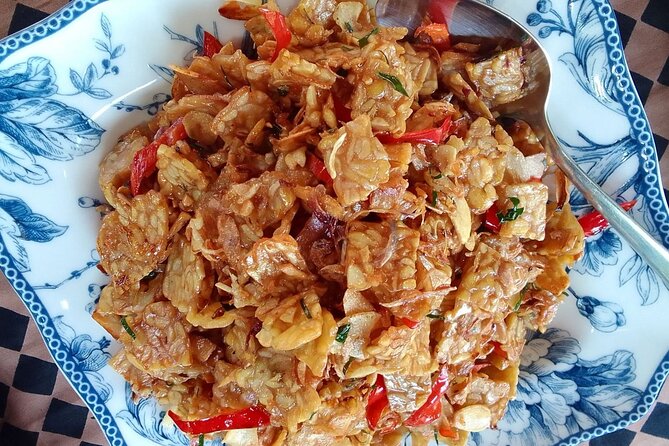
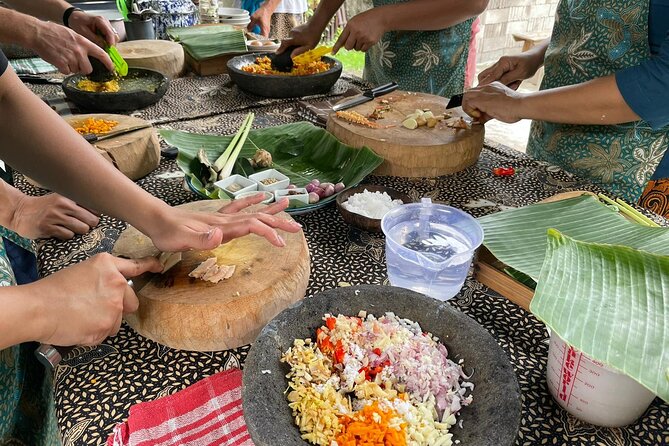
Once tempeh is underway, you move into the open-air kitchen studio to cook the lunch dishes. The class is scheduled for a full morning, so you’re not just cooking one plate and calling it a day. You’ll prepare a number of traditional Indonesian dishes using tempeh, then sit down to eat what you made.
A clear dish you should expect is sayur urab. This is described as a vegetable dish made with greens and beans mixed with grilled grated coconut. It’s one of those recipes that looks simple until you taste it. Coconut can make vegetables feel like a main dish, especially in a meal built around multiple plates.
You’ll also cook local recipes beyond sayur urab, with tempeh showing up across the menu. And because this is vegan-friendly, you’re not stuck with one-note substitutions. The class notes that some dishes include chicken and tuna, but those can be skipped if you are vegan. That flexibility is important, because a lot of vegan classes only remove meat after the fact, instead of building a cohesive menu.
During the cooking window, tea, coffee, water, and a light snack are provided. That’s a small detail, but it helps you stay comfortable while you’re chopping, mixing, and cooking through a full morning.
The garden lunch, seven dishes, one cozy family vibe
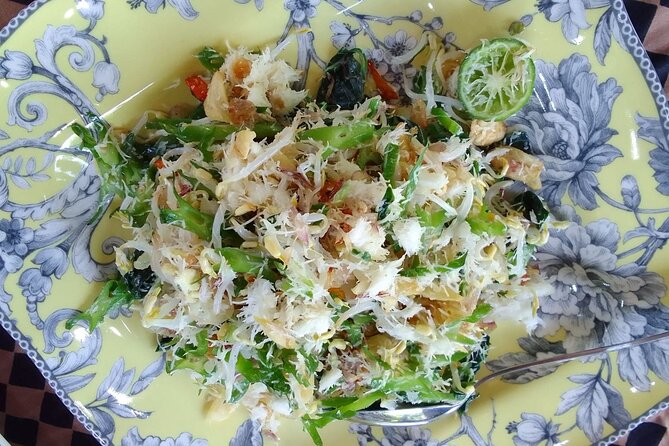
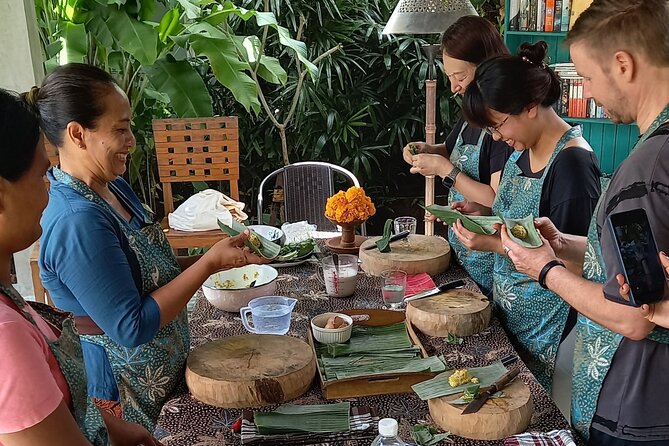
After the cooking time, you enjoy your meal in the garden of a cozy local home. The class is designed so you share the food family-style, and the setting is described as a home atmosphere with a sense of togetherness.
You’ll eat seven dishes total. That’s a key value point, because it turns the experience into more than a cooking lesson. You’re getting a structured meal where you can taste the results of what you learned with your own hands.
For vegans, this is particularly helpful. Instead of feeling like you’re eating a single vegan side plate, the meal is presented as a multi-dish lunch. With the option to skip meat ingredients like chicken and tuna, you should be able to keep the whole plate aligned with your preferences.
Also, eating right after cooking is where the lessons stick. The flavors are fresh, textures are still crisp in your memory, and you’re better able to connect the steps you followed to what you taste now.
Private upgrade: when a smaller group helps
There’s an option to upgrade to a private class for a more personalized experience. With a group size maximum of 10 already, you’ll likely feel well supported in the standard format. But if you want more focused help, private can make sense.
You might choose private if:
- you want extra time for tempeh making questions
- you’re cooking with a specific diet need and want clearer menu tailoring
- you want a slower, more conversational rhythm while you work
If you’re traveling with friends and want everyone to learn at the same pace, private can also reduce the pressure of keeping up in a group setting.
Price and timing: is $39 good value?
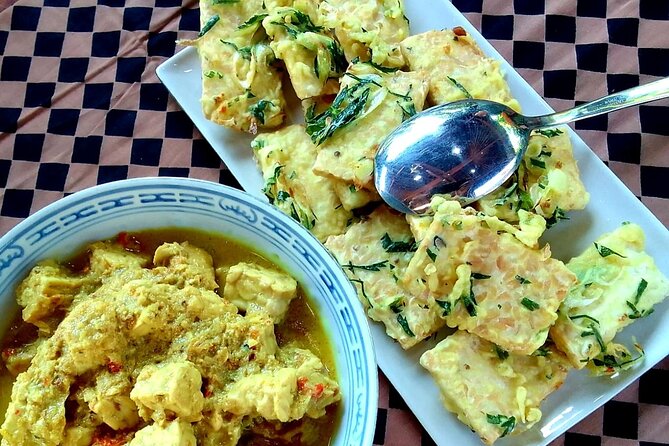
At $39 per person for about 3 hours, plus lunch, tea, coffee, water, and a light snack, the value is pretty clear. You’re paying for instruction, ingredients used during cooking, and a full meal with seven dishes.
What makes that feel reasonable is the structure. Many cooking classes give you a single dish to make or end with a short tasting. Here, you’re making tempeh from scratch and then cooking multiple dishes with it, so the food component is not separate from the lesson.
Timing is also practical. Starting at 9:30 AM means you can still have the rest of the day for the beach, temples, or a lazy scooter ride. And because it finishes by 12:30, you avoid the late-day fatigue that can come from longer classes.
One small planning note: the experience requires good weather. If you book and weather turns ugly, there’s a chance the class could be canceled and rescheduled or refunded. That’s not a reason to avoid it, just a reason to pick dates with a bit of flexibility.
Who should book this tempeh and Balinese cooking class
I’d point you toward this class if you want an authentic Balinese cooking experience that centers on an ingredient with real local roots. Tempeh is Indonesian by origin, and learning how it’s made and used gives you a different perspective than ordering it at a restaurant.
This is also a smart fit if:
- you eat plant-based or want vegan-friendly Balinese flavors
- you like hands-on lessons more than watching
- you want small-group attention instead of a crowd experience
- you want a full lunch included, not just tasting bites
Who might want to consider another option? If you’re aiming for an entirely indoor class, this may not feel like your best match because the meal setting includes an outdoor garden and the class depends on good weather. Also, if you dislike early mornings, the 9:30 start can feel firm.
Should you book this tempeh making and Balinese cuisine class?
Yes, I think it’s worth booking if you want a morning that mixes culture, cooking, and a genuinely satisfying meal. The strongest reasons are practical: you’ll learn tempeh from scratch, you’ll cook multiple dishes including sayur urab, and you’ll eat seven plates you helped make in a cozy garden setting.
Also, the host pair matters. Ayu and Ngurah are described as passionate and focused on teaching the steps, including the history of tempeh as the process happens. That combination is what turns a cooking class into something you remember.
If you’re on the fence, use this quick checklist:
- You want to cook with tempeh, not just taste it.
- You’re happy with a 9:30 AM start.
- You’re traveling with a flexible enough schedule in case weather affects outdoor parts.
- You want a small group, not a mass class.
FAQ
What time does the class start and finish?
The class starts at 9:30 AM and finishes by 12:30 PM. Lunch is included as part of the experience.
How long is the experience?
It runs for about 3 hours (approx.).
Is this cooking class vegan-friendly?
Yes, it’s described as vegan-friendly. The class includes tempe-based dishes, and it notes that some dishes may include chicken and tuna, or can be skipped if you are vegan.
What dishes will I make and eat?
You’ll learn to make tempeh from scratch, then prepare traditional Balinese Indonesian dishes using it. Sayur urab is specifically mentioned, along with other local recipes, and you’ll enjoy a lunch of seven dishes.
How big is the group?
The experience has a maximum of 10 travelers.
Where does the class meet?
The meeting point is Canang Sari Homestay, Gg. Kaswari No. 6, Dangin Puri Kaja, Kec. Denpasar Utara, Kota Denpasar, Bali 80234. The activity ends back at the meeting point.
What happens if the weather is poor, or I cancel?
The class requires good weather. If it’s canceled due to poor weather, you’ll be offered a different date or a full refund. There is free cancellation, and you can cancel up to 24 hours in advance for a full refund. If you cancel less than 24 hours before the start time, the amount paid is not refunded.
Just added around Seminyak
- Kuta Seminyak Scooter Lessons★ 5.0 · 40 reviews
- Ubud Private Tour★ 5.0 · 36 reviews
- English and Japanese Speaking Local Bali Driver★ 5.0 · 22 reviews
- Private Full-Day Tour in Bali & FREE WIFI★ 5.0 · 82 reviews
- Best of North Bali: Banyumala Waterfall, Handara Gate and Temple★ 5.0 · 4 reviews
- Wonderful Bali In 3 Days Private Tour★ 5.0 · 56 reviews
- Zero Gravity Flotation Therapy in Canggu Bali by Solace Float★ 5.0 · 36 reviews
- West Nusa Penida Full-Day Private Tour★ 5.0 · 93 reviews
Seminyak Tours, compared.

Experts Bali Driver : Best Bali Private Driver for Tour in Bali
Read our review →

Ubud Hot Springs and Waterfall Private Guided Tour
Read our review →
Bali Secret Waterfall Tour – Private and All-Inclusive
Read our review →