REVIEW · GUIDED
Well-Guided Local Textile Tour of Denpasar
Your hands will want every fabric.
This Denpasar textile tour is a focused, 2-hour walk through real local shops, where you see traditional Indonesian textiles up close and learn what they mean for everyday life in Bali and beyond.
I love the human side of it, starting with a meeting with Pak Rayyis at Jalan Gajah Mada, so you hear stories around collections rather than only looking at products. I also love that Ayu can adjust the stops to your interests, and the guidance comes with very clear English.
One consideration: this is a walking experience that depends on good weather, so wear comfortable shoes and plan for a bit of street time in central Denpasar.
In This Review
- Key things that make this textile tour worth it
- Why Denpasar is a textile stop you should not skip
- Getting oriented at Jalan Gajah Mada with Pak Rayyis
- Kumbasari Market: batik, ikat, and weaving shops in one practical block
- Jalan Sulawesi: where affordable everyday batik meets modern fabrics
- The textiles you’ll learn to recognize: batik, ikat, endek, and more
- Price and value: what $25 buys you in the real textile world
- Shopping tips that actually help on Jalan Sulawesi
- Best for fabric lovers, DIY makers, and cultural explorers
- Should you book this Denpasar textile walk?
- FAQ
- How long is the Well-Guided Local Textile Tour of Denpasar?
- What is the meeting point for the tour?
- What time does the tour start?
- How much does the tour cost?
- Where will the tour go during the experience?
- How many people are in a group?
- Is there a mobile ticket for this activity?
- Does the tour depend on weather?
- Is free cancellation available?
Key things that make this textile tour worth it
- Meet Pak Rayyis at Jalan Gajah Mada and get context for local textile collections
- Kumbasari Market textile shops focused on batik, ikat, and weaving
- Jalan Sulawesi fabric streets for affordable everyday batik plus modern materials
- A small group size with a maximum of 10 travelers
- Smart shopping support if you want to buy, with guidance on local pricing
Why Denpasar is a textile stop you should not skip
Bali gets most of the spotlight for beaches and temples, but Denpasar has a quieter personality, especially on the textile side. What I like about this tour is its plain focus: you are not here to do a photo shoot, you are here to understand textiles as part of daily culture and craft in Indonesia.
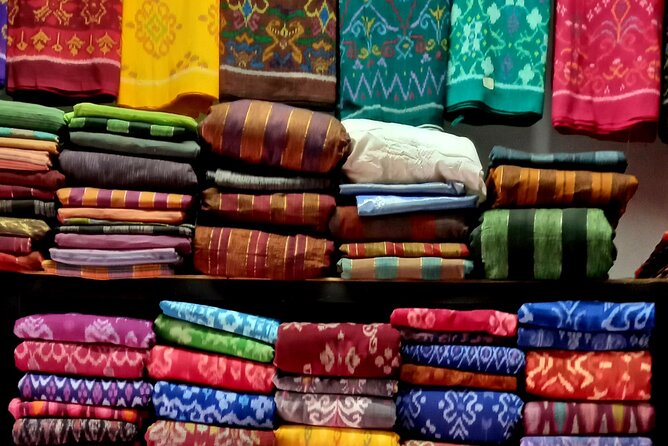
You’ll spend two hours walking between textile-focused areas, and you will see how many different styles can exist in one city. The tour highlights everything from Javanese hand painted batik to modern batik, then moves through ikat and endek weaving. That mix matters because it shows you that Indonesian textile culture is not one single look. It is regional, it is technique-driven, and it changes depending on who is making the cloth and what it is for.
If you are a fabric person, you will also enjoy the shopping energy. The atmosphere feels practical. People come to find supplies, not just souvenirs, and that keeps the experience grounded.
A few more Seminyak trips to compare
- Bali Full-Day Traditional Village Sightseeing Trip All Inclusive
★ 5.0 · 3,069 reviews - Experts Bali Driver : Best Bali Private Driver for Tour in Bali
★ 5.0 · 1,339 reviews - Bali Hai Sunset Dinner Cruise
★ 5.0 · 1,173 reviews
Getting oriented at Jalan Gajah Mada with Pak Rayyis
The tour meets at Jl. Gajah Mada No.1, Dauh Puri Kangin, Denpasar Utara, around 2:00 pm. From there, you start with a visit connected to Pak Rayyis, where you hear about his textile collections. That opening sets the tone. Instead of jumping straight into bolts of cloth, you get a quick foundation for how collectors and shop owners think about textiles.
This first stop also helps you get your bearings fast. You learn what to pay attention to as you move through later shops: not just color and pattern, but the technique behind the textile. It makes the rest of the tour more rewarding because you start recognizing styles at a glance. You will also get a feel for why some fabrics cost more, based on how they are made and what they are used for.
Since the tour is guided by Ayu and Ngurah, you also get the practical benefit of a local perspective. If something catches your eye, the guide can point you toward the type of textile you are actually looking at, whether it is traditional or more modern fabric.
Kumbasari Market: batik, ikat, and weaving shops in one practical block
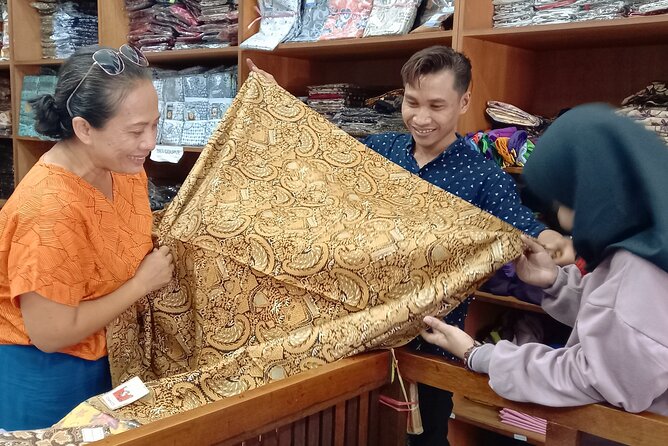
Next up is Kumbasari Market, where the tour visits two shops that specialize in traditional batik, ikat, and weaving. This stop is valuable because it is the closest thing in the route to a focused craft showcase. You are not wandering randomly. You are seeing a concentration of related techniques side by side.
What makes Kumbasari especially useful is how it helps you compare. You can look at batik patterns and then shift your attention to how ikat works, then to what weaving looks like when the structure is visible in the cloth. Even if you do not know textile terms, you will start noticing the difference between decoration done through dyeing patterns and decoration created through the way threads are arranged.
A good watch-out here: market shops can be visually intense. You might feel pulled toward the prettiest colors first, then later wish you had taken more time to understand the technique. My advice is to slow down for the first 5 to 10 minutes in each shop. Ask questions and let the guide explain what you are seeing, then shop if you still want to.
Jalan Sulawesi: where affordable everyday batik meets modern fabrics
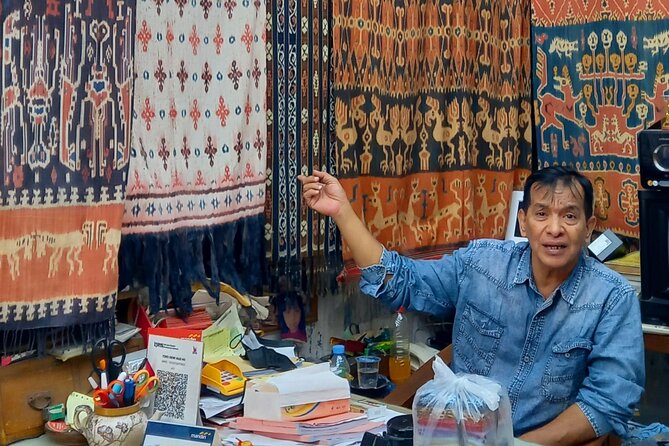
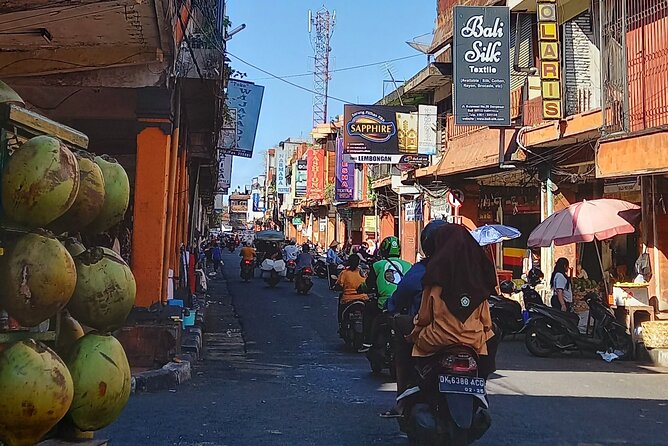
After Kumbasari, you head to Jalan Sulawesi, a well-known fabric haven area. This is where the tour turns more into variety and possibility. You can find print affordable everyday use batik, but the stop also includes modern fabrics like linen, brocade, cotton, lace, quilting materials, dressmaking fabrics, and interiors.
That list is the reason Jalan Sulawesi feels so useful, especially if you are traveling with a project in mind. Maybe you want fabric for a gift, a small sewing task, or even just to bring home a textile that feels genuinely Bali-adjacent. The tour structure helps because you are not stuck hunting alone among many options. You have a guide who can help you connect what you like to what you are actually buying.
You will likely see fabric types that go beyond traditional wear. The tour notes materials including silk and rayon as well. That matters for planning because your best purchase might not be a full batik garment. It could be a fabric piece for lining, a trim, or something for an interior touch.
One practical consideration at this stop: the sheer number of materials can tempt you into buying more than you need. Set a simple goal before you arrive, like one fabric type or one purchase for a specific purpose, and stick to it.
Another side of Indonesia:
- Mount Batur Sunrise Trekking
★ 5.0 · 947 reviews - Mount Batur Sunrise Jeep Adventure
★ 5.0 · 898 reviews - Private Arrival Transfer: Bali Airport to Hotel
★ 4.5 · 739 reviews - Ubud Hot Springs and Waterfall Private Guided Tour
★ 5.0 · 719 reviews
The textiles you’ll learn to recognize: batik, ikat, endek, and more
This tour’s power is that it does not treat textiles like generic souvenirs. It points you toward specific categories and shows how they relate.
Here are some of the textile types you can expect to encounter:
- Hand painted batik (Javanese style), where pattern work is part of the craft identity
- Modern batik, where design and presentation may feel more contemporary
- Ikat, recognized for its distinctive patterning approach based on yarns and dyeing method
- Endek weaving, a woven textile category that connects to Balinese weaving traditions
- Modern materials such as linen, brocade, cotton, lace, quilting materials, and more
If you are shopping, the most useful thing you can learn is how to look beyond the surface. Pattern placement, fabric feel, and how the cloth hangs can tell you which technique is involved and what kind of cloth it is. If you are not sure what you are holding, this is exactly the moment to ask your guide. Ayu and Ngurah are there to translate what the shop offers into something you can confidently choose.
Even if you do not buy, you will still benefit. You come away with a mental map: batik tends to read one way visually, ikat reads differently, and weaving has texture cues that stand out once you are looking for them.
Price and value: what $25 buys you in the real textile world
At $25.00 per person for about 2 hours, this tour is priced like a smart add-on to a Bali itinerary, especially if you care about crafts. The value comes from the combination of three things:
- You get access to multiple textile zones instead of one shop
- You receive guided context, including a stop linked to Pak Rayyis
- The group stays small, with a maximum of 10 travelers
For the money, you are also buying time. If you tried to do this on your own, you would need local confidence to decide where to go and how to ask the right questions. Here, the guide handles the route and the textile focus. And since the tour uses a mobile ticket, it is easy to manage day-of without a complicated paper process.
Two hours can sound short, but for textile browsing it is actually the sweet spot. You move enough to compare styles without spending a whole day in shops. That is ideal if you also want to see other parts of Bali, or if you prefer shopping with structure instead of aimless wandering.
Shopping tips that actually help on Jalan Sulawesi
The tour is designed so that shopping feels less stressful. It notes that if you want to do textile shopping, you’ll get reasonable local pricing and tips for smart buying. That support matters because textile prices can vary based on fabric type, intended use, and how it is made.
Here are practical ways to use the guide’s help while you shop:
- Tell the guide your goal first, like everyday use versus fabric for a project
- Ask what category a textile fits into, like batik versus ikat versus weaving
- If you are considering modern materials, ask how the fabric is used locally, especially for dressmaking or interiors
- When you find something you like, confirm what it actually is before you commit
Also, keep your eyes on your budget. Textile shopping can multiply fast once you see so many categories in one area. Decide in advance how many items you want to purchase. Even one or two good pieces from the right technique can make the whole trip feel worth it.
If you are buying as a gift, a smaller piece like fabric for lining or a quilting material can be easier to transport than a full garment.
Best for fabric lovers, DIY makers, and cultural explorers
This is a great fit if you enjoy hands-on travel themes. You’ll likely love it if you:
- are a textile fan and want to see multiple Indonesian textile types in one afternoon
- want to shop with guidance rather than guessing
- like learning what regional craft means, not just buying an object
- enjoy markets and fabric streets that feel practical
It is also a solid option for most travelers, since the tour is designed as an easy walking experience and stays mobile-focused. The route is near public transportation, which helps if you are combining it with other activities in the Denpasar area.
Who might want to skip it? If you want a long, destination-heavy cultural day with minimal walking, two hours of shop-to-shop might not be your style. Also, if you hate any chance of shopping pressure at all, pick a strict viewing-only plan ahead of time.
Should you book this Denpasar textile walk?
If you care about textiles, I think this is an easy yes. For $25, you get a structured two-hour walk across three strong textile touchpoints: a start on Jalan Gajah Mada, a craft-heavy stop at Kumbasari Market, and the fabric variety of Jalan Sulawesi. The guide duo, Ayu and Ngurah, adds value through clear explanations, excellent English, and the ability to tweak stops to your interests.
Book it if you want to leave with a better eye for batik, ikat, endek weaving, and modern fabric options. It is also a good choice if you want shopping tips that keep you from overspending without feeling cheap or pressured.
One last practical reason to book: it runs in the mid-afternoon, starting at 2:00 pm, which makes it simple to fit between other plans in Bali.
FAQ
How long is the Well-Guided Local Textile Tour of Denpasar?
It lasts about 2 hours.
What is the meeting point for the tour?
The meeting point is Jl. Gajah Mada No.1, Dauh Puri Kangin, Kec. Denpasar Utara, Kota Denpasar, Bali 80232, Indonesia.
What time does the tour start?
The tour starts at 2:00 pm.
How much does the tour cost?
The price is $25.00 per person.
Where will the tour go during the experience?
You visit textile spots around central Denpasar, including Kumbasari Market and Jalan Sulawesi, starting from Jalan Gajah Mada.
How many people are in a group?
The tour has a maximum of 10 travelers.
Is there a mobile ticket for this activity?
Yes, the tour includes a mobile ticket.
Does the tour depend on weather?
Yes. It requires good weather. If it is canceled due to poor weather, you’ll be offered a different date or a full refund.
Is free cancellation available?
Yes. You can cancel for a full refund up to 24 hours before the experience’s start time.
Just added around Seminyak
- Kuta Seminyak Scooter Lessons★ 5.0 · 40 reviews
- Ubud Private Tour★ 5.0 · 36 reviews
- English and Japanese Speaking Local Bali Driver★ 5.0 · 22 reviews
- Private Full-Day Tour in Bali & FREE WIFI★ 5.0 · 82 reviews
- Zero Gravity Flotation Therapy in Canggu Bali by Solace Float★ 5.0 · 36 reviews
- Best of North Bali: Banyumala Waterfall, Handara Gate and Temple★ 5.0 · 4 reviews
- Wonderful Bali In 3 Days Private Tour★ 5.0 · 56 reviews
- West Nusa Penida Full-Day Private Tour★ 5.0 · 93 reviews
Guided, compared.

Sunrise Mount Batur Guided Hike with Breakfast
Read our review →
Guided ATV Quad Bike Jungle Adventure with Lunch
Read our review →
Mount Batur Sunrise Trek With Guide and Breakfast
Read our review →
Ayung River Guided Rafting Adventure with Lunch
Read our review →
Bali Zoo: Guided Ethical Elephant Care Experience
Read our review →
Customized Private Car Charter with Optional Guide
Read our review →
Bali/Lovina: Guided Dolphin Watching & Sunrise Boat Snorkel
Read our review →