
REVIEW · SCUBA DIVING TRIPS
3-Day Freediving Level 1 Course
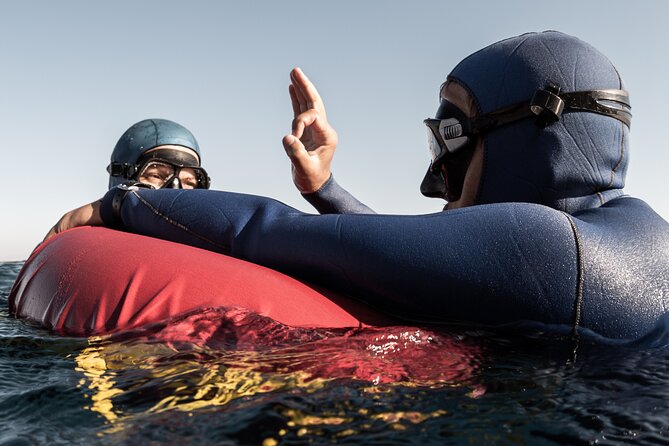
Breath-hold training can feel almost peaceful. On Nusa Penida in Bali, this 3-day Level 1 course mixes theory, pool work, and open-water practice, so you build confidence step by step with photo takeaways.
Two things I really like: the max 4 students per instructor setup (you get more individual coaching than big-group courses), and the fact that the price covers gear use and certification plus digital learning materials, so you do not have to buy extra equipment to start.
One thing to plan for is that the day runs long, 8:30 AM to 4:30 PM, and lunch, transportation, and accommodation are not included.
In This Review
- Key highlights you will care about
- Why Nusa Penida Works So Well for Level 1
- Your 3 Days Schedule: 8:30 AM to 4:30 PM, Pool to Ocean
- Safety and Progress: What “Max 4 Students” Changes
- What You Learn on Land, and Why It Matters
- Confined Water vs Open Water: The Real Difference
- Gear, Photos, and Certification: What the Course Covers
- Price and Value: Is $450 Fair for Level 1?
- Who This Course Fits Best (And Who Should Think Twice)
- Instructors and Teaching Style: Patient Coaching You Can Feel
- How to Plan Your Day on Nusa Penida (Since Transport and Lunch Are Extra)
- Should You Book This Level 1 Course?
- FAQ
- Do I need prior experience for this Level 1 course?
- How long is the course each day?
- What training do you do during the 3 days?
- What is included in the $450 price?
- Do I get any photos from the course?
- What results can I expect by the end of Level 1?
- What is the cancellation policy?
Key highlights you will care about
- Max 4 students per instructor, built for quick skill growth and close feedback
- Pool then open water, so you practice breathing control before the ocean
- Most students reach 15 to 20 meters and 2+ minutes of breath-hold by the end
- Take-home underwater photos of you in the water near coral and tropical fish
- No extra gear shopping: equipment use and essential items are included
- Certification included plus digital learning materials to keep you progressing after the course
Why Nusa Penida Works So Well for Level 1
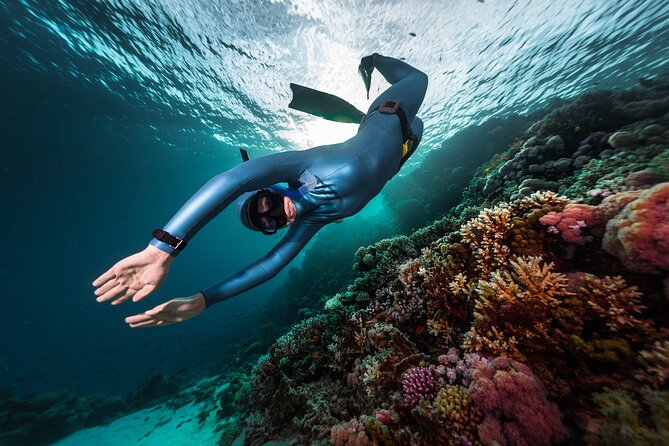
Nusa Penida is the kind of place where an intro course feels like it has a payoff. You get open-water sessions where coral and tropical fish are part of the experience, which matters because breath-hold skills are easiest to learn when you stay calm and curious instead of rushed and stressed.
This course is aimed at true beginners. You do not need any prior experience, and you only need to be able to swim. That combination is important on day one, because the hardest part for most people is mentally switching from normal breathing to controlled breath-hold practice.
Also, small-group coaching helps you connect the dots between what you learn on land and what happens once you are in the water. When the group is limited to four, an instructor can correct your form, breathing timing, and comfort level fast, rather than giving generic advice and hoping for the best.
More Diving Trips in Nusa Penida
- Scuba Diving in Nusa Penida – Manta Point
★ 5.0 · 198 reviews - Snorkeling and Freediving Trip around Nusa Penida
★ 4.5 · 77 reviews - Certified Scuba Dive with Manta Rays (Open Water Diver minimum)
★ 5.0 · 55 reviews
Your 3 Days Schedule: 8:30 AM to 4:30 PM, Pool to Ocean
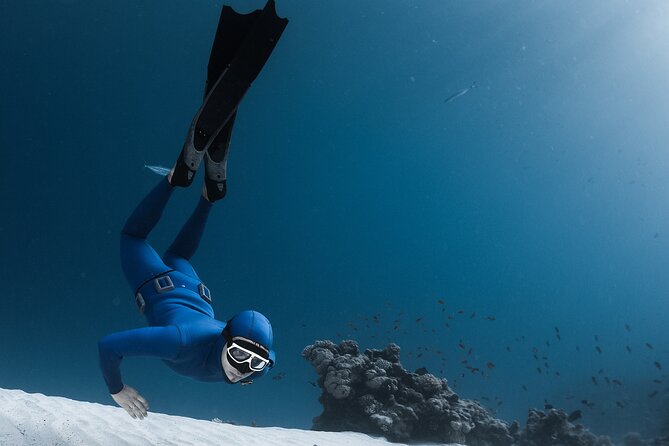
The course runs for about three days, with each day scheduled from 8:30 AM to 4:30 PM. That includes a lunch break, plus the land-based theory and training time that comes before you start handling water sessions.
Across the full course, you get both confined water and open-water sessions:
- 2 confined water sessions, typically in a controlled setting where you can focus on breath-hold technique and safety habits
- 3 open-water sessions, where you apply those skills with the added challenge of natural conditions
The training rhythm is the main reason this is a solid intro. You spend time building fundamentals, then you repeat the same types of skills in progressively more challenging conditions.
One practical consideration: because the hours are full-day, plan your Bali days around this course. If you are trying to fit it between boat rides or long transfers, you may end up stressed, and stress is the enemy of breath control.
Safety and Progress: What “Max 4 Students” Changes
A class limit of four students per instructor is not a marketing line, it is the structure. Breath-hold training is very technique-driven, and your ability to improve depends on getting accurate feedback at the right moment. With a larger group, you can spend more time waiting and less time refining.
Here, the smaller group size supports a safer, more intensive approach. You can expect consistent attention, especially during the parts where instructors monitor equalization comfort, relaxation, and surface recovery.
The course also uses a measured progression: you start with theory and land drills, then you move into confined water practice, and only after that do you spend multiple days in open water. That order is useful if you are new, because it gives you a chance to build familiarity with the sensation of being underwater without breathing, at your own pace.
This is also why the course can deliver results for many beginners. The expectation is realistic for a Level 1 path: most students finish able to descend to around 15 to 20 meters and hold their breath for more than two minutes.
What You Learn on Land, and Why It Matters
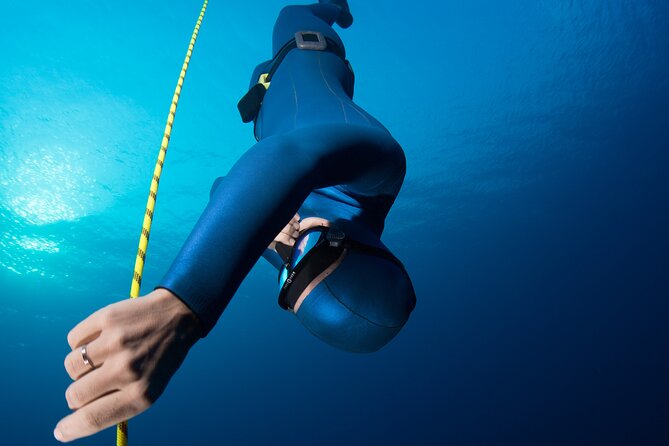
The “on land” part is not filler. It is where you learn the mental and technical basics that keep you comfortable underwater. With breath-hold training, your body follows your head, so learning how to control breathing, relax, and respond to feedback is essential.
Over the three days, you get theoretical and practical sessions on land before you go into water. That means you are not guessing when you are asked to equalize or when you are coached on how to pace your breath-hold attempts.
The course also includes digital learning materials and a certification at the end. That matters because good breath-hold instruction is not just about what you do during the course, it is about being able to remember the key points afterward and keep practicing safely.
A small but meaningful detail: the course includes certification, so you leave with something structured to build on, not just a one-off experience.
Compare these Scuba Diving trips in Nusa Penida:
- Nusa Penida Try Scuba Diving Program – for Non-Certified Divers
★ 5.0 · 42 reviews - Try Diving in Manta Point – Nusa Penida
★ 5.0 · 41 reviews - Scuba Diving Nusa Penida Manta Point 3 dives for certified divers
★ 5.0 · 35 reviews - Try Scuba Diving for Beginners with manta rays (Non – Certified)
★ 4.5 · 31 reviews
Confined Water vs Open Water: The Real Difference
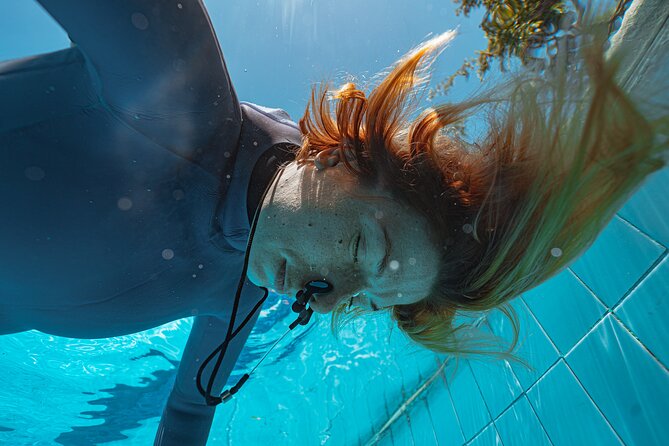
Confined water sessions are where you get repetition without the uncertainty of the ocean. In those two sessions, you can focus on the foundation: breathing control, relaxation, and learning how to respond when your body feels different underwater. For a first-timer, that familiarity makes the later open-water sessions less intimidating.
Then come the three open-water sessions. Open water adds real-world variables like natural movement and less predictable conditions. That is exactly why the confined sessions matter. When you already know how your body reacts, you can concentrate on staying calm and moving smoothly.
Most students can descend to about 50 to 65 feet (15 to 20 meters) by the end. The point is not just depth. It is that you are learning control while going deeper, and that is where instructors’ hands-on coaching helps the most.
You should also expect underwater life to be part of the experience. The training includes take-home underwater photos featuring you underwater near coral and tropical fish, which is a nice way to mark progress, not just count minutes.
Gear, Photos, and Certification: What the Course Covers
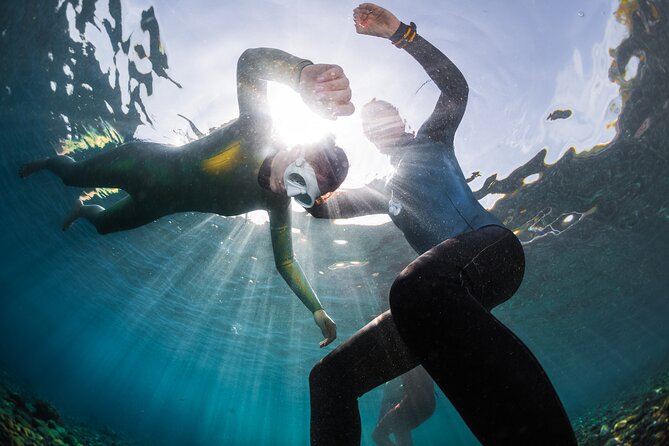
You do not need to buy anything special for this Level 1 course. Equipment use is included, along with all fees and taxes. That takes away a common beginner headache, because breath-hold setups can be confusing if you do not know what you actually need.
You also get:
- Use of freediving equipment (equipment included)
- Certification on completion
- Digital learning materials you can review later
- Underwater photos you take home
That mix is good value for beginners. Gear included means you can focus on learning rather than shopping. Certification and digital materials mean your progress can continue after the course.
One note on photos: since the course includes take-home underwater photography, it is worth thinking about how you want to feel in front of the camera underwater. Being comfortable on day one usually leads to better photos and less stress.
Price and Value: Is $450 Fair for Level 1?
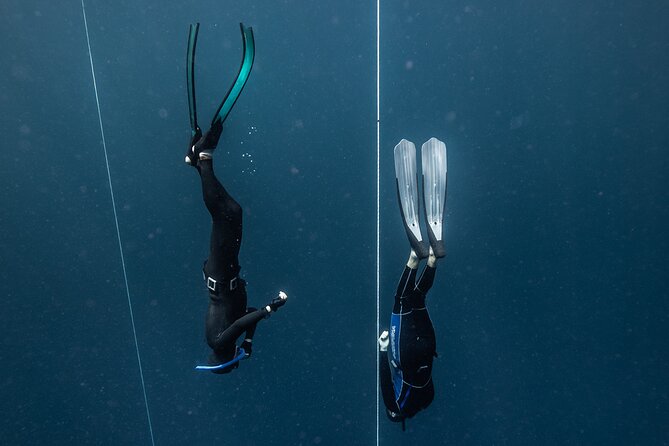
At $450 per person, this is not a “cheap and cheerful” option, but it also does not try to upsell you with mandatory add-ons. The value comes from what is included: equipment use, certification, digital materials, and the training format with small-group attention.
For a beginner, those inclusions matter more than they might for an experienced diver. If you end up needing to rent gear elsewhere and pay for separate certification, the total cost climbs fast. Here, the structure is built to be one clear package.
Your main extra costs are not hidden in the fine print. Lunch, private transportation, and accommodation are not included, so you need to budget for those based on where you stay on Nusa Penida.
If you are choosing between an underpriced course with big groups and limited coaching versus a course with a strict four-student cap and included certification, this one has a practical edge. You are paying for time with an instructor and for a complete learning arc.
Who This Course Fits Best (And Who Should Think Twice)
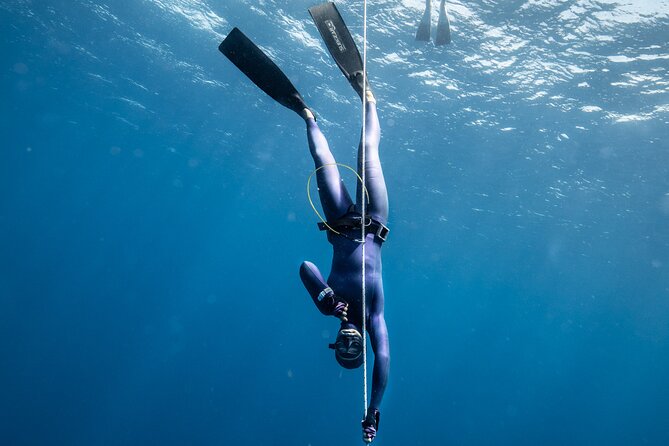
This Level 1 breath-hold course welcomes absolute beginners. You only need to be able to swim, and the course is designed as a smooth introduction even if your first water activity is this one.
You should have moderate physical fitness. That does not mean you need to be an athlete, but you should be comfortable with a full day of training and repetitive practice. If you are recovering from an injury or you feel unsure about your swimming comfort, it is worth considering whether you can train consistently for three days.
The course is also a good fit if you want structure. You get both theory and practice, and you finish with certification, so you can keep building on a defined path.
Instructors and Teaching Style: Patient Coaching You Can Feel
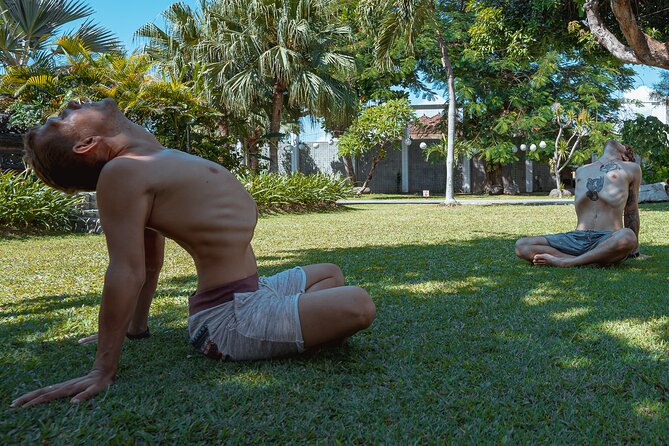
One of the strongest signals from past students is consistency in teaching care. Instructors such as Sabli, Artem, Roberto, Seva, Hamza, Gaston, Chiara, and Kirill are repeatedly described as supportive, clear, and attentive to individual needs.
That matters in breath-hold training. You need coaching that helps you connect the “why” from theory with the “how” in the water. When an instructor is patient, you tend to relax faster, and relaxation is what lets breathing control work.
You will likely notice instructors coaching you to challenge yourself at the right level. Several accounts highlight a mix of care and pressure in a good way, meaning you are guided to improve without being pushed past your comfort.
If you want a course where you can ask questions and get feedback in the water, the small group cap and this teaching style are a big reason this course earns high marks.
How to Plan Your Day on Nusa Penida (Since Transport and Lunch Are Extra)
Because the schedule is 8:30 AM to 4:30 PM, plan meals and timing around that block. Lunch is not included, so bring a realistic plan: either find a place nearby for a simple meal or check with the school about what is easiest during the break time.
Private transportation is also not included, so you need to handle getting to the meeting point and back. The start point is at Freedive Nusa – Freediving School on Jl. Ped – Buyuk No, Desa, Ped, Kec. Nusa Penida, Nusa Penida, Bali 80771, Indonesia. The activity ends back at the meeting point.
If you are staying on Nusa Penida, the course is much easier to fit into your schedule. If you are based elsewhere on Bali, make sure your transfer plan gives you enough buffer. Stress before a breath-hold session is a bad trade.
Should You Book This Level 1 Course?
If you want a structured start with small groups, included gear, and certification, this course is a strong choice. The training plan makes sense for beginners: land theory, then confined water, then open water, with results aimed at around 15 to 20 meters and 2+ minutes for many students by the end.
I would especially recommend it if you care about safety and close coaching, not just ticking a box. A maximum of four students per instructor is the difference between feeling guided and feeling like you are on your own.
I would hesitate only if a full-day schedule and bringing lunch is a deal-breaker for you, or if you cannot comfortably handle moderate physical demands over three days.
FAQ
Do I need prior experience for this Level 1 course?
No previous experience is required. You only need to be able to swim, and the course is designed as an introduction for beginners.
How long is the course each day?
The course runs from 8:30 AM to 4:30 PM, with a break for lunch included in the schedule.
What training do you do during the 3 days?
You do theory and practical sessions on land, two confined water sessions, and three open water sessions.
What is included in the $450 price?
The price includes use of the freediving equipment, all fees and taxes, freediving certification, and digital learning materials.
Do I get any photos from the course?
Yes. You take home underwater photos of yourself diving amid coral and tropical fish.
What results can I expect by the end of Level 1?
Most students can descend to about 50 to 65 feet (15 to 20 meters) and hold their breath for more than two minutes by the end.
What is the cancellation policy?
You can cancel for a full refund up to 24 hours in advance of the experience start time. If you cancel less than 24 hours before the start, the amount paid is not refunded.
Just added around Nusa Penida
- Bali 2 Days and 1 Nights of Nusa Penida and Lembongan Tour★ 5.0 · 13 reviews
- All Inclusive Nusa Penida Private Tour★ 5.0 · 15 reviews
- Snorkeling 4 Spots, Manta Rays, Tembeling Pool & Kelingking Beach★ 4.5 · 15 reviews
- West Nusa Penida Full-Day Private Tour★ 5.0 · 93 reviews
- West Nusa Penida Island Snorkeling Tour – From Bali Island★ 4.0 · 5 reviews
- West And East Nusa Penida Tour,Depart From The Island of Bali★ 5.0 · 20 reviews
- Nusa Penida West trip with snorkeling at 3 spot with Free Meals★ 5.0 · 15 reviews
- Best Seller West Nusa Penida Island Private Guided Tour★ 4.5 · 57 reviews
Scuba Diving Trips, compared.
2 Days Discover Scuba Diving in Nusa Lembongan – Scuba Initiation
Read our review →
Bali Diving for Beginners: Tulamben Liberty Wreck
Read our review →
Discover Scuba Diving in Tulamben – Diving Initiation in Bali best diving sites
Read our review →
Bali Diving Day Trip-Manta Point/Tulamben Shipwreck-Fun Dive
Read our review →
5 Fun Dives in Tulamben (for certified divers) – Discover famous diving sites
Read our review →
Snorkeling and Freediving Trip around Nusa Penida
Read our review →Browse the lists this tour appears in