
REVIEW · EAST BALI TOURS
Candidasa Hidden Activities
Coconut oil starts with fire and patience. This 5-hour Candidasa experience with Wayan and his family turns everyday Balinese life into something you can watch, smell, and participate in, with Balinese village cooking at the center. You get village flavor from the garden, not a packaged script, and you’ll see the calm side of Bali with banana and coconut trees around you.
One possible drawback to plan for: this is a real home and temple routine. It is not suitable for people over 70, and if hygiene standards are a deal breaker for you, this kind of village set-up may feel uncomfortable.
In This Review
- Quick hits worth knowing
- What makes the Candidasa Hidden Activities format special
- Hotel pickup, small group size, and your English-speaking guide
- Start with a market stop and coconut coffee
- Village home basics: bananas, young coconut, and well water
- Canang sari offerings and temple prayer at the family home shrine
- Wood-fire natural coconut oil: hands on and seriously practical
- Incense sticks for daily ceremonies
- Cooking 5 Balinese dishes plus desserts together
- Lunch, animals, and the quieter side of Bali
- What to pack and what to expect during the 5-hour rhythm
- Price and value: what $55 covers in Candidasa
- Should you book this Candidasa Bali cooking experience?
- FAQ
- How long is the Candidasa Hidden Activities experience?
- Is hotel pickup and return included?
- What’s included in the price?
- What language is the tour guide?
- What should I bring?
- Are alcohol or drugs allowed?
Quick hits worth knowing
- Small group (max 10) with an English-speaking guide, so it feels personal
- Wood-fire natural coconut oil made in a traditional way, not a demo for show
- Canang sari offerings and temple prayer at the family home shrine
- Incense stick making tied to daily ceremonies, with a clear process
- Hands-on cooking of 5 Balinese dishes plus desserts, using fresh ingredients
- Village garden tasting, including banana and young coconut, plus coconut coffee
What makes the Candidasa Hidden Activities format special
This isn’t a big bus tour with a rushed photo stop. It’s built around one family’s rhythm, so you understand what Balinese life looks like between the main tourist sights.
The biggest win is how practical everything feels. You’re not just watching someone cook. You’re seeing how ingredients are sourced, how coconut oil is made over firewood, and how daily worship connects to food and household routines. That mix of food, religion, and local chores is what makes it click.
I also like the pacing. At 5 hours, you get a lot of experiences without feeling cooked by the clock. You leave with stories you can actually explain, not just a handful of generic facts.
A few more Karangasem Regency trips to compare
- Bali: Blue Lagoon Beach Snorkeling Tour with Lunch
★ 4.5 · 426 reviews - Bali/Amed: Underwater Temple Snorkeling Experience
★ 4.8 · 134 reviews - Bali: Snorkeling on 2 spots with Lunch and Transport
★ 4.8 · 123 reviews
Hotel pickup, small group size, and your English-speaking guide
The day starts with free round-trip hotel transfer, which matters in Bali. You avoid the stress of sorting transportation before you’re even in the village.
Once you’re picked up, the group stays small, limited to 10 participants. That size helps in two ways. First, the guide can translate and keep questions flowing. Second, you’re more likely to actually participate in the cooking steps rather than stand at the edge.
The tour runs in English with a live guide. Reviews also point to Wayan speaking fluent English while guiding the family routine. If you’re the type who likes to understand what you’re seeing, that really helps.
Start with a market stop and coconut coffee
Early on, the schedule includes a drive to a traditional market. Even if you do not plan to shop, it’s a useful reality check on how local ingredients and daily goods move through the area.
From there, you’ll get a welcome drink and tastings, including coconut coffee and a coconut flour coffee option. It’s a nice bridge between the tourist version of Bali and the everyday one. You start picking up the flavors you’ll likely use later.
A practical note: bring some cash. The tour mentions extra money for souvenir shopping, and markets tend to be where you might want small purchases.
Village home basics: bananas, young coconut, and well water
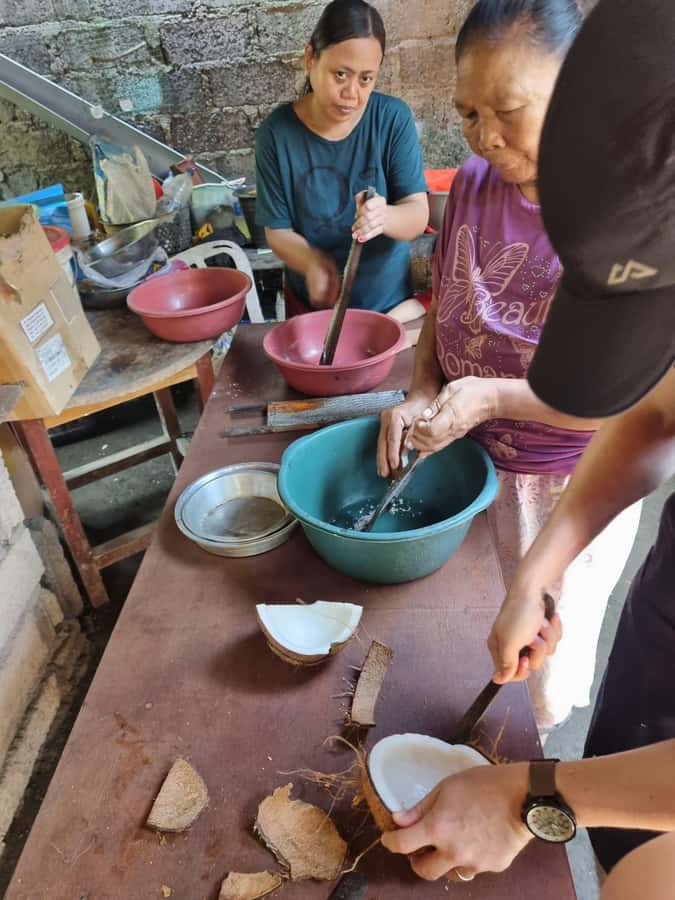
The setting is part of the experience. You’re surrounded by banana trees and coconut trees, and the tone is quieter than most tourist zones. That matters because incense, cooking smoke, and temple offerings all land better in a calm environment.
You’ll meet the Balinese family and be introduced to how they live in their village. That includes small details that make the day feel real, like well water straight from the ground. It’s the kind of thing you normally never think about on a holiday, and then suddenly you’re paying attention.
On the refreshment side, expect Balinese cake, banana, and fresh young coconut from the garden. Reviews highlight that the fruit and ingredients aren’t just staged. You’re tasting what comes from nearby, which gives the cooking lesson more meaning.
Another side of Indonesia:
- Bali: Lempuyang Temple, Tirta Gangga, and Temesi Waterfall …
★ 4.9 · 120 reviews - Bali: Telaga Waja White Water River Guided Rafting & Lunch
★ 4.7 · 88 reviews - Bali: Private Full day trip Customizable tour
★ 5.0 · 40 reviews - East Bali: Lempuyang Temple, Tirta Gangga, and Taman Ujung
★ 4.9 · 35 reviews
Canang sari offerings and temple prayer at the family home shrine
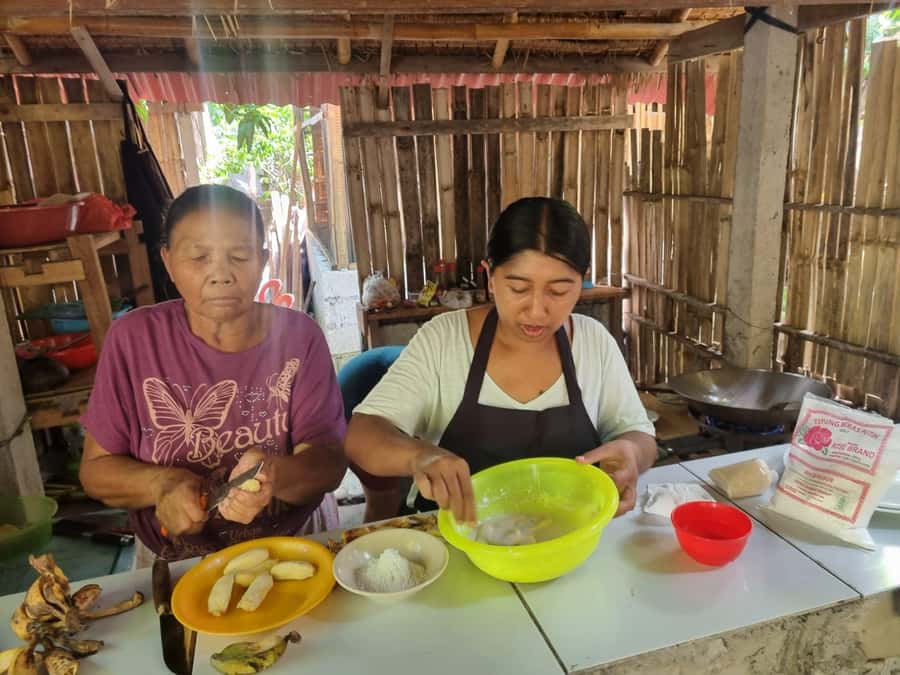
Balinese daily life includes offerings, and this tour makes that visible. You’ll learn how to make canang sari, the small offering trays people place for worship throughout the day.
Then you’ll pray together at the temple, including the family’s home shrine. This is one of those moments where understanding replaces curiosity. You get the sense that the rituals aren’t performance. They’re routine.
If you’re the kind of traveler who wants respectful context, this part is a strong choice. It’s not just watching hands arrange flowers and leaves. You also learn why it happens as part of daily temple ceremonies.
If you prefer quiet observation only, this portion still works. You can participate in the making and then step back to watch the prayer.
Wood-fire natural coconut oil: hands on and seriously practical
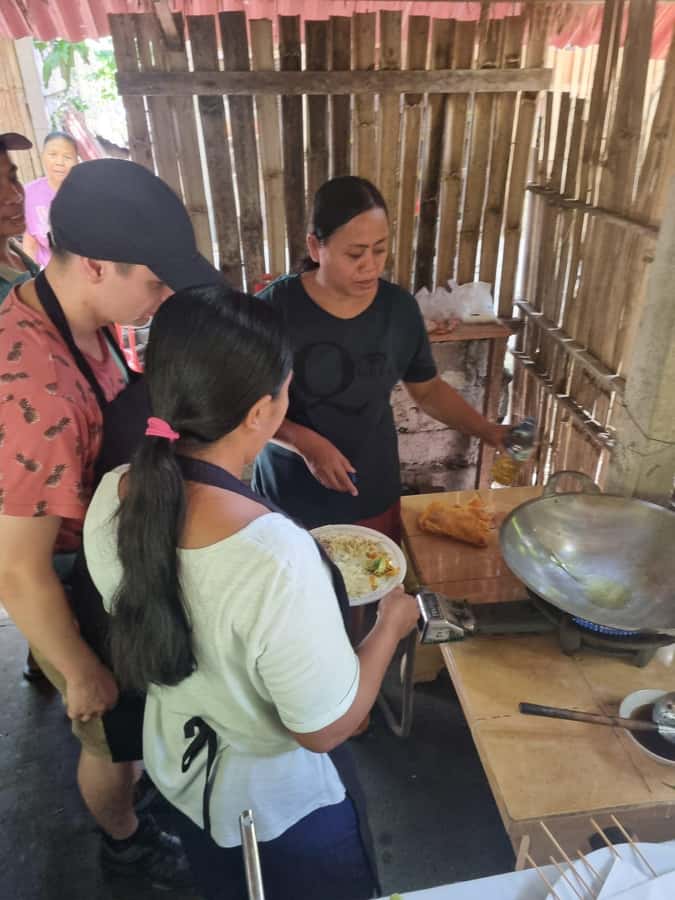
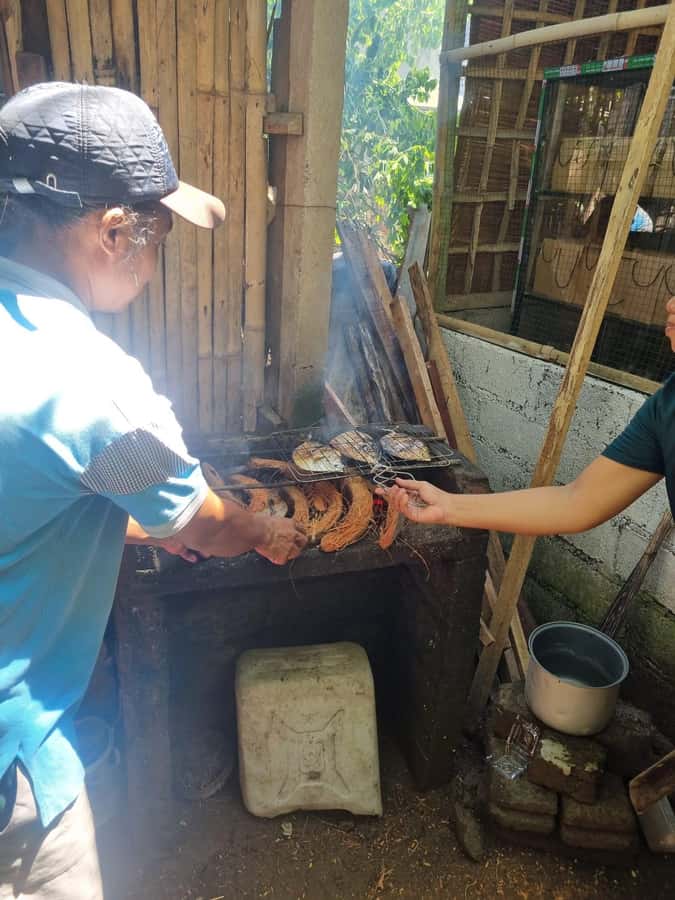
Coconut oil is the star here, and not in a glossy wellness way. The tour shows you how natural coconut oil is cooked on a wood fire stove using a traditional process.
This is valuable because it explains the labor behind a product many people just buy. You see the firewood method and the steps involved, and it helps you understand why coconut is so central to Balinese homes.
From a sensory standpoint, wood smoke and coconut smell are hard to forget. You also get a real appreciation for how patience and steady heat work in traditional cooking.
One consideration: the setting is authentic, so it’s not polished studio comfort. Plan for a practical, earthy environment where you’ll be close to the process.
Incense sticks for daily ceremonies
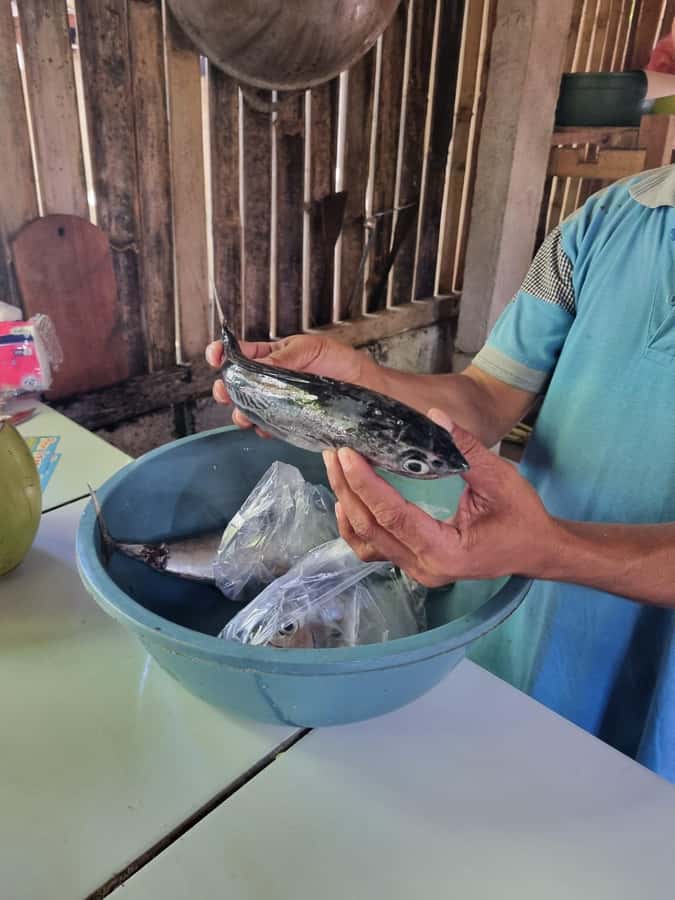
Incense making is another hands-on skill you’ll see up close. The tour includes learning the process of making incense stick for daily temple ceremony.
This part connects with the canang sari offerings. Instead of treating them as separate cultural items, you see how they fit into the same home worship system. It’s easier to remember that way.
If you like crafts, you’ll probably enjoy this section. It’s also a nice change of pace from cooking and eating. Your hands get to work in a different way, and your brain gets a mini break from food prep.
Also, you’ll likely notice the tour’s emphasis on daily practice rather than special event spectacle. That balance makes the day feel grounded.
Cooking 5 Balinese dishes plus desserts together
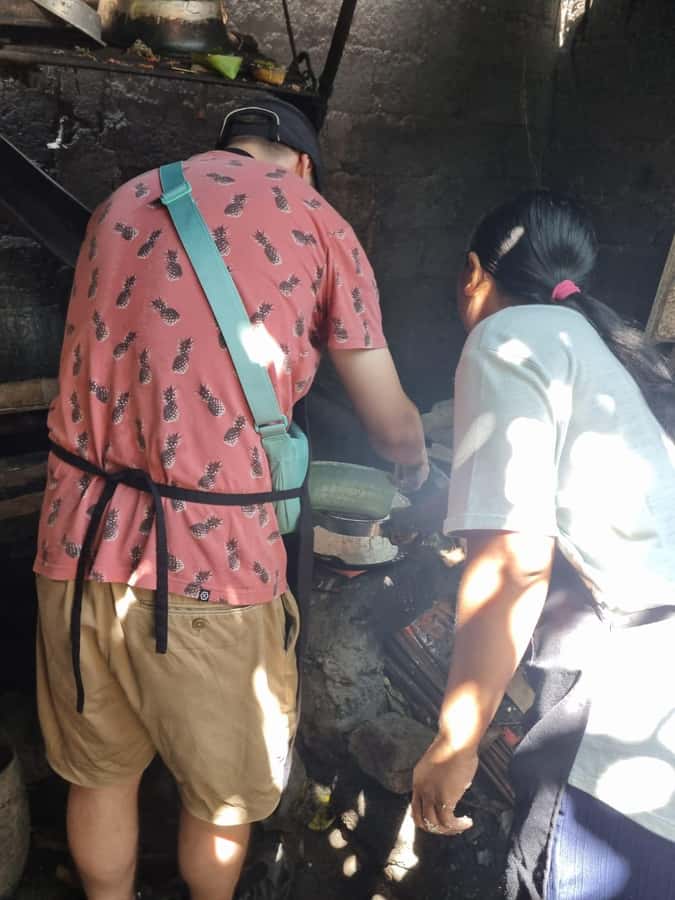
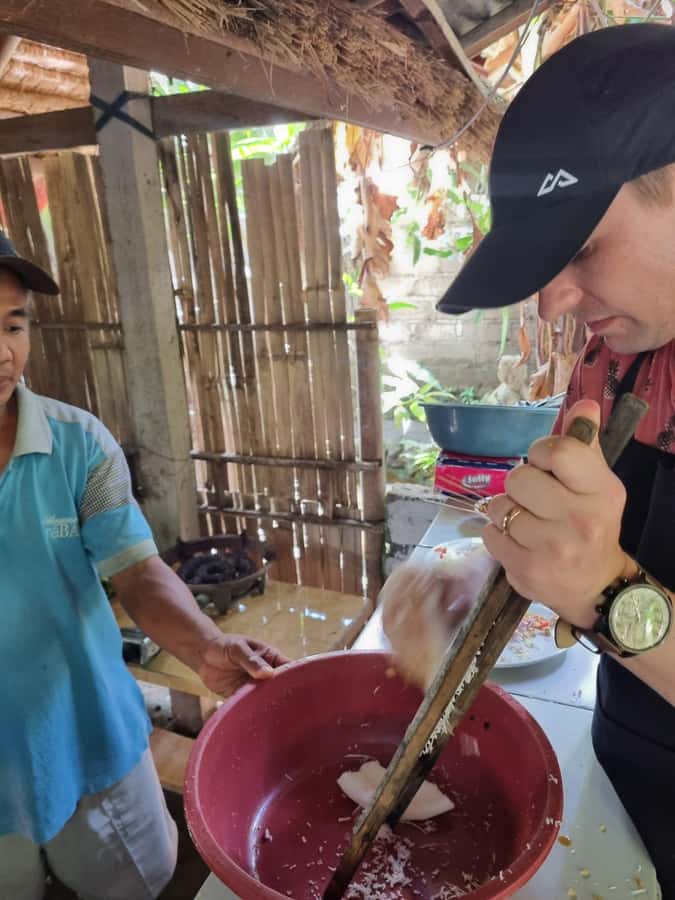
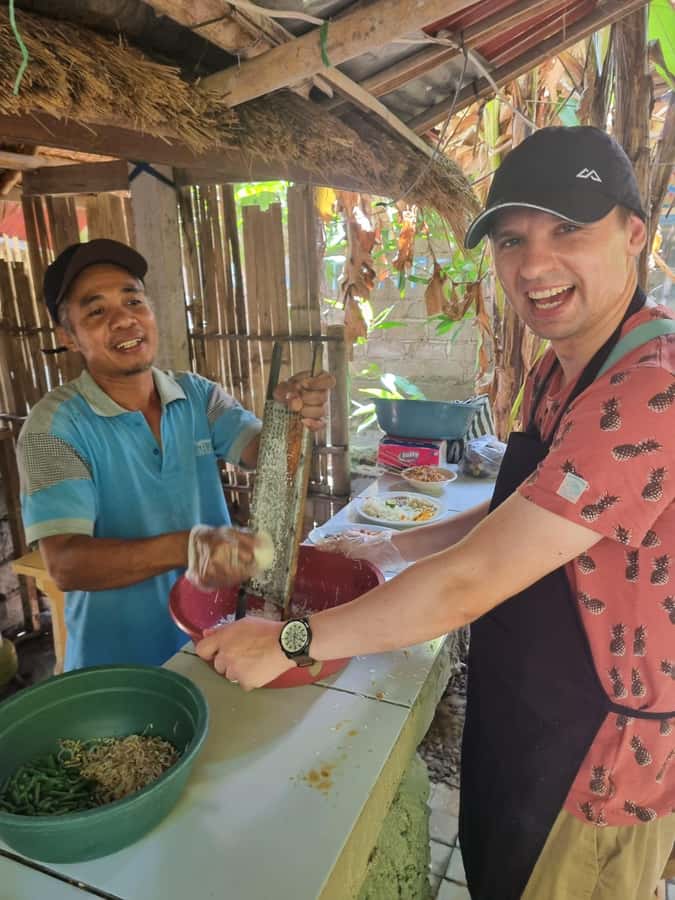
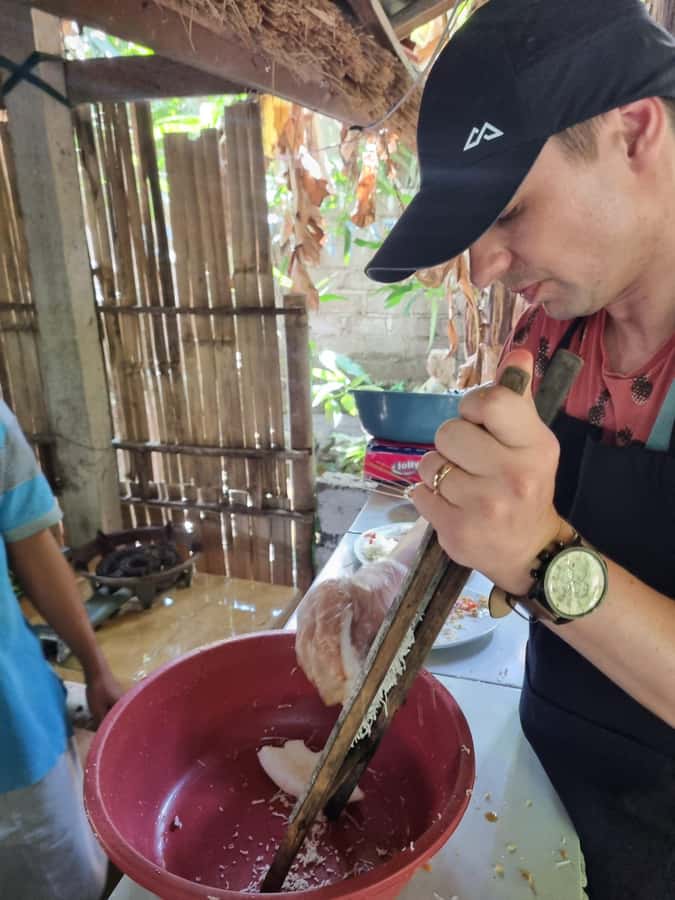
Now for the main event: cooking. You’ll join a cooking demonstration where you make 5 different Balinese food items and desserts. The exact dishes can vary by day, but the structure stays the same: learn the steps, help prepare, then cook together.
What makes this worth your money is the ingredient story. You get fresh produce like bananas and young coconut, plus you’ll learn about sourcing and preparation. Reviews specifically mention fish being fresh, and that the ingredients can be tied to what is available locally.
You also get a deeper look at how Balinese cooking supports daily life. Food isn’t separate from worship or chores. It’s part of the same system.
In practical terms, 5 hours is tight but doable for hands-on cooking. You won’t become a chef. You will, however, leave knowing how a few key dishes come together, and you’ll be able to recognize flavors if you eat them later in Bali.
If you’re picky about hygiene, handle this thoughtfully. One experience note flags that if you are very sensitive about hygiene, a village home setup may not feel comfortable. I’d treat that as a real warning, not a minor detail.
Lunch, animals, and the quieter side of Bali
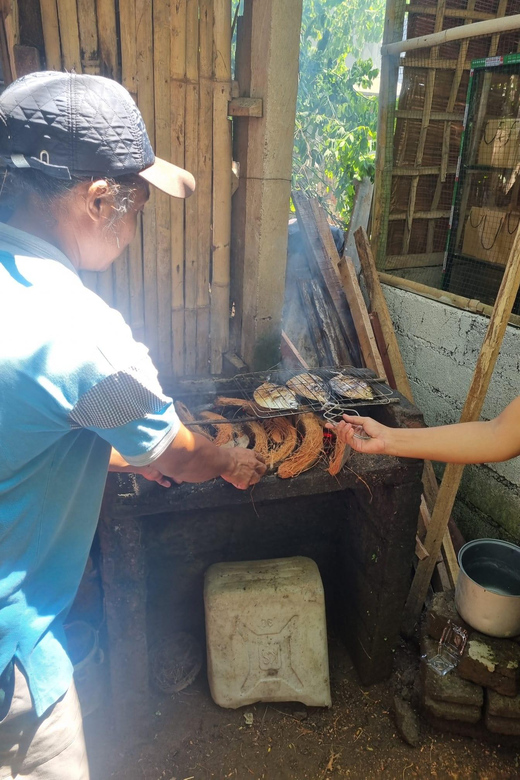
The day includes lunch, plus time to see life around the home. You may also see the family’s animal care area, including cows and chickens.
That farmyard glimpse does two things. It shows how families support themselves locally, and it gives context for why ingredients matter so much. Cooking in Bali isn’t just about taste, it’s about what’s available and how it’s handled.
The experience also includes a fun local moment: you can see a monkey man climb a coconut tree. It’s playful, but it also fits the theme of how people interact with their environment in practical ways.
You’ll finish the tour back at your hotel with a sense of having spent time in the real Bali, not just toured it.
What to pack and what to expect during the 5-hour rhythm
Bring a camera, and bring cash. The tour notes souvenir shopping as an extra expense, and the market setting makes cash useful.
You should also expect no alcohol and no drugs as part of the rules. That keeps the vibe focused and respectful in a religious and family home environment.
Comfort-wise, this is a day where you may move around outdoors and spend time near cooking setups. Wear something you feel steady in, because you’ll likely be standing, watching, and participating.
Timing matters too. The tour is offered with starting times based on availability, and it’s a 5-hour experience. If you have another booking the same day, give yourself a buffer for hotel drop-off.
Price and value: what $55 covers in Candidasa
At about $55 per person for roughly 5 hours, this sits in the middle of Bali activity pricing, but it’s strong value for what you actually do.
Here’s the practical value math:
- Round-trip hotel transfer saves money and stress
- A welcome drink, mineral water, and Balinese cake keep you covered on basics
- Coconut coffee and tastings connect the cooking lesson to real flavors
- You also get the major work parts of the day, like cooking 5 dishes, making canang sari, and learning incense stick making
What you do not get built into the price is optional souvenir shopping money. That’s normal, and it’s easy to plan around.
For me, the key value point is participation. You’re not just paying for views. You’re paying to do small tasks, taste ingredients, and learn how the daily ritual side of Bali ties into food.
Should you book this Candidasa Bali cooking experience?
If you want Balinese village culture plus a real cooking lesson, this is a great fit. The small group size, Wayan’s family guidance, wood-fire coconut oil process, and the canang sari and incense making components give you a full picture of daily life.
I’d skip it if you are over 70, since the tour says it is not suitable. I’d also take the hygiene sensitivity note seriously, because this happens in a family setting rather than a controlled, sanitized environment.
If you like hands-on learning, calm atmosphere, and practical culture that you can explain later, book it and plan for a simple, earthy, honest day in Candidasa.
FAQ
How long is the Candidasa Hidden Activities experience?
It runs for 5 hours.
Is hotel pickup and return included?
Yes. You get free round-trip transfer from your hotel.
What’s included in the price?
Included items are hotel transfer return, welcome drink, Balinese cake, tasting coconut flour coffee, and mineral water.
What language is the tour guide?
The live tour guide speaks English.
What should I bring?
Bring a camera and cash.
Are alcohol or drugs allowed?
No. Alcohol and drugs are not allowed.
Just added around Karangasem Regency
- Sidemen: Rice Terraces, Waterfall, & Village Tour★ 5.0 · 5 reviews
- Sidemen Bali Private Rafting on Telaga Waja River With Lunch★ 4.9 · 31 reviews
- Bali: The Gate of Haven Trip Private Tour, Luxury Car★ 4.9 · 10 reviews
- New Route: The Shortcut Route Up Mount Agung’s Peak 3142M★ 4.8 · 6 reviews
- Mount Abang Trekking★ 5.0 · 5 reviews
- Lahangan Sweet, Tirta Gangga & Virgin Beach★ 5.0 · 6 reviews
- Hire Bali Driver As Your Guide★ 4.6 · 4 reviews
- Heaven Gate East Bali Tour★ 4.7 · 4 reviews
East Bali Tours, compared.

Lempuyang Quick Access, Waterfall, Water Palace & More
Read our review →
Sidemen Trekking: A Walk from a Different Perspective
Read our review →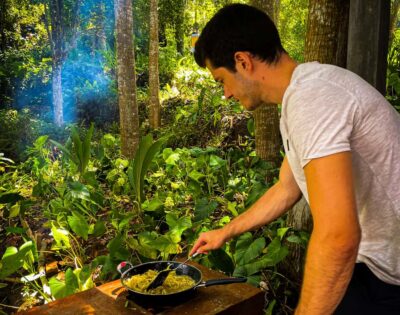

Bali/Amed: Underwater Temple Snorkeling Experience
Read our review →
Amed: Tirta Gangga, Jemeluk Bay, & Virgin Beach Day Trip
Read our review →
Lempuyang Temple, Tirta Gangga, and Temesi Waterfall …
Read our review →Browse the lists this tour appears in