
REVIEW · GUIDED
From Yogyakarta: 12-Hour Guided Dieng Plateau Sunrise Trip
Dieng begins before the alarm. I love the Sikunir Hill sunrise experience, and I also really like how the tour swaps views for real mood, the Sikidang sulfur crater feels straight out of another world. The main drawback is simple: the day starts at midnight, and the long road can feel tiring, especially with heavy traffic.
In my favorite moments, the guide quality really shows. On this route, Ardhan is praised for safe driving and smart viewpoint choices, Yuni gets a nod for adding little touches like coffee gear at sunrise, and Himawan earns points for friendliness and handling weather changes with patience.
If you’re going for a stress-free, high-meaning day trip with a small group and English-speaking guidance, this fits well. Just know that sunrise depends on conditions, and fog or rain can change what you see from the hill.
In This Review
- Key Things I’d Watch For On This Dieng Sunrise Day
- Midnight Pickup From Yogyakarta to Dieng Plateau
- Sikunir Hill Sunrise: The Clear-Sky Promise and the Real Deal
- Batu Pandang Hill and the Colourful Lake View Over the Valley
- Sikidang Crater: Sulfur Lakes, Bubbling Mud, and Steam
- Arjuna Temple Complex: Eight 7th-Century Hindu Temples
- Timing, Group Size, and Comfort on a 12-Hour Plan
- English-Speaking Guides: Ardhan, Yuni, and Himawan
- Price and Value for a $53 Guided Sunrise Day
- Weather Reality: Rain, Fog, and What to Expect When Sunrise Changes
- Who This Tour Suits Best, and Who Might Want Something Different
- Should You Book This Dieng Plateau Sunrise Trip?
- FAQ
- What time do you get picked up from Yogyakarta?
- How large is the group for this Dieng sunrise trip?
- Is the tour guide available in English?
- What stops are included during the 12 hours?
- Do you get hotel pickup and drop-off included?
- What if it is cloudy or raining during sunrise?
Key Things I’d Watch For On This Dieng Sunrise Day
- Midnight hotel pickup means you trade sleep for a first-class chance at dawn views.
- Small group size (up to 8) keeps the experience calmer on narrow viewpoints and dusty paths.
- Sikunir Hill viewpoint choice matters when the weather is good, and even when it is not.
- Sikidang Crater route shortcuts can make slippery, steamy terrain feel more manageable.
- Arjuna Temple Complex timing gives you a calmer visit after the morning adrenaline.
- English live guiding helps you get meaning from both the volcanic sites and the 7th-century temples.
Midnight Pickup From Yogyakarta to Dieng Plateau
You start with a midnight pickup from your hotel in Yogyakarta, then you head uphill toward the Dieng Plateau. This is not a late-morning outing, it is a full day built around dawn, so plan for a very early start and a long day in the car.
The drive is part of the deal, but it can also be the hardest part. One traveler noted that the roads from Jogja can bring painful traffic, so I’d treat this as a day trip for people who like getting things done early. The good news is the transport is highly rated, with many people pointing to safe, careful driving.
If you’re the type who can fall back asleep in the van, you will enjoy the early rhythm more. One review even highlights that the guide let the traveler sleep during the drive, which is exactly what you want when you are leaving at midnight.
A few more Yogyakarta trips to compare
- Yogyakarta: Borobudur sunrise(guarantee climb up)& Prambanan
★ 4.9 · 1,545 reviews - Yogyakarta: Borobudur ClimbUp (sunrise option) & Prambanan
★ 4.9 · 1,260 reviews - Yogyakarta: Borobudur Climb-up and Prambanan Guide Tour
★ 4.9 · 1,031 reviews
Sikunir Hill Sunrise: The Clear-Sky Promise and the Real Deal
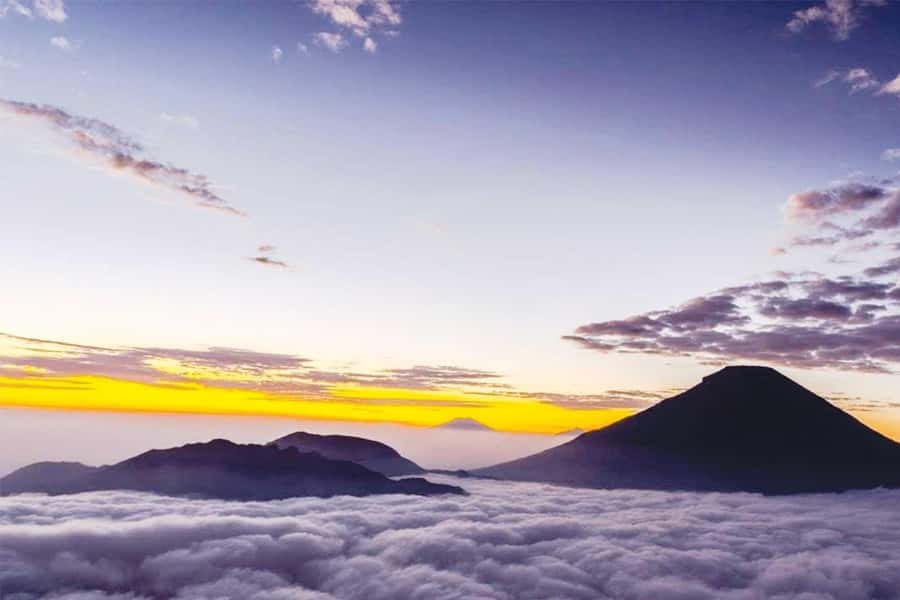
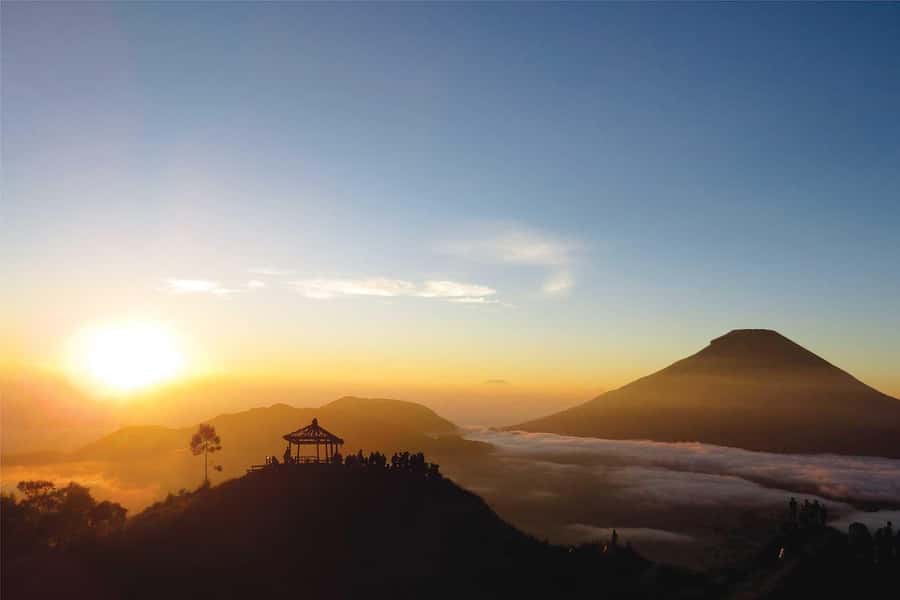
Sikunir Hill is the headline act, because it is where you go for sunrise. On a clear day, the view can reach across up to eight volcanoes, which is the kind of brag-worthy geography that actually sounds believable here.
The key detail is that the hill is also where weather becomes the main character. Rain and clouds can roll in, and then the sunrise can get dim or disappear completely. One traveler had rain all night and still had fun waiting, while another went during cloudier conditions and did not see sunrise, but instead experienced a strange, fog-heavy mood that still felt special.
That is where the guide’s role matters. Ardhan is repeatedly praised for choosing a spot that gives you the best chance of sunrise views, and also for managing safe descents after dawn when the ground can be slippery. If you want a calm sunrise experience, pick the tour for the guide and their on-the-ground decisions, not just for the idea of sunrise.
Practical mindset: go with flexible expectations. If you get clear skies, great. If not, focus on the atmosphere, the waiting, and the chance to see Dieng’s high-altitude weather in motion.
Batu Pandang Hill and the Colourful Lake View Over the Valley
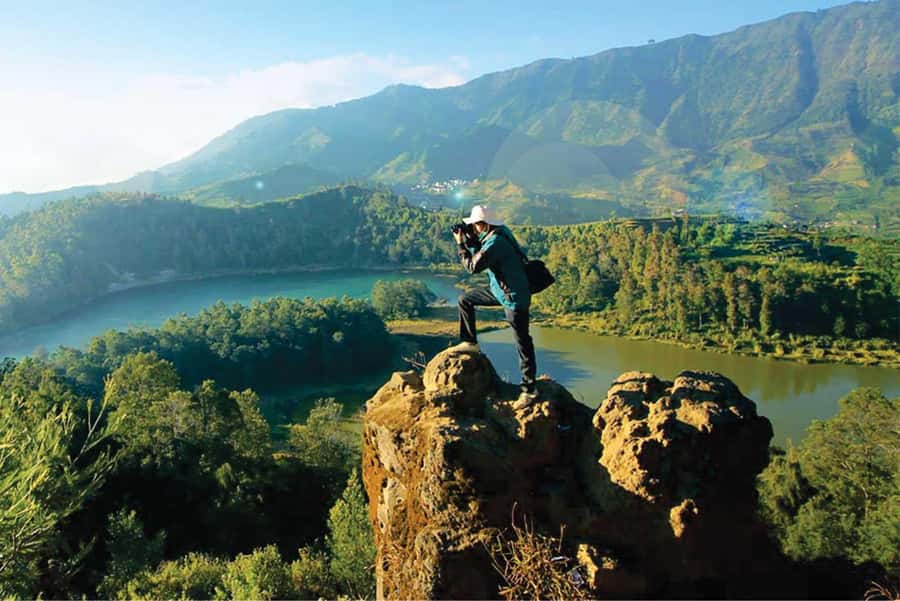
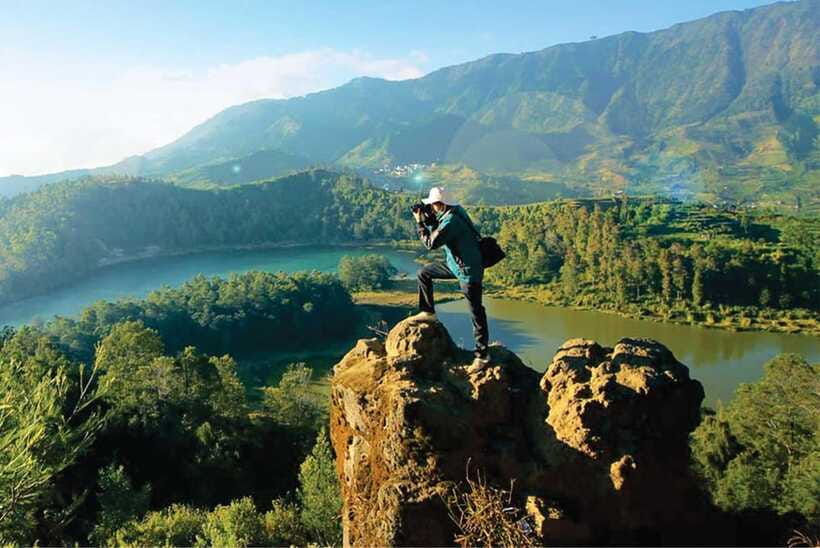
After sunrise, the itinerary shifts from vertical effort to wide views. You stop at Batu Pandang Hill to look down at the Colourful Lake from above.
What makes this stop worth your time is the contrast. Right after the sunrise adrenaline, you get to breathe and take in a different kind of drama, the plateau scenery spreading out below. Even when the lake does not look like a bright, high-saturation postcard, one review specifically points out vivid green that still feels intensely alive.
This is also a good moment to reset your body after the hill climb. You likely do not need to rush here, so you can take your photos, pause, and let the day slow down for a minute.
If you hate waiting, though, be aware this is still an outdoor viewpoint stop. You are on a hill for the view, so you are at the mercy of wind and timing.
Sikidang Crater: Sulfur Lakes, Bubbling Mud, and Steam
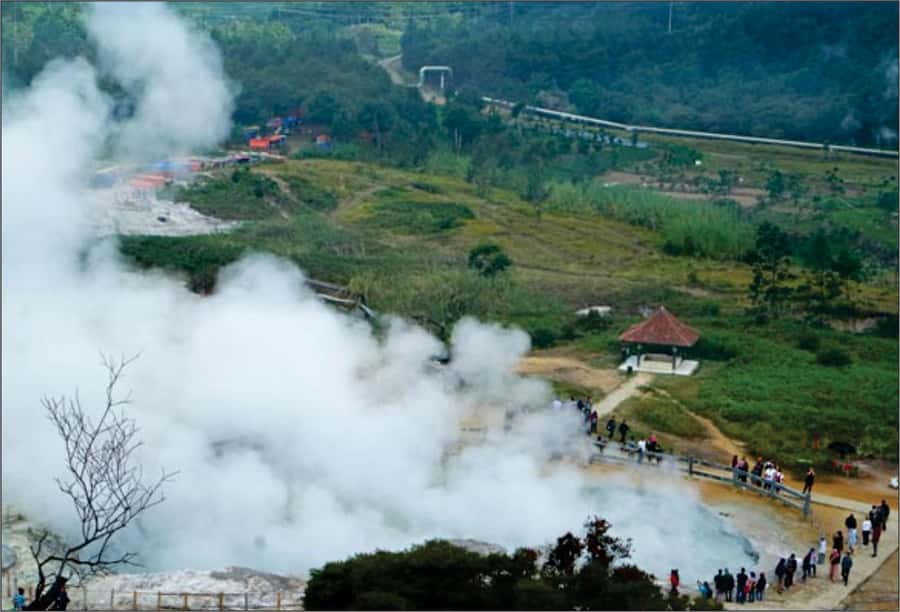
Then you get the part that feels the most unreal on a typical Java itinerary. Sikidang Crater is an open sulfur crater with bubbling mud and bellowing steam, sitting in a dusty, uneven setting that makes the whole place feel like a different planet.
This stop is not about “pretty.” It is about texture and smell and sound. You are walking through an area shaped by active geothermal activity, so the experience is raw, gritty, and very visual. And because it is open and steaming, it can feel dramatic even on a grey day.
Guide decisions matter here too. In one case, the guide was praised for knowing the right path and shortcuts, which is exactly what you want in bumpy terrain. Another review emphasizes the guide’s ability to lead safely and keep the timing moving through the crater area.
My advice: treat this as your sensory stop. If you’re the type who wants quiet churches, you might find it loud and intense. If you like how travel can throw you into the real workings of a place, this is the payoff moment.
Another side of Indonesia:
- Borobudur Sunrise from setumbu Hill , Merapi Volcano & Prambanan Full Day Tour
★ 5.0 · 1,030 reviews - Yogyakarta: Jomblang Cave and Pindul Cave all inclusive Trip
★ 4.9 · 854 reviews - Borobudur Sunrise, Merapi Volcano & Prambanan Full Day Tour
★ 4.8 · 717 reviews - Borobudur Temple Climb To The Top & Prambanan Temple – 1 day tour
★ 5.0 · 638 reviews
Arjuna Temple Complex: Eight 7th-Century Hindu Temples
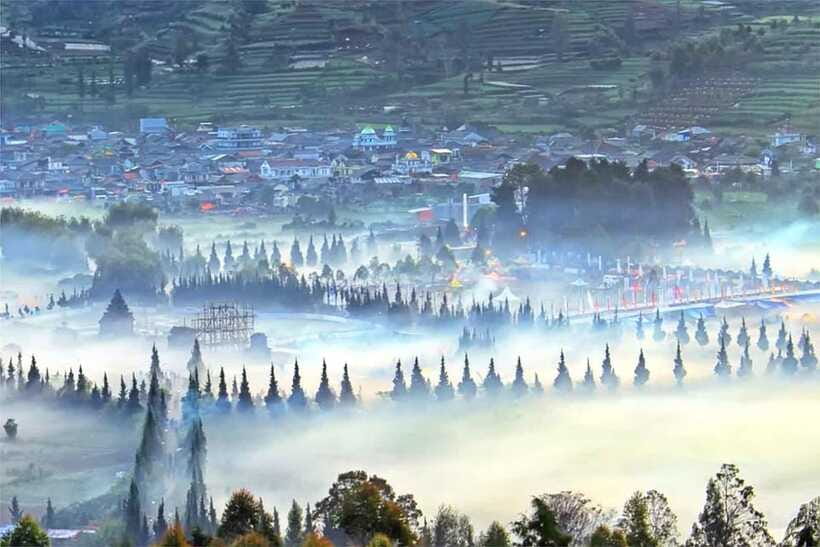
After the sulfur show, you head to the Arjuna Temple Complex. Here you can see eight small Hindu temples dating to the seventh century.
What makes this stop more than just a quick photo stop is the context you gain once you’re there. Multiple guides help explain the significance of the complex, including its role as an earlier prototype for later larger temple styles. It may be smaller than the famous names you might have heard, but it still reads as impressive, especially when you realize it comes from a much earlier period.
Also, the timing works. Because you’ve already done dawn and crater stops, the temple complex gives your senses a calmer landing. You can look closely at the shapes and materials without the same rush of “stand here now for the view.”
If you enjoy architecture and want a meaningful stop that still feels natural in a packed itinerary, this is the right balance.
Timing, Group Size, and Comfort on a 12-Hour Plan
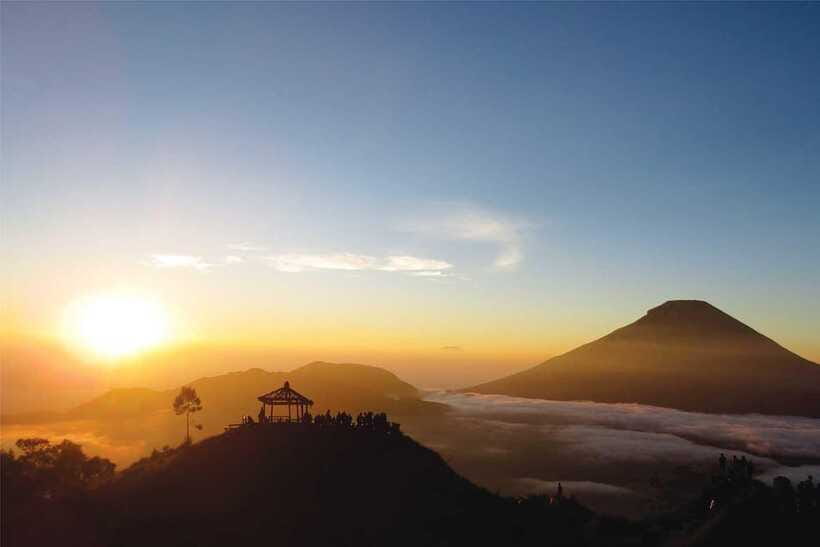
This tour is designed as a 12-hour guided loop, with hotel pickup at midnight and a return after you finish the sites. Group size is limited to 8 participants, which helps with pacing at viewpoints and on uneven ground.
Small groups are more than a marketing phrase here. Dieng is not just one attraction, it is multiple stops with different terrains. When the group is small, it is easier for the guide to keep everyone together without slowing down for every photo, and easier to adjust plans if weather changes.
Transport also matters for your comfort. The vehicle is rated highly, and you can feel why that matters when you are doing a long early drive. One review even mentions the ability to sleep during the ride, and that can turn the “midnight start” from a problem into just a setup.
There is a tradeoff, though. A small group tour still means you do not get to sleep in, and you do not get to linger at each site for hours. If you prefer slow travel, you might find this packed.
If you like structured days, where someone else handles the route and you just show up, you will probably feel satisfied by the end.
English-Speaking Guides: Ardhan, Yuni, and Himawan
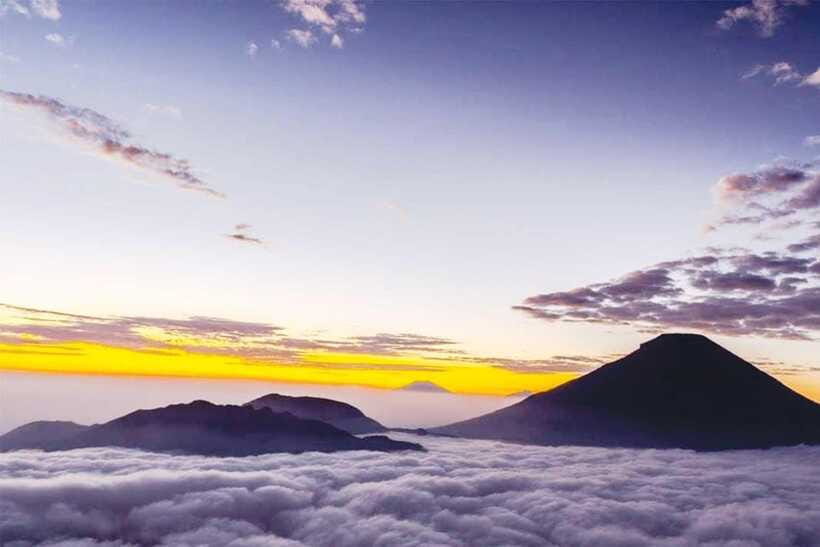
The biggest repeating theme in the experience quality is guide behavior. Ardhan is praised for attentiveness, safe driving, and smart sunrise planning. Himawan is remembered for friendliness and for doing well even when sunrise visibility was limited by weather.
Yuni gets a fun, practical mention that I think says a lot about the care level. This guide reportedly brought two chairs and a gas burner for coffee at sunrise, which turns waiting out in the cold or rainy dark into something more bearable and more social.
The value of a good English guide is not only translation. It is understanding why each stop matters. Here, that includes both volcanic sites and the historical temple complex, so your photos end up tied to meaning instead of just scenery.
If English guidance matters to you, the fact that the tour includes a live English guide is a real advantage. You can ask questions in real time, and you are not left piecing things together alone in the dust.
Price and Value for a $53 Guided Sunrise Day
At about $53 per person for a 12-hour, guided, entry-fee-included day trip, this is priced like a value-focused sunrise outing. The cost becomes easier to justify when you look at what you are paying for: early transport from Yogyakarta, a guide throughout multiple sites, and admission to everything on the route.
Yes, you could try to do Dieng on your own, but then you would be solving the coordination problem at midnight and the safety problem on uneven volcanic ground. You would also be handling entry fees and timing yourself without local viewpoint expertise.
So for many people, the “value” is that you get a full sampler of Dieng in one day with minimal logistics stress. And the high satisfaction rating suggests that the guide and transport factor is not random.
One cost detail to note: if you are outside the normal pickup area, there is an extra charge of IDR300,000 for airport-area pickup or drop-off. If your lodging is in central Yogyakarta, you are likely fine with the standard included pickup.
In short: at this price, you are buying convenience plus context. That is usually the right deal for a sunrise day when timing is everything.
Weather Reality: Rain, Fog, and What to Expect When Sunrise Changes
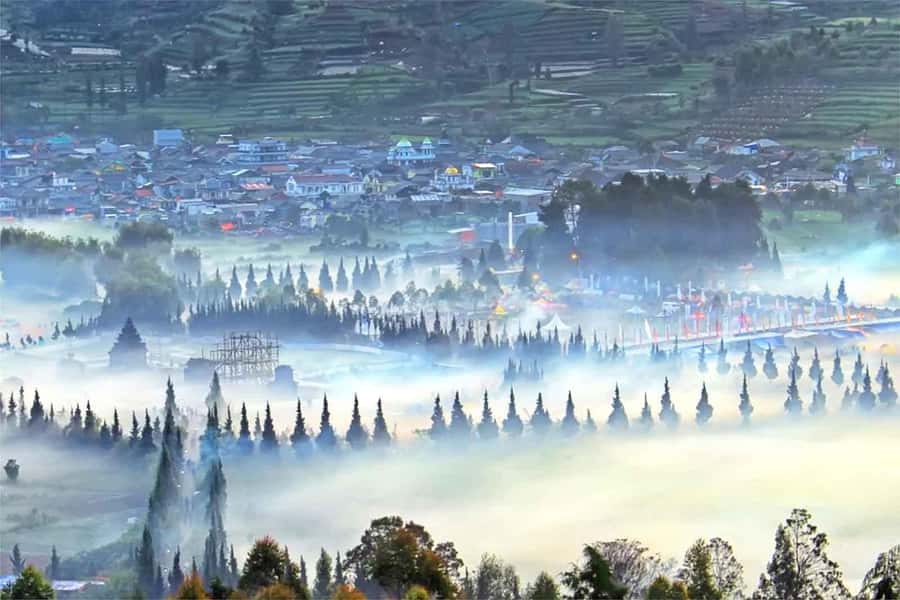
Dieng weather can be unpredictable. One traveler had rain all night and still found a good sunrise moment, while another experienced thick fog where sunrise did not happen but the mist created a weird, memorable scene.
Here is the practical takeaway: do not treat sunrise visibility as guaranteed. Treat it as the goal, and be ready for Plan B, meaning you still get the crater, the lake viewpoint, and the temples.
This is also why the guide’s job is so important. A good guide helps you stay safe during slippery descents, and helps you navigate paths when the terrain gets wet or slick. If you are traveling in rainy season or shoulder-season haze, you should value calm, experienced handling more than your “ideal sunrise” fantasy.
Who This Tour Suits Best, and Who Might Want Something Different
This is a great fit if you want a single-day Dieng hit with guidance, and if sunrise from Sikunir Hill is at the top of your list. It also works well for solo travelers since the group is small and guides are comfortable managing one-on-one needs. One traveler even did the tour alone because no one else signed up that day, and still had a good, friendly experience.
You might choose something else if you hate early starts, or if you want slow, unstructured wandering. A 12-hour format with multiple stops can feel intense, and the drive from Yogyakarta can add fatigue.
If you love volcanic terrain and steam and sulfur smells, Sikidang will be your favorite part. If you prefer quiet, shaded sites and long architecture sessions, Arjuna Temple Complex will hit best, and you may find the crater stop a bit too intense.
Should You Book This Dieng Plateau Sunrise Trip?
I’d book it if you want a guided, small-group route that hits the essentials: Sikunir Hill sunrise attempt, the lake viewpoint, Sikidang crater, and the Arjuna Temple Complex. The guide quality, especially how people describe safe driving and smart viewpoint choices, is a strong reason to pick this over trying to DIY at midnight.
I’d pause before booking if you are extremely sensitive to early mornings or you are expecting sunrise like a sure thing. Weather can shift fast, and fog or rain can change visibility. The upside is that even when sunrise does not go to plan, you still get a full stack of Dieng experiences in one day.
If you’re flexible, bring your best attitude, and treat the day as a guided adventure with real geothermal drama, this tour is likely to deliver exactly what you want from Dieng.
FAQ
What time do you get picked up from Yogyakarta?
Pickup starts at midnight from your hotel in Yogyakarta, then you travel to the Dieng Plateau for the sunrise hike and morning stops.
How large is the group for this Dieng sunrise trip?
The tour is a small group with a limit of 8 participants.
Is the tour guide available in English?
Yes. The tour includes a live tour guide who speaks English.
What stops are included during the 12 hours?
You’ll hike up to Sikunir Hill for sunrise, visit Batu Pandang Hill to view the Colourful Lake, go to Sikidang Crater (sulfur crater with bubbling mud and steam), and finish with the Arjuna Temple Complex.
Do you get hotel pickup and drop-off included?
Yes, hotel pickup and drop-off are included. If you need pickup or drop-off from the airport area, there is an extra cost of IDR300,000.
What if it is cloudy or raining during sunrise?
Sunrise visibility depends on conditions. On cloudy or foggy days, you might not see the sunrise as planned, but you still continue with the other stops, and the mist and weather can still make the experience feel unusual and memorable.
Just added around Yogyakarta
- Sunset at Prambanan & Ramayana Ballet (Ticket Guaranteed)★ 4.5 · 10 reviews
- Sunrise Setumbu, Borobudur structure climbing and Prambanan★ 4.7 · 4 reviews
- Sultan Palace, Water Castle & Prambanan Temple Guided Tour★ 4.6 · 4 reviews
- Yogyakarta: Jurang Tembelan, Pine Forest, and Timang Beach★ 4.5 · 20 reviews
- Prambanan Sunset (and Ramayana Ballet Option) Tour★ 3.3 · 8 reviews
- Yogyakarta: Prambanan Temple Morning Tour and Palace Tour★ 5.0 · 4 reviews
- Yogyakarta: Ramayana Show with Transfer, Entry Fee & Dinner★ 4.6 · 20 reviews
- Prambanan Temple Afternoon Tour★ 4.9 · 48 reviews
Guided, compared.
Sunrise Mount Batur Guided Hike with Breakfast
Read our review →
Guided ATV Quad Bike Jungle Adventure with Lunch
Read our review →
Mount Batur Sunrise Trek With Guide and Breakfast
Read our review →
Ayung River Guided Rafting Adventure with Lunch
Read our review →
Bali Zoo: Guided Ethical Elephant Care Experience
Read our review →
Customized Private Car Charter with Optional Guide
Read our review →
Bali/Lovina: Guided Dolphin Watching & Sunrise Boat Snorkel
Read our review →
Browse the lists this tour appears in