

REVIEW · WALKING TOURS
Ubud: 3-Hour Walking Tour with Lunch
Rice terraces, rituals, and a real lunch plan.
This Ubud 3-hour walking tour pairs a morning temple ceremony at a traditional griya compound with a guided walk through rice terraces and rural village lanes. I love how the guide connects what you see to daily Balinese life, and I also love the rice-field details, including the famous subak irrigation system. One heads-up: the path can be slippery and uneven in places, so good grip shoes matter.
My favorite part is that the day does not feel like a checklist. You start with cultural context, move through countryside on foot, stop for coffee and herbal tastings on a plantation, and then end at a local home with Indonesian lunch overlooking fields and temples. Guides like Wayan (sometimes listed as Wayan Sumerta or Wayung) tend to explain as you go, and several reviews highlight that they adjust to your needs, even helping with steeper or slippery bits.
In This Review
- Key moments I’d plan this tour around
- Entering Ubud on Foot, Not Just By Scooter
- Who this tour fits best
- Hotel Pickup Windows in Ubud, and Why the Morning Timing Matters
- The Griya Compound Blessing: Culture You Can Feel in Minutes
- What to expect at this start
- Temple Visits and Family Compounds: How the Tour Avoids the Tourist Script
- What makes this part worth your time
- Possible drawback to consider
- Rice Terrace Walking: Subak Irrigation, Working Fields, and Mud Reality
- The walk itself
- If you are hoping for cattle and farm details
- Wear for the conditions
- Crafts Workshop and Nature Stops: Waterfalls, Brief Breaks, and Perspective
- Coffee Plantation Tea Tasting: Herbal Flavors and How Bali Drinks Its History
- What makes the plantation stop feel worth it
- Lunch at a Local Home: Nasi Goreng, Fruit, and Field Views
- Why I like this kind of ending
- One fair caution
- What You Pay, and Why It Can Still Feel Like a Deal at $30
- Transfers from outside Ubud
- The biggest value point
- Practical Tips So Your Morning Stays Comfortable
- Bring these items
- Plan your pacing
- Expect some photo and stop time
- Should You Book This Ubud Walking Tour?
- FAQ
- Is this tour good for a short trip to Ubud?
- How much does the tour cost?
- Does the tour include hotel pickup and drop-off?
- What time does pickup happen in Ubud?
- What is included in the price?
- Is lunch included, and what kind of lunch is it?
- Do I need to bring anything?
- Will there be coffee and tea tasting?
- Is the tour guided in English?
- Can I cancel for a refund?
Key moments I’d plan this tour around
- Brahman priest blessing at a traditional griya family compound
- Temple and family-compound visits that explain how Balinese religion is lived
- Rice terrace walking with practical context on subak irrigation
- Craft stop plus a nature break that can include waterfalls
- Coffee plantation herbal tea and coffee tasting
- Indonesian lunch at a local home with views over fields and temples
Entering Ubud on Foot, Not Just By Scooter
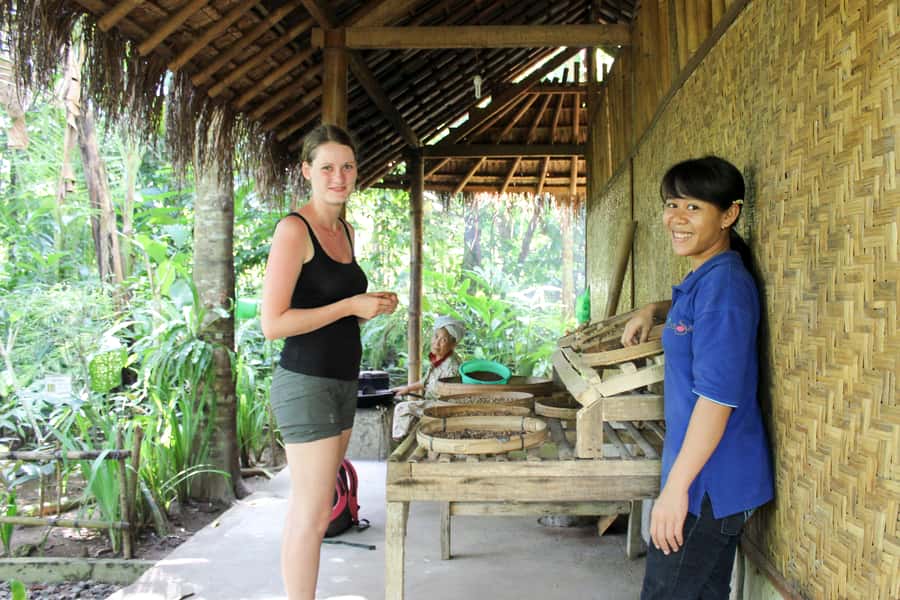
Ubud is one of those places where you can rack up scenic stops all day without really understanding the rhythm of life. This tour is built for the opposite. In about three hours, you get a walk-paced version of rural Bali, with just enough structure to keep you from wandering in circles.
The whole idea is simple: you start in a traditional family setting, you walk through working areas like rice paddies and jungle edges, and you finish with food in a home setting. For many people, this becomes the best first-day activity, because it gives you bearings fast. After that, even your later taxi rides feel more meaningful, because you know what you are looking at.
A few more Bali trips to compare
- Bali: Nusa Dua Underwater Sea Walking Experience
★ 4.8 · 69 reviews - Denpasar: Night Street Food Walking Tour
★ 4.5 · 60 reviews - Bali: 6-Hour UNESCO Sites Cultural Walking Tour
★ 4.7 · 17 reviews
Who this tour fits best
I’d point you toward this if you like:
- Cultural context, not just photos
- Short walks with frequent pauses for explanations
- Seeing rice cultivation up close in Ubud, not just from viewpoints
It is not the best fit if you want a long hike with nonstop walking, or if you have very limited mobility. The route is designed for a walk through countryside, and some steps can be slick.
Hotel Pickup Windows in Ubud, and Why the Morning Timing Matters
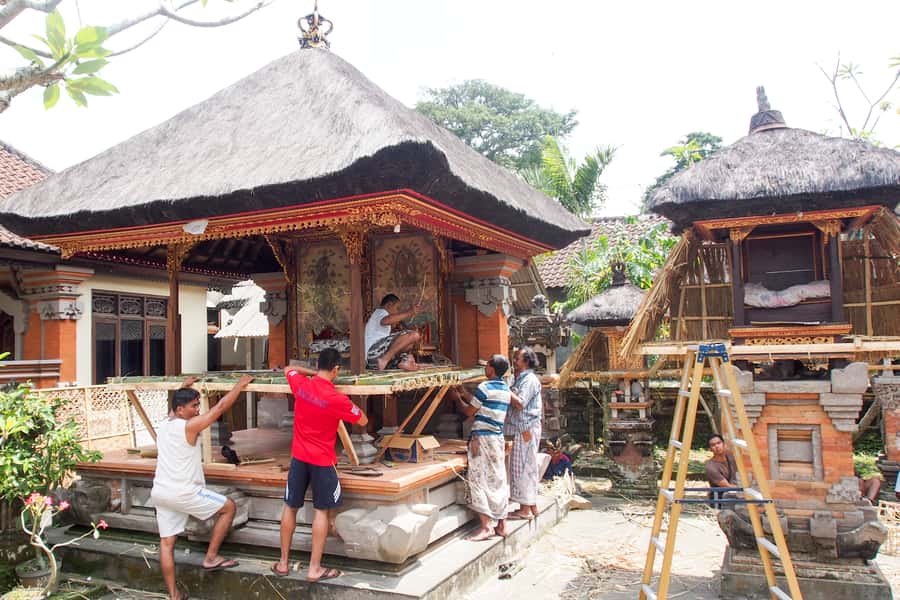
This starts in the morning, which is key in Ubud. You get cooler air, softer light for photos, and less heat stress for your shoes, water bottle, and patience. Hotel pickup is included if you stay in Ubud.
Here are the pickup windows you should plan around:
- Ubud: 08:00 to 08:30
- Kuta and Sanur areas: 07:30 to 08:00
- Jimbaran and Nusa Dua: 07:00 to 07:30
If you are staying outside Ubud, special arrangements are possible with extra planning, and you may pay an additional transfer fee (the listed amounts are IDR 300,000 from Sanur, IDR 400,000 from Kuta, and IDR 500,000 from Nusa Dua). This matters because it affects how smoothly the morning flows. In practice, you want to be ready at pickup time, not rolling out five minutes later.
The Griya Compound Blessing: Culture You Can Feel in Minutes
The tour begins with something rare for short activities: a special blessing connected to an authentic morning ceremony. You visit a traditional griya family compound where a Brahman priest conducts the ceremony.
This is the moment that changes the rest of the tour. Instead of jumping straight into rice views, you get a grounded explanation of why the spaces around you look the way they do, and why family compounds and temples are not separate from everyday life. In Bali, belief is not kept behind doors. It is visible in rituals, family roles, offerings, and the layout of home compounds.
Another side of Indonesia:
- Bali: Sunrise Mount Batur Guided Hike with Breakfast
★ 4.8 · 9,660 reviews - Bali: Mount Batur Sunrise Guided Hike and Natural Hot Spring
★ 4.8 · 9,284 reviews - Bali: Full-Day Instagram Highlights Tour
★ 4.8 · 7,817 reviews - Bali/Nusa Penida: East & West Highlights Full-Day Tour
★ 4.7 · 6,263 reviews
What to expect at this start
- You will be guided through what you are seeing
- You will likely spend time understanding the compound setting and the ceremony purpose
- You may see elements of family spirituality that are specific to the region
One practical note: ceremonies often involve respectful behaviors, so keep your camera ready but don’t treat it like a museum. Follow your guide’s cues.
Temple Visits and Family Compounds: How the Tour Avoids the Tourist Script

After the morning ceremony, you shift into visits at local temples and family compounds. These are not just decorative stops. The guide helps you understand how compounds work, how families organize their spaces, and how religion shapes day-to-day rhythms.
In several accounts, Wayan and other similarly named guides are praised for explaining culture and religion in clear English. That matters because Bali has layers, and a good guide turns those layers into something you can actually hold onto.
What makes this part worth your time
- Temples are explained in context, not as isolated monuments
- Family compounds help you understand Bali beyond rice terrace postcards
- You get a sense of how communities work together
Possible drawback to consider
This is a small local experience, so your enjoyment depends on guide focus. One review mentioned a guide using a phone frequently during the walk, which can make the tour feel a bit less personal. If you are someone who wants near-constant explanation, bring this in your mind as a possibility, even if most experiences reported are strongly attentive.
Rice Terrace Walking: Subak Irrigation, Working Fields, and Mud Reality
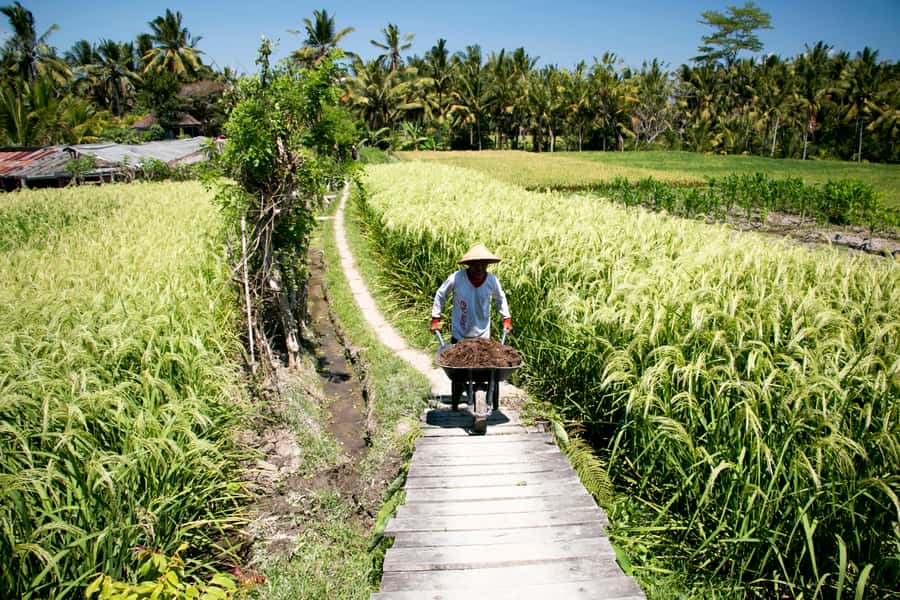
Now the tour becomes very Bali in the best way: you walk through rice terraces and rural lanes, with the guide explaining how rice is grown and how the subak irrigation system works.
Subak is one of those concepts that sounds technical until you see it in action. The tour turns it into everyday water management. You learn that rice cultivation is not just about fields and farmers, it is about coordinated water distribution and long-standing methods that keep agriculture running.
The walk itself
Expect a mix of:
- Rice paddy paths
- Jungle-edge sections
- Village lanes where daily life continues
Some reviews describe the walking as close to a 5 km outing, but not all of the tour is pure walking. There are stops for explanation, plus short transport segments depending on the exact route day-to-day.
If you are hoping for cattle and farm details
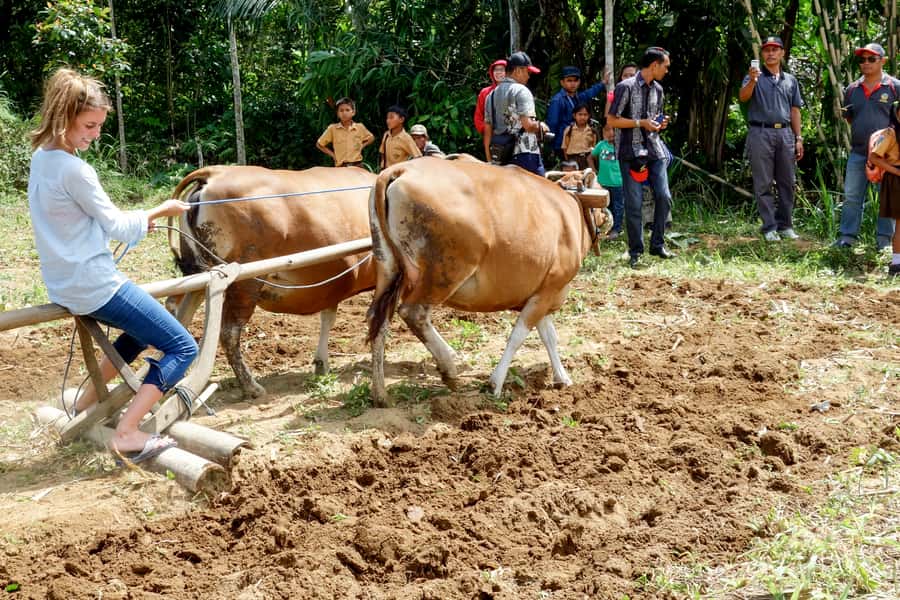
You might get lucky. The tour description sets the expectation that you may see cattle working through mud pulling a primitive plow. Even if you do not, you will still see different stages of rice fields and the reality of how busy this agricultural cycle is.
Wear for the conditions
This is not a flat promenade. Reviews repeatedly stress the need for shoes with grip. Some parts can be steep, slippery, or uneven, especially after rain. If you forget this, you will spend the morning thinking about your footing instead of the view.
Crafts Workshop and Nature Stops: Waterfalls, Brief Breaks, and Perspective
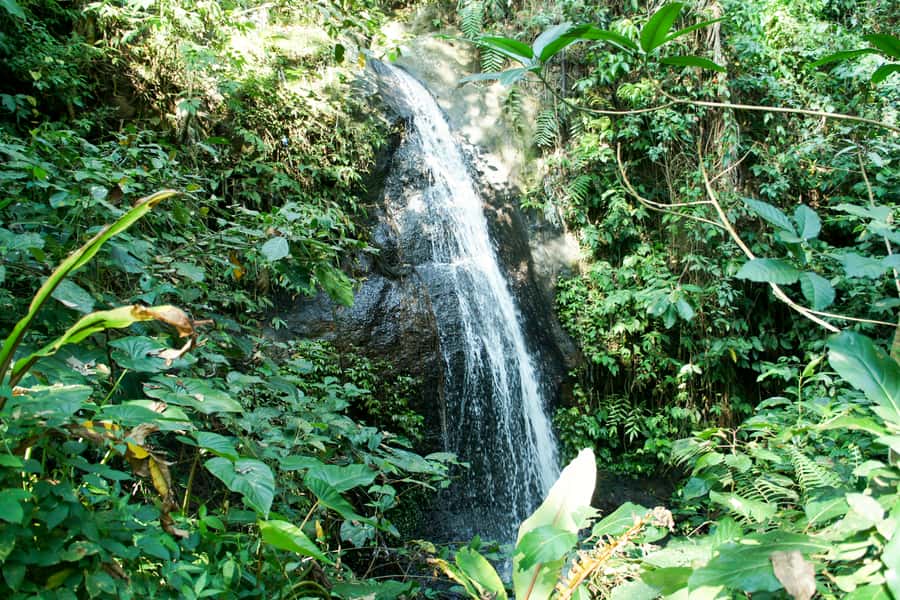
This tour typically includes a stop at a traditional craftsman workshop and also a nature stop that can include waterfalls.
Why these breaks work well in a short tour:
- Crafts show the handwork behind village life, not just farming
- Nature stops give your eyes and brain a rest between cultural and agricultural scenes
- Waterfalls are often a visual reward that makes the morning feel complete
The “exact” waterfall situation can vary, but the goal is consistent: you get a chance to connect with the outdoors and slow down for a few minutes. Bring your camera because the light in jungle areas can look dramatic at certain points, and several guides are noted for leading you to good spots.
Coffee Plantation Tea Tasting: Herbal Flavors and How Bali Drinks Its History
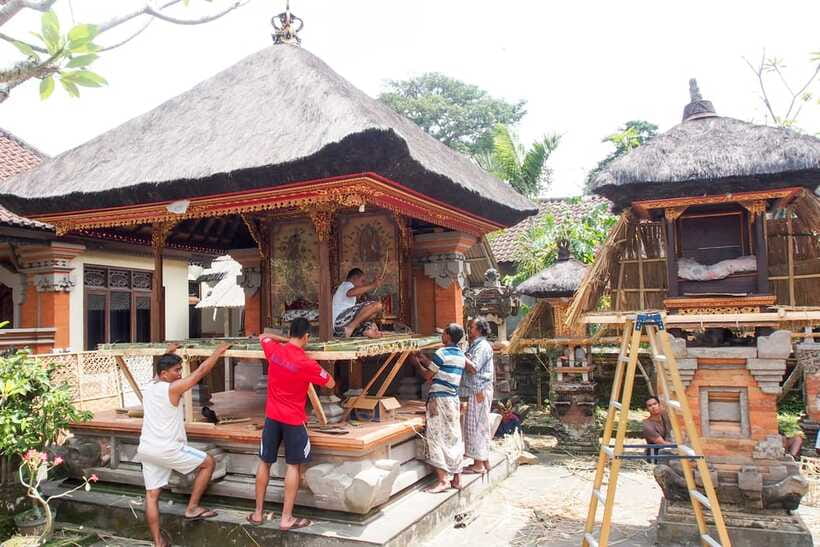
After the walk, the tour heads to a coffee plantation. This is where the morning turns from sightseeing into tasting.
You will sample different local herbal teas and coffees. That matters because Bali coffee culture is not only about coffee beans. It is also about herb blends and local flavors you will not find at an ordinary café back home.
What makes the plantation stop feel worth it
- You get a tasting format, not just a quick look
- You can learn how people grow and process ingredients
- You can pick up flavor favorites to replicate later, if you want
One review also mentioned an option to try a Bali swing, but also made it clear this was not included. So treat that as an optional add-on if you see it and you want the photo.
Lunch at a Local Home: Nasi Goreng, Fruit, and Field Views

The tour ends with lunch in the home of a local family. The meal is Indonesian, and you will likely eat with views over the fields and nearby temples.
Across reviews, lunch gets strong praise for being home-cooked. Examples include nasi goreng plus fresh fruits, and an overall sense that the meal is prepared specifically for visitors in a family setting, cooked by the guide’s wife in at least one account.
Why I like this kind of ending
A lot of tours throw you into a restaurant that could be anywhere. Here, lunch is the reward for the walking, and it closes the cultural loop. You see the countryside in motion, then you sit still inside a home that is part of that same landscape.
One fair caution
One review said the lunch was a little ordinary compared to the rest of the day. That can happen with any included meal. If you are very picky about food presentation or flavors, go in expecting tasty home-style Indonesian food, not fine dining.
What You Pay, and Why It Can Still Feel Like a Deal at $30
Let’s talk value. At $30 per person for a 3-hour morning tour, you are paying for:
- Hotel pickup and drop-off from Ubud
- Cold water and a cold face towel
- A snack
- Lunch at a local home
- A live English-speaking guide
You are also paying for time and access. Morning ceremonies, temple visits, plantation tasting, and home lunch are not things you can always reproduce easily on your own without planning.
Transfers from outside Ubud
If you are not in Ubud, your total cost can change because pickup from Sanur, Kuta, or Nusa Dua has listed additional fees. That is still often worth it, but do the math based on your hotel location.
The biggest value point
I’d say the best value is the guide’s explanations and the way the tour compresses a lot into a short morning. Reviews consistently highlight that guides like Wayan are friendly and answer questions. If you want a quick start in Bali with a story behind the scenery, this kind of tour tends to pay off.
Practical Tips So Your Morning Stays Comfortable
A three-hour walk can still feel long if you are sweaty, thirsty, or uncomfortable with your footing. Here is what you should take seriously before you go, based on the tour’s guidance and repeated review themes.
Bring these items
- Proper walking shoes with good grip
- Hat and sunblock
- Mosquito repellent
- Camera
- Cash (for any optional extras like coffee purchases or add-ons)
Cold water and a cool face towel are included, and that helps a lot on a humid morning. Still, water is not the only issue. Sun and bugs can take over fast if you are not prepared.
Plan your pacing
This tour includes steps and uneven ground. Wear shoes you trust. If you have a bad leg, tell the guide early. One review specifically praised Wayan for helping with steep and slippery sections, which suggests the guide can adjust pacing and support.
Expect some photo and stop time
Because there are ceremonies, temple visits, and tastings, it is not a constant walking event. That is good. It keeps the tour from feeling like a workout and makes it easier to learn and enjoy.
Should You Book This Ubud Walking Tour?
If your goal is to get a genuine feel for rural Bali fast, I think this tour is a strong choice. It gives you the cultural start (griya blessing), the practical countryside walk (rice terraces and subak irrigation), the sensory stop (coffee and herbal tea tasting), and a satisfying finish (Indonesian lunch at a local home).
Book it if you:
- Want an authentic morning in Ubud that includes more than just scenery
- Like guided explanations in English
- Prefer a short, well-paced countryside outing
Consider skipping or choosing something else if you:
- Need a fully flat, wheelchair-friendly route (this involves uneven paths)
- Hate slipping hazards and do not have proper shoes
- Expect a restaurant-style lunch experience, rather than home-style Indonesian food
If you want one simple way to decide, think about your first morning in Ubud. When you need context, this tour gives it. When you already know Bali rituals and farming basics, you might want a longer countryside hike. For most people, though, this strikes a great balance of culture, walking, and food.
FAQ
Is this tour good for a short trip to Ubud?
Yes. It is a 3-hour walking tour that focuses on Ubud’s rural life, including temples, rice terraces, a coffee plantation tasting, and lunch.
How much does the tour cost?
The price is listed as $30 per person.
Does the tour include hotel pickup and drop-off?
Pickup and drop-off are included for hotels in Ubud. If you stay outside Ubud, the tour lists additional transfer fees for Sanur, Kuta, and Nusa Dua.
What time does pickup happen in Ubud?
Pickup from Ubud is scheduled between 08:00 and 08:30.
What is included in the price?
Included items are cold water, a cold face towel, a snack, and lunch, plus hotel pickup and drop-off from Ubud and a live English tour guide.
Is lunch included, and what kind of lunch is it?
Lunch is included and is Indonesian. Reviews mention meals such as nasi goreng and fresh fruits.
Do I need to bring anything?
The tour advises bringing proper walking shoes, a hat, sunblock, mosquito repellent, a camera, and cash.
Will there be coffee and tea tasting?
Yes. The coffee plantation stop includes tasting different local herbal teas and coffees.
Is the tour guided in English?
Yes. The live tour guide is listed as English.
Can I cancel for a refund?
Free cancellation is offered up to 24 hours in advance for a full refund.
Just added around Bali
- Bali: 3-Day Private Gili Islands Snorkel Tour with Hotel★ 4.2 · 44 reviews
- Bali: 2-Day Sunset and Sunrise Camping at Mt. Batur★ 4.6 · 124 reviews
- Private Full-Day Tour to the Real Bali Swing and Ubud★ 4.5 · 9 reviews
- Ubud: Rice Terrace, Holy Water Temple & Waterfalls Trek Tour★ 4.9 · 115 reviews
- Sanur Village E-bike Tour: Family-Friendly Adventure★ 4.6 · 85 reviews
- Sanur: Horse Riding at the Bali Beach 30 minute ride★ 4.6 · 8 reviews
- Private Sekumpul Waterfall Hiking Tour★ 4.9 · 116 reviews
- Nusa Penida and Nusa Lembongan Island Tour★ 4.7 · 24 reviews
Walking Tours, compared.

Tetebatu Walking Tour – Rice Terraces, Waterfall & Monkey Forest
Read our review →
Sidemen Trekking: A Walk from a Different Perspective
Read our review →
Small-Group Walking and Food Tour by Night in Yogyakarta
Read our review →

Bali Private Food Walking Tour With Locals: The 10 Tastings
Read our review →
Ubud yoga, rice terrace walk and floating Breakfast tour
Read our review →
Jakarta Walking Tour: Explore Jakarta as the Locals do
Read our review →Browse the lists this tour appears in