
REVIEW · WALKING TOURS
Queen of the East (Old Batavia) Walking Tour
Old Batavia feels like a living map.
This private, English-guided walk stitches together Jakarta’s Dutch-era leftovers and the VOC spice-and-logistics story, with entrance fees included so you are not doing math every stop. I also like the built-in pacing, about 3 hours, with a practical pocket map and a cool little batik cloth fan for Jakarta’s warm, humid hours. One consideration: the port-side start at the maritime museum can feel like a heavy first chapter if you are mostly hungry for the best outdoor scenes.
You walk through real city edges, not just a museum circuit. The route links Sunda Kelapa Harbour, Batavia’s surviving walls, and the iconic Kota Intan drawbridge, then ends at a major history anchor, Fatahillah Museum. If you like photos and short, clear explanations as you move, this works well.
Because this is still a walking tour, plan for humidity and 4 to 4.5 km on your feet. Bring an umbrella if rain shows up, and note there is no tour on Mondays since museums are closed.
In This Review
- Key moments on the route
- Queen of the East tour, what Old Batavia is really about
- Price and value check for a $67.66 private guided walk
- Start at Museum Bahari, get your bearings fast for Sunda Kelapa
- The maritime museum stop, when it’s worth it and when it isn’t
- Kota Tua streets, surviving walls, and warehouse edges
- Kota Intan drawbridge, a 400-year-old crossing story
- Dutch colonial planning and the Toko Merah stop
- Fatahillah Museum finale, antiques plus an underground dungeon
- Walking logistics in Jakarta, heat, rain, and the 4 to 4.5 km rhythm
- Who this Old Batavia walk suits best
- Booking timing, Monday closures, and how to plan your day
- Should you book Queen of the East walking tour?
- FAQ
- How long is the Queen of the East (Old Batavia) Walking Tour?
- Where does the tour start and end?
- What is included in the price?
- Are meals included?
- Is the tour private?
- How much walking is involved?
- Does the tour run on Mondays?
- What should I bring for the weather?
- What is the cancellation policy?
Key moments on the route
- Museum Bahari start near Sunda Kelapa, with VOC spice-warehouse context
- Kota Intan drawbridge crossing that is nearly 400 years old
- Surviving Batavia city wall and the East Warehouse area
- Dutch colonial planning and architecture from the 17th to 18th centuries
- Fatahillah Museum finale with 17th to 19th century antiques plus an underground dungeon
Queen of the East tour, what Old Batavia is really about
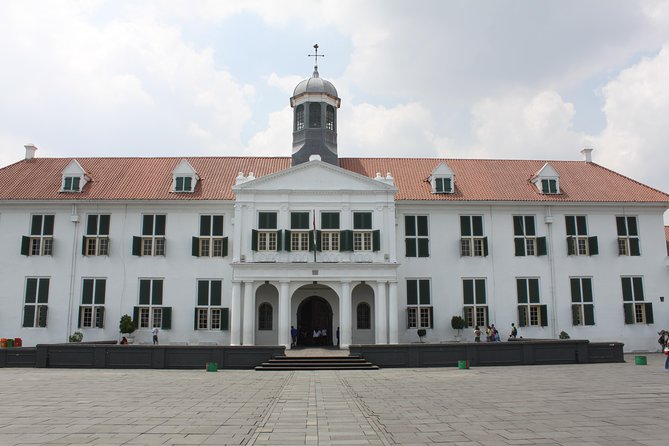
Old Batavia, now part of Jakarta’s Old Town area (Kota Tua), is not just “old buildings.” It is the layout of an economy. In the Dutch Colonial era, the city functioned around trade routes, warehouses, and a tight system to move spices and goods. This tour is built to help you see that logic while you walk.
The big theme you get is the VOC connection, the Dutch East India Company that turned the region into a global trading hub. Instead of treating VOC as a history word, you get it placed into physical spots: the warehouse story at the maritime museum, the surviving walls, the city edge near warehouses, and the drawbridge that helped manage movement. Even if you only catch a few names and dates, the places make those facts stick.
It also helps that this is a private tour for 1 to 15 people, so your guide can keep the pace comfortable and answer your questions as you go. You are not stuck waiting for a large group shuffle at every photo stop.
A few more Jakarta trips to compare
- Jakarta Walking Tour: Explore Jakarta as the Locals do
★ 4.8 · 82 reviews - Jakarta Walking Tour with Public Transportation Visiting Sites
★ 5.0 · 14 reviews - Jakarta Social and Political Walk
★ 4.8 · 6 reviews
Price and value check for a $67.66 private guided walk
At $67.66 per person, the price is not low, but it is structured in a way that often feels fair for this part of town. You get an English-speaking guide, mineral water, a pocket map, and an included batik cloth fan. More important, you also get entrance fees built in for the stops where tickets matter.
Here is the value equation that matters in practice:
- If you would otherwise pay separate admission tickets, the included entrance fees can make the total feel much less painful.
- If you prefer explanations while you walk, the guide is the product, not just transportation.
- The pocket map and fan are small perks, but they solve real problems in Jakarta, heat and navigation.
If you are the kind of traveler who likes to wander alone and read at your own pace, you might question the cost. But if you want the VOC-era story translated into street-level context, the guided format is where the money goes.
Start at Museum Bahari, get your bearings fast for Sunda Kelapa
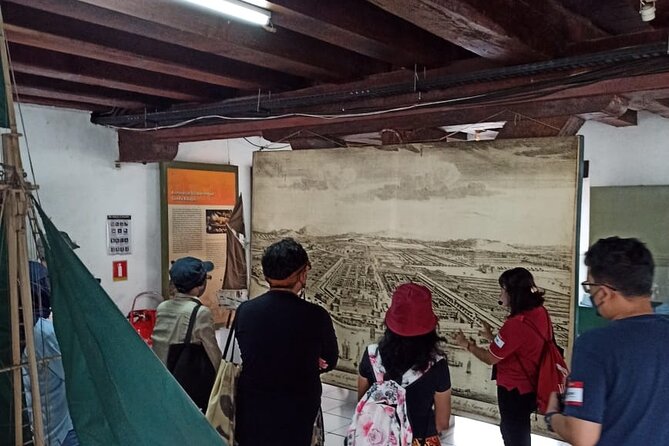
The tour begins at the Museum Bahari, at the Oud Uitkijkpost Bahari nautical museum area near Sunda Kelapa Harbour. Your first stop is about orientation. The guide sets the VOC-era scene by tying it to the spice and shipping world that made this coastline matter.
Even before you see much walking architecture, you get that viewpoint feeling, you look toward the harbour area from above, then you hear how the VOC warehouse system supported shipping logistics. That “trade engine” framing is useful because it gives you a reason to pay attention later when the route turns to walls, warehouses, and crossings.
Practical tip: start hydrating here. Mineral water is included, but it is still smart to sip early. In warm, humid weather, that first 20 to 30 minutes can quietly sap your energy.
The maritime museum stop, when it’s worth it and when it isn’t
The Museum Bahari portion is a decent history primer, especially if you like maritime and warehouse context. That said, if your main goal is the most photogenic outdoor relics, this stop can feel like extra indoor time at the front.
A good way to decide: if you enjoy the “how trade worked” angle, you will likely enjoy the museum’s framing. If you are mainly chasing the most dramatic old-world street scenes, you may wish the itinerary gave you a bit more time outdoors earlier. Either way, go in with the right expectation: this segment is there to load your mental background before the walk gets more architectural.
Another side of Indonesia:
- Jakarta: Volcano, Tea/Rice Fields, Hot Spring, Local Food
★ 4.9 · 515 reviews - Active Volcano, Rice Field, Hot Spring, Fruit market, Tea Plantation with Lunch
★ 5.0 · 513 reviews - Private Full-Day Guided Tour: Explore Jakarta’s Top Highlights
★ 5.0 · 338 reviews - Jakarta Half-Day Guided Tour with a Private Fun Local Host
★ 5.0 · 292 reviews
Kota Tua streets, surviving walls, and warehouse edges
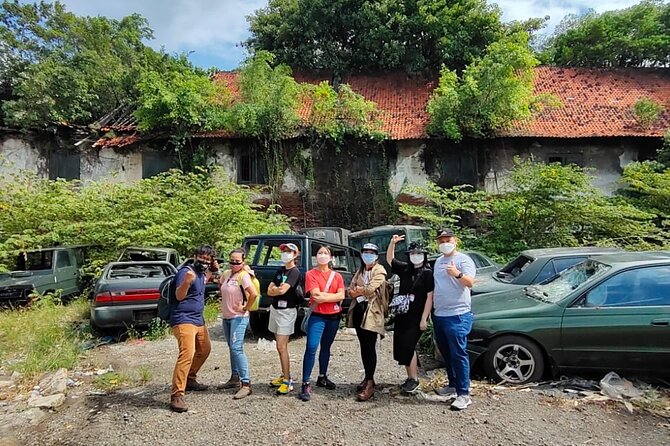
After the museum start, the route shifts into the Old Batavia street grid. You visit the area where Batavia’s old city wall still exists, near the Eastern Warehouse zone. This is the kind of stop where a guide matters, because the wall is not always labeled in a way that shouts its importance.
What you are really looking for is continuity. In many “old town” places, the past is rebuilt into a theme park. Here, you are seeing fragments and edges that survived, and the guide helps connect them to how Batavia functioned.
This is also where you should slow down for photos. The wall and warehouse surroundings can be easy to miss if you are simply walking and scanning. When you hit this section, pause when the guide points out details, like what the location implies about movement and storage.
Kota Intan drawbridge, a 400-year-old crossing story
One of the most memorable parts is the Kota Intan Bridge area, where you pass through the nearly 400 years old Kota Intan drawbridge. This is not just a photo stop. The bridge story links back to logistics, how goods and people moved across boundaries, and why controlling access mattered.
The drawbridge is iconic because it is both functional history and human-scale history. You can picture the crossing, imagine the flow of activity, and understand why the VOC would care. Even if you are not a “bridge person,” the guide’s explanation helps you read it as a piece of a much larger trade system.
Timing note: your walk-through here is short. Make your photos count. Aim for one wide shot, then one close detail shot, then keep moving so you do not miss the next architecture cues.
Dutch colonial planning and the Toko Merah stop
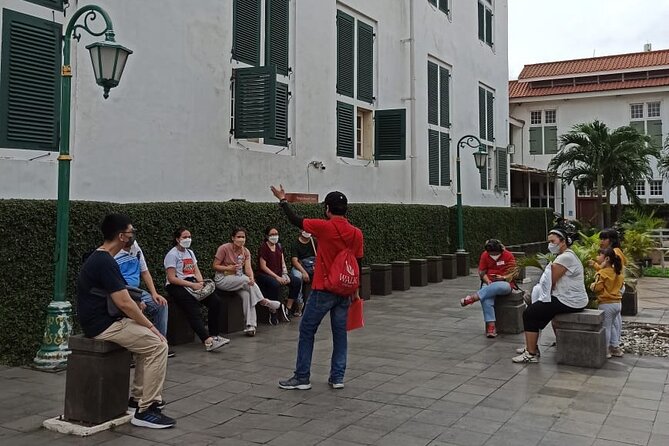
As the walk continues, you move through streets shaped by Dutch urban planning from the 17th to 18th centuries. This is where you start seeing “system thinking” in brick and street alignment. The guide points out how old Batavia was designed around control, commerce, and structure.
A specific highlight in this phase is the reference to the Old Governor General’s mansion known as Toko Merah. Even if you do not spend a long time at that exact landmark, the guide uses it as a way to explain power and status in the colonial era. It helps you understand why the trading engine needed more than warehouses. It needed authority, administration, and a visible hierarchy.
If you like architecture, you will appreciate how this part of the tour gives you a framework. You stop, you look, you connect shapes and spacing to historical purpose. It turns a normal walk into something you can actually interpret.
Fatahillah Museum finale, antiques plus an underground dungeon
The tour ends at the Jakarta History Museum (Fatahillah Museum) in the Taman Fatahillah area. This is a strong way to finish because it concentrates the story you heard on the streets into collections you can actually view.
You get time for the main museum galleries with antiques from the 17th to 19th centuries. You also visit an underground dungeon. That underground piece matters because it adds a harsher layer to the history, and it gives the VOC and colonial story more emotional weight than street architecture alone.
Your final stop is about 40 minutes. Do not plan to “see everything” in that time. Instead, pick a couple of points of interest, listen for the guide’s key explanations, and use the last minutes for photos. If you feel your feet tightening up, keep your attention on the big, guided highlights rather than trying to inspect every single display.
Walking logistics in Jakarta, heat, rain, and the 4 to 4.5 km rhythm
This tour is about 4 to 4.5 km of walking over roughly 3 hours. That distance sounds straightforward, but Jakarta’s weather changes how it feels. It is warm and humid most of the year, so comfortable shoes matter more than you think.
Also plan for rain from October to April. The tour runs in sunny or rainy conditions, so bring an umbrella. If rain starts, the umbrella keeps you moving, and it helps you avoid the “stop, dry off, start over” cycle that can ruin your pace.
One more thing: the route is designed as a set flow from harbour-area history to Old Town walls and then into Fatahillah Museum. If you are prone to tiring out, take quick recovery sips of water during transitions, not only when you sit down.
Who this Old Batavia walk suits best
This tour is a great fit for you if:
- You want an English-speaking guide to translate Dutch and VOC-era history into street-level meaning.
- You like photo-friendly landmarks like the Kota Intan drawbridge and surviving city wall fragments.
- You want museums included without the hassle of buying tickets and guessing opening hours on your own.
It may be less ideal if:
- You hate walking through city blocks and prefer short, single-location visits.
- You are mainly looking for the most cinematic outdoor sights and you tend to skip museums unless the collection is a big draw.
It is also a smart option for travelers who want a more personal experience. Since it is private for your group, you are not stuck with the hardest pace for someone else.
Booking timing, Monday closures, and how to plan your day
This tour is commonly booked about 30 days in advance, so if you are traveling in peak season, aim earlier rather than later.
Museums closures matter here. There is no tour on Monday because all museums are closed. Since your itinerary includes museum time, do not plan this on a Monday unless you are ready to switch days.
The tour also ends at the Jakarta History Museum, so it naturally slots into an Old Town afternoon. You can keep exploring afterward, but I suggest you save your “extra wandering” for after you finish the guided route. Your brain will thank you.
Should you book Queen of the East walking tour?
Book it if you want a guided, street-to-museum experience that makes Old Batavia feel logical. The value is strongest when you care about the VOC story and you appreciate having entrance fees handled, plus those small comfort extras like mineral water and a pocket map.
Think twice if you are mostly after long, scenic outdoor time. The museum start at Museum Bahari may be a slower entry point, and the walking includes stretches where you might want more guidance on what to notice.
My bottom line: this is a solid choice for anyone who likes history that you can point to in front of you. If you go in expecting a structured 3-hour story walk, not a relaxed sightseeing stroll, you are likely to come away with a much clearer sense of how Jakarta’s Old Town became the VOC engine room.
FAQ
How long is the Queen of the East (Old Batavia) Walking Tour?
The tour lasts about 3 hours.
Where does the tour start and end?
It starts at Museum Oud Uitkijkpost Bahari, Jalan Pakin No. 2, Penjaringan, North Jakarta, and it ends at Jakarta History Museum, Taman Fatahillah No. 1, Pinangsia, Taman Sari, West Jakarta.
What is included in the price?
The price includes an English-speaking guide, mineral water, a pocket map, a private tour setup, entrance fees, and a batik cloth fan.
Are meals included?
No, meals are not included.
Is the tour private?
Yes. It is a private tour/activity, with only your group participating.
How much walking is involved?
Expect about 4 to 4.5 km of walking.
Does the tour run on Mondays?
No. There is no tour on Monday because museums are closed.
What should I bring for the weather?
Wear comfortable clothes and shoes. Bring an umbrella in case it rains, especially during the rainy season from October to April.
What is the cancellation policy?
The experience is non-refundable and cannot be changed for any reason. If you cancel or ask for an amendment, the amount you paid is not refunded.
Just added around Jakarta
- The Secret Society of Batavia – Walking Tour★ 5.0 · 4 reviews
- Soekarno Hatta International Airport by Plaza Premium Lounge★ 4.0 · 46 reviews
- Volcano and Domas Crater of Hot Stony Bubble from Jakarta Lunch★ 5.0 · 23 reviews
- Situ Gunung Waterfall & Suspension Bridge Sukabumi start Jakarta★ 4.5 · 13 reviews
- Batik Heritage Introduction Class with Lunch & Souvenir★ 5.0 · 8 reviews
- Jakarta Indonesian Culture in half Day★ 5.0 · 50 reviews
- DAY TRIP TO BANDUNG CITY From Jakarta★ 5.0 · 9 reviews
- Private Full Day Tour of Jakarta with Hotel Pickup★ 4.0 · 13 reviews
Walking Tours, compared.


Tetebatu Walking Tour – Rice Terraces, Waterfall & Monkey Forest
Read our review →
Sidemen Trekking: A Walk from a Different Perspective
Read our review →
Small-Group Walking and Food Tour by Night in Yogyakarta
Read our review →

Bali Private Food Walking Tour With Locals: The 10 Tastings
Read our review →Sidemen Trekking: A Walk from a Different Perspective
Read our review →
Ubud yoga, rice terrace walk and floating Breakfast tour
Read our review →Browse the lists this tour appears in