
REVIEW · COOKING CLASSES
Bali Cooking Class with Culture Experience
A morning market plus cooking class in a family home. This Bali food experience in Ubud pairs ingredient shopping with chef-led lessons, and it has real cultural context along the way. I love the morning market ingredient hunt led by the Family Host, and I especially like that you leave with an illustrated instructional booklet you can actually use later. The main tradeoff is the early start at 7:30 am, so plan your morning accordingly.
If you want a small-group class, this one caps at 12 people, and pickup is offered from central Ubud hotels. You’ll move from a market visit to the cooking pavilion, then sit down to the lunch you prepared, with time for coffee or tea and those crisp pisang goreng (banana fritters).
In This Review
- Key highlights at Lobong Culinary Experience
- Why the 7:30 am start actually helps your cooking class
- Coffee, banana fritters, and meeting the people behind the lesson
- The morning market: where “ingredients” become a lesson
- From market to pavilion: how the cooking session is structured
- What you actually cook and why Balinese flavors feel different
- Lunch you prepare, plus the gratitude ritual
- What you take home: the illustrated booklet that makes this worth it
- Transfers, small group size, and timing in central Ubud
- Price and value: is $62 a fair deal for a full menu?
- Should you book this Bali cooking class with culture?
- FAQ
- Where is the Bali cooking class located?
- How long is the cooking class experience?
- What time does the experience start?
- Is pickup included?
- Do I need to bring a ticket to join?
- What happens at the beginning of the experience?
- What will I cook during the class?
- Do you provide lunch and food to eat?
- How big is the group?
- Can I cancel for free?
Key highlights at Lobong Culinary Experience
- Family Host market shopping: fresh herbs, spices, fruits, and vegetables, plus explanations you can follow back home
- Coffee or tea, plus pisang goreng: a warm, tasty start before you cook
- Chef-led full menu practice: appetizer, multiple entrees, side dishes, and dessert
- Home setting and culture notes: learn about daily life, families, and home shrines as you cook
- Illustrated take-home booklet: recipes, directions, photos, tips, and space for your own notes
Why the 7:30 am start actually helps your cooking class
In Ubud, timing matters. Starting around 7:30 am means you catch a typical morning market at its most active, with better selection of herbs, spices, fruits, and vegetables. You’re also more likely to learn ingredient choices while everything still feels fresh and cutting boards are ready to roll.
You should also know this is a half-day commitment, about 6 hours total. That’s long enough to cook multiple dishes and eat well, but short enough that you can still plan other activities in Ubud later the same day.
The biggest practical upside of the early start is focus. Once you arrive, you’re not rushing between stops. You get to shop, snack, cook, and then eat what you made without the whole day feeling like one long sprint.
More Cooking Classes in Ubud
- Ubud Cooking Class Bali with Balinese Chef
★ 5.0 · 1,609 reviews - Ubud: Cooking Class with Transfers and Optional Market Visit
★ 4.9 · 824 reviews - PRIVATE Authentic Balinese Cooking Class in Ubud at Putu’s Home
★ 5.0 · 644 reviews
Coffee, banana fritters, and meeting the people behind the lesson
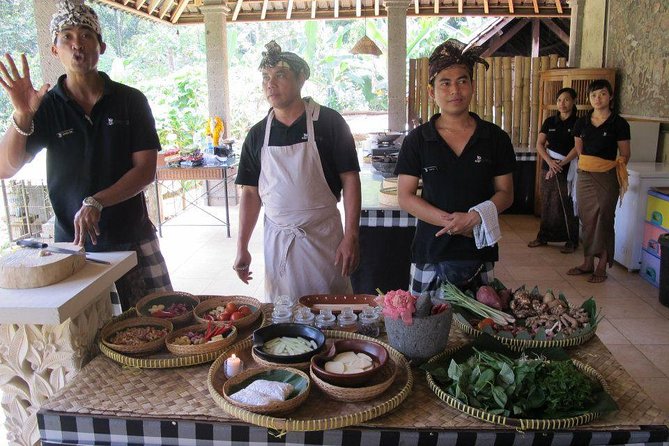
Your experience begins with a meet-and-greet at home base. First, your Family Host goes through the market shopping and then you’re welcomed by Dewa with a hot drink, either coffee or tea, or mineral water.
Then comes the snack: pisang goreng, fresh-made crispy banana fritters. It’s a small moment, but it sets the tone. You’re not just showing up to learn techniques, you’re being fed, and you’re learning in a home environment rather than a warehouse kitchen.
While you sip and nibble, the group discusses Balinese life. The setting also includes reminders of how everyday routines connect to food, including families and home shrines. This isn’t presented as a lecture. It’s part of the rhythm of the morning, so you start to understand the ingredients in context.
The morning market: where “ingredients” become a lesson
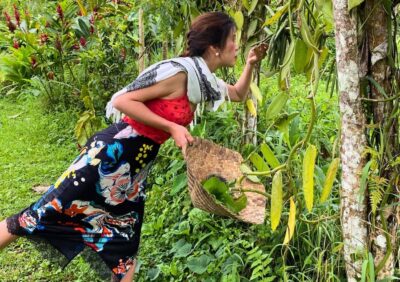
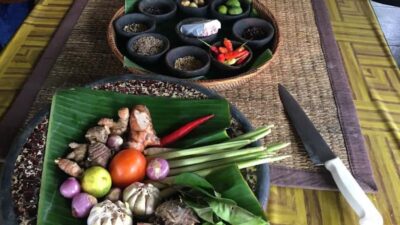
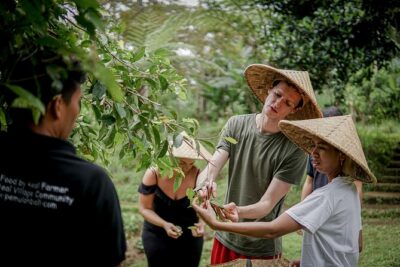
This class includes a market tour where you’ll tour a typical morning market and shop for what you’ll cook. Your Family Host buys the ingredients and explains what you’re looking at: fresh herbs, spices, fruits, and vegetables.
This part is more valuable than it sounds. In a lot of cooking classes, you get a pile of pre-chosen items and a recipe card. Here, you’re practicing how to choose ingredients and how to think about flavor. You’ll smell herbs, notice differences in fresh produce, and connect those choices to the cooking later at the pavilion.
From a practical standpoint, you’ll be leaving with a better mental map of what to buy when you’re no longer in Ubud. Even if you can’t find the exact same items in your local store, you’ll know what role each ingredient plays in the final dish.
Also, because it’s a small-group experience (up to 12 people), you’re more likely to ask questions and get direct explanations instead of repeating yourself to a rushed guide.
From market to pavilion: how the cooking session is structured
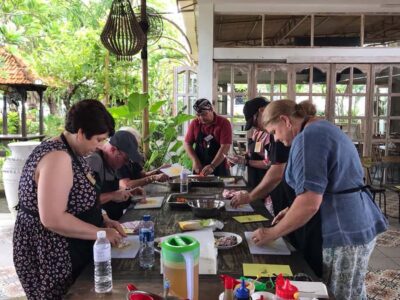
Once market shopping wraps, the group moves to the cooking pavilion. Staff double-check that the pavilion is ready, and you get set up with an illustrated instructional gift booklet.
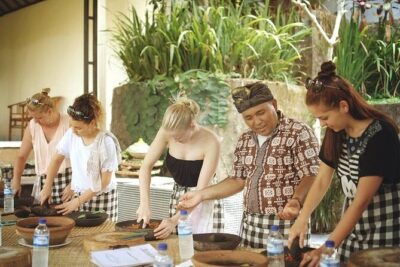
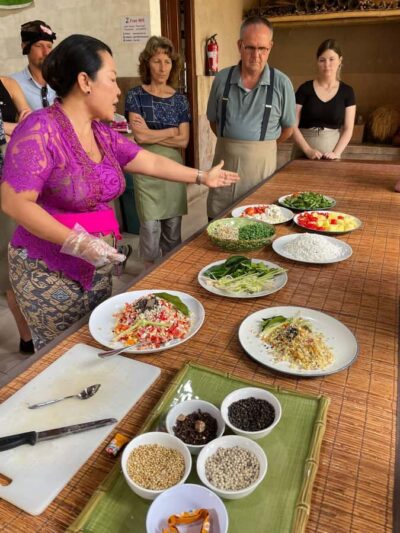
Then the cooking starts. You’ll prepare a complete menu that includes:
- an appetizer
- multiple traditional entrees
- accompanying side dishes
- dessert
The layout matters here. Cooking a full menu lets you practice Balinese flavor logic instead of just making one standout dish. You’ll get a sense of how flavors build across courses, and how side dishes change the way entrees taste.
If you’re a beginner, don’t worry. Your booklet includes the menu, recipes, directions, photos, tips, and it even leaves space for personal notes. That’s a quiet superpower. It helps you remember what to do when you’re back home and your ingredients look slightly different.
And if you’re a more confident cook, you’ll still enjoy it, because the session focuses on ingredient handling and culture context, not just copying a single recipe.
Another side of Indonesia:
- All-Inclusive Ubud Private Tour
★ 5.0 · 14,344 reviews - Best of Ubud Full-Day Tour with Jungle Swing
★ 5.0 · 8,571 reviews - Ubud: Monkey Forest, Jungle Swing, Rice Terrace, and Water Temple
★ 5.0 · 7,160 reviews - Ubud: Waterfalls, Water Temple & Rice Terraces Private Tour
★ 5.0 · 5,484 reviews
What you actually cook and why Balinese flavors feel different
The menu covers more than one course, and that gives you more chances to learn. You’re not only chasing taste, you’re building technique and confidence.
Balinese cooking often leans on fresh herbs, spices, and the way ingredients are combined rather than relying on one heavy sauce. Because you start with market shopping, the cooking feels like it follows a logic you helped create, not a random list of steps.
Here’s what you can expect from the structure:
- Appetizer prep helps you learn early flavor building
- Multiple entrees lets you practice how seasoning changes across dishes
- Side dishes are where balance comes in, so you understand why the meal works as a whole
- Dessert gives you a complete ending to the experience, not just a mid-class sugar break
Even if you forget a specific step, the take-home booklet and the repeated pattern of courses should help you rebuild. That’s the difference between a class that feels like a show and one that teaches you how to recreate the results.
Also, the class pacing includes breaks built around the food you’re eating. The hot drink and banana fritters start you off, and then lunch and dessert close the loop.
Lunch you prepare, plus the gratitude ritual
After you cook, you eat what you made. This is not a separate restaurant meal tacked on at the end. Lunch is part of the learning flow.
The cultural element matters too. There’s a short ritual of gratitude after a traditional meal. In practical terms, it gives the experience a sense of completion. Food isn’t treated like a product you consume and forget, it’s treated like something you take part in.
This is also one of the best parts of the day for people who care about more than recipes. You get to watch how gratitude and everyday home life connect to the meal. That helps you understand why certain ingredients and dishes carry meaning beyond flavor alone.
What you take home: the illustrated booklet that makes this worth it
At the end of the class, you don’t just leave with full bellies. You leave with a take-home instructional booklet that’s built for repeating the dishes later.
The booklet includes:
- menu and recipes
- directions and photos
- tips
- space for notes
Photos and directions are more useful than you might think. When you’re making Balinese dishes at home, small differences in ingredient freshness can affect texture and timing. Having photos and notes helps you troubleshoot without guessing.
Tips also matter for people who cook casually. You’ll often learn how to adjust flavor based on what you find locally, instead of getting stuck because you can’t find an ingredient in your area.
This is where the value really shows. Many cooking classes are fun in the moment but fade fast when you get home. This one is designed to stay on your kitchen counter.
Transfers, small group size, and timing in central Ubud
This experience offers round-trip transfers from central Ubud hotels, which removes one of the biggest travel headaches. You do not need to figure out local transport mid-morning with wet markets and a heavy appetite.
The tour also runs near public transportation, which is helpful if you’re staying outside the center and want a fallback plan. Still, pickup is the easiest option if it’s available for your hotel area.
The group limit is 12 travelers, which keeps things from turning into a conveyor belt. In a cooking class, smaller group size helps in real ways:
- more chances to ask questions
- more hands-on attention
- less waiting around when ingredients or tools are shared
The day is also tight enough that you get a complete flow: market, snack, cooking, lunch, dessert, and instructions to bring home. If you’re planning other Ubud activities, this timing helps you build a day that doesn’t fall apart.
Price and value: is $62 a fair deal for a full menu?
At $62, you’re paying for more than a recipe lesson. You’re getting:
- a market tour and ingredient shopping
- chef-led cooking for an entire menu (not just one dish)
- breakfast snack and lunch you prepare
- dessert
- hot drinks at the start
- round-trip transfers from central Ubud hotels
- the illustrated booklet with recipes, directions, photos, and tips
- a small-group setting
When you break it down, it feels more like a guided food workshop than a typical tourist meal. Market shopping and transfers alone would likely cost extra on their own, especially if you’re counting time.
The course length, about 6 hours, is also important. You’re not rushing through a couple steps and leaving. You’re cooking multiple courses, and then you eat the results. That makes the class feel complete.
One last angle: you’re also buying cultural context, not only cooking technique. Learning about family life and home shrines while you cook helps the whole experience make sense, which makes it more satisfying than a generic cooking demo.
If you love food with a story, this price can feel like a bargain. If you just want the simplest recipe to recreate one dish, it might be more than you need. But for most people who enjoy cooking and want more than one dish, it’s well matched.
Should you book this Bali cooking class with culture?
Book it if you want a morning market to full-menu cooking experience in Ubud, with a real chef-led structure and a take-home booklet that supports cooking after you return home. This is especially good for first-time visitors who want more meaning than just sightseeing, and for people who like learning ingredients in context, not just following steps.
Skip it or choose a different option if you hate early mornings. The 7:30 am start can be tough if you’re planning late nights. Also, if you’re only interested in learning one recipe, you might find the multi-course menu slightly more than you need.
Before you go, bring a practical mindset: expect to shop, smell herbs and spices, cook several dishes, and then eat a full lunch plus dessert. If you show up ready to participate, this one has the best chance of becoming a repeat-in-your-kitchen experience.
FAQ
Where is the Bali cooking class located?
The experience is in Ubud, Indonesia.
How long is the cooking class experience?
It lasts about 6 hours.
What time does the experience start?
The start time is 7:30 am.
Is pickup included?
Yes, pickup is offered from central Ubud hotels, with round-trip transfers included.
Do I need to bring a ticket to join?
You’ll receive a mobile ticket.
What happens at the beginning of the experience?
You start with a local morning market visit where a Family Host purchases and explains fresh herbs, spices, fruits, and vegetables. You’re also welcomed with a hot drink and pisang goreng (banana fritters).
What will I cook during the class?
You’ll prepare a full menu that includes an appetizer, multiple traditional entrees, side dishes, and dessert.
Do you provide lunch and food to eat?
Yes. You enjoy a breakfast snack and then a lunch you’ve prepared, followed by your freshly made dessert.
How big is the group?
The class is limited to a maximum of 12 travelers.
Can I cancel for free?
Yes, free cancellation is available. You can cancel up to 24 hours in advance of the experience for a full refund.
Just added around Ubud
- Bali Tunnel ATV Adventure★ 5.0 · 5 reviews
- Bali Private Day Tour★ 4.5 · 7 reviews
- Ubud ATV ride Adventure and water rafting★ 4.5 · 8 reviews
- Bali Tour Driver★ 5.0 · 9 reviews
- Bali Tour Guide And Driver★ 5.0 · 9 reviews
- Mount Batur Trekking Sunrise Private Tour★ 5.0 · 47 reviews
- Bali Ayung River White Water Rafting with Transport★ 5.0 · 4 reviews
- Spiritual Cleansing Ritual and Shamanic Healing in Bali★ 5.0 · 7 reviews
Cooking Classes, compared.
Cooking Class with Transfers and Optional Market Visit
Read our review →
PRIVATE Authentic Balinese Cooking Class in Ubud at Putu’s Home
Read our review →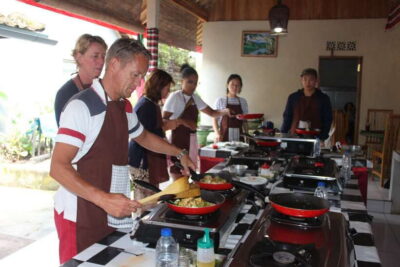
Browse the lists this tour appears in