
REVIEW · COOKING CLASSES
From Ubud: Authentic Cooking Class in a Local Village
Cooking in Bali is a whole morning lesson. This Paon Bali class turns a local village visit in Laplapan into a practical lesson on Balinese flavors, from picking ingredients to cooking at your own station. I especially like the market tour approach and the hands-on rhythm of the class, so you’re not just watching. One thing to consider: the afternoon option is shorter and skips the market stop.
You’ll also need to make one simple choice ahead of time, meat or vegetarian, since the menu adapts based on that. I like that the pace is structured for a small group (up to 15), which means you get time to chop, pound, mix, and cook. If you’re the type who likes big tour buses and lots of downtime, this one may feel like a busy half-day, because you’ll be actively cooking most of the time.
In This Review
- Key Highlights You’ll Actually Feel During the Day
- From Ubud Pickup To a Local Kitchen in Laplapan
- Market Stop: Choosing Your Ingredients Like a Balinese Cook
- Rice Plantation Views and the Staple Crop Lesson
- Laplapan Village Time: Warm Welcome, Traditional Kitchen Energy
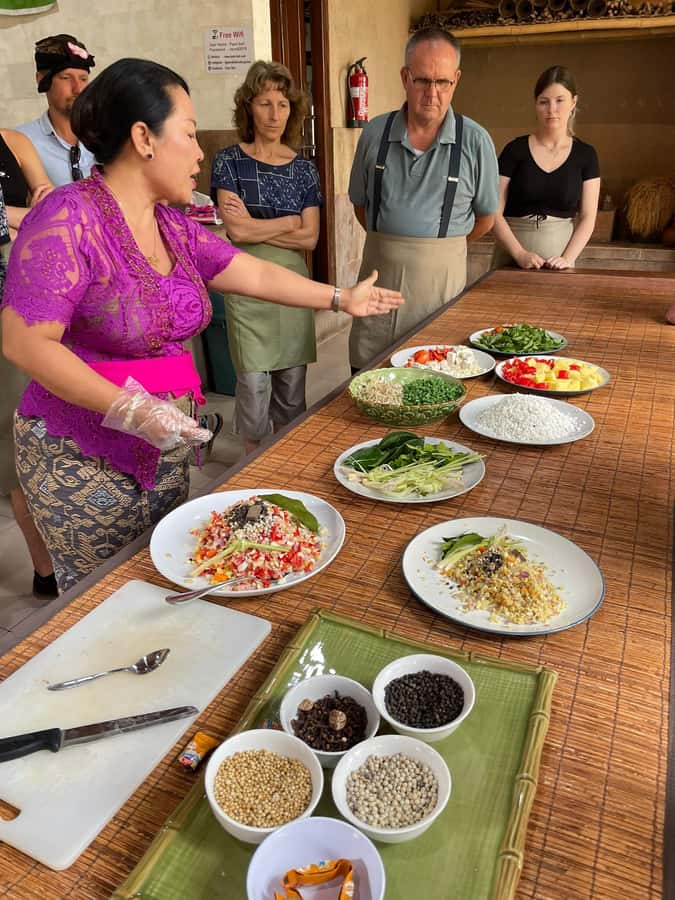
- The Cooking Class Core: 3 Starters, 4 Mains, 1 Dessert
- What You Learn That Actually Transfers Home
- Lunch at the End: Eating Your Work, Without Waiting in Line
- Price and Value: Why About $35 Can Be a Smart Use of a Half-Day
- Who Should Book This Class in Ubud (And Who Might Skip It)
- Tips to Get the Most Out of Your 4-Hour Class
- Should You Book Paon Bali Cooking Class in Ubud?
- FAQ
- How long is the cooking class?
- Do you get hotel pickup in Ubud?
- Is the market tour included?
- What dishes will we cook?
- Can I choose vegetarian dishes?
- How big is the group?
- What language is the guide?
- What is included in the price?
- Do I take recipes home?
- Is there free cancellation?
Key Highlights You’ll Actually Feel During the Day
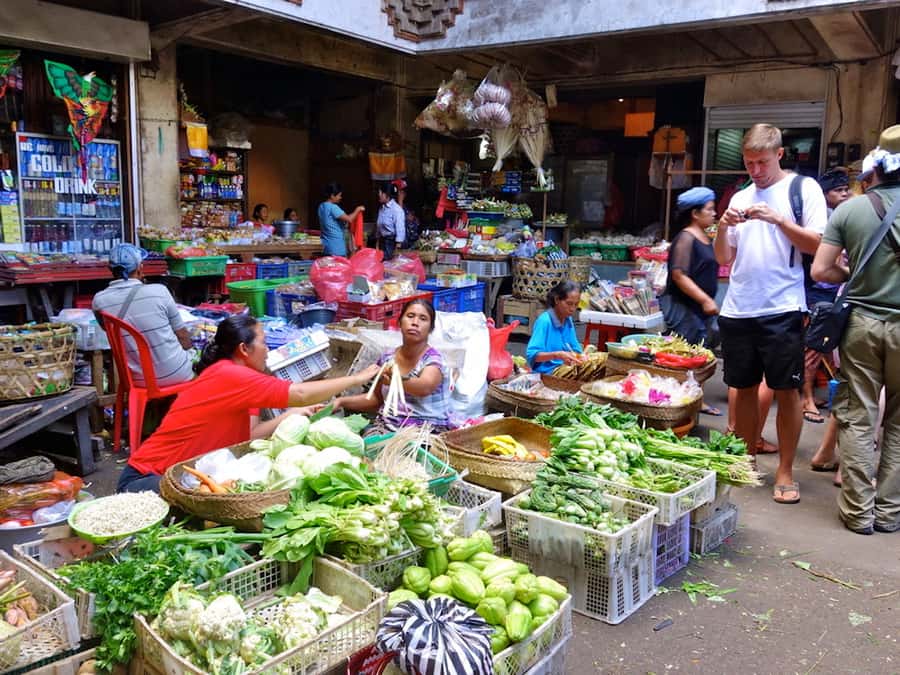
- Market tour that informs every dish: Morning classes include a fresh food market where you select the ingredients you’ll cook later.
- Rice plantation learning with real views: You get a taste of Bali’s rice culture before heading into village life.
- Warm Laplapan welcome: You arrive to a traditional village atmosphere, with time to look around the compound.
- A full production line of cooking: You’ll work through 3 starters, 4 main courses, and 1 dessert, with guidance at each station.
- Recipe notes and a certificate to take home: You leave with notes for recreating what you cooked, plus a certificate.
- Dietary options handled with care: The class offers a meat or vegetarian pathway, and the team has shown willingness to accommodate allergies with suitable adjustments.
From Ubud Pickup To a Local Kitchen in Laplapan
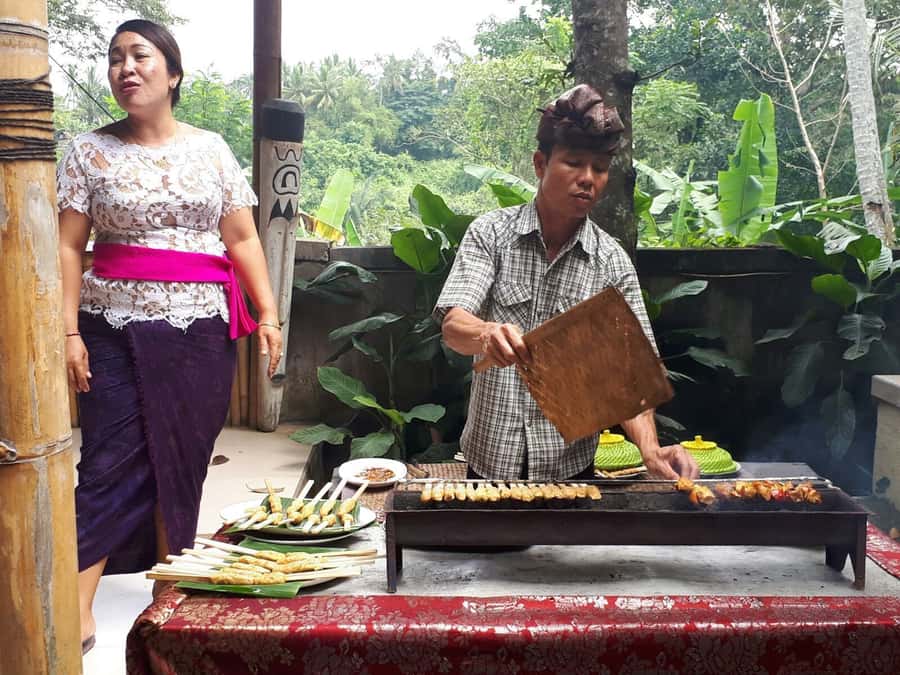
Your day starts with hotel pickup in the Ubud area, then a transfer to the cooking site. The whole experience runs about 210 minutes to 4 hours, depending on the session you choose. You’ll have an English live guide, plus a crew of chefs who run the cooking portion like a well-practiced team.
What I like about the format is that it respects your time. You’re not spending most of the half-day in transit, and you get a clear sequence: market or no market (depending on morning or afternoon), rice plantation, then village and cooking. The small group size, limited to 15, matters here. It means you can actually get hands-on time instead of waiting for a turn.
One practical note: pickup from outside Ubud is possible for an extra fee. If you’re staying just beyond the usual pickup zone, confirm pickup details so you don’t end up rushing your timing.
More Cooking classes in Bali:
- Ubud: Balinese Cooking Class at an Organic Farm
★ 5.0 · 1,786 reviews - Seminyak: Balinese Cooking Class & Market Tour
★ 4.9 · 458 reviews - Bali: Private Balinese Cooking Class in a Family Home
★ 4.8 · 87 reviews
Market Stop: Choosing Your Ingredients Like a Balinese Cook
If you pick the morning class, you get a fresh food market tour, and that’s a big part of why this works as more than a cooking demo. You’ll be selecting items from what’s displayed, including vegetables, herbs, meat, and spices. This is where you start learning the logic of Balinese cooking, not just the recipe list.
The market experience also changes your whole mindset for the class. When you’ve seen ingredients in person, you cook with more confidence later. You notice what’s aromatic, what’s leafy, and what spice blends smell like when they’re fresh. Some classes even include little moments like tasting fruits at the market, which makes it feel like a real local errand, not a staged stop.
Even if you’re not the type to cook much at home, this market leg gives you something useful: ingredient awareness. You’ll be better at spotting equivalents when a home grocery store doesn’t carry the same brand or cut.
If you choose the afternoon session, expect a trade-off: it’s shorter, and it won’t include the market tour. That’s not bad. It’s just the difference between learning ingredients first versus walking straight into cooking.
Rice Plantation Views and the Staple Crop Lesson
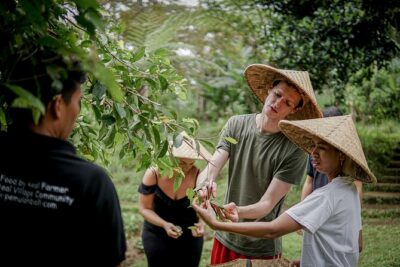
After the market, you’ll visit a rice plantation. This part is built into the experience for a reason: rice is the backbone of everyday meals in Bali, and you’ll learn how it’s cultivated and prepared.
What makes this stop valuable is the pacing. You’re not rushing from one place to another. You’re given a view of the area around you, then you get the meaning behind the ingredient that shows up again and again.
This isn’t a lecture with a microphone. It’s more like a guided walk and explanation that helps you understand why rice belongs in the bigger story of Balinese cuisine. By the time you reach Laplapan, you’re primed to cook, not just sightseeing.
Laplapan Village Time: Warm Welcome, Traditional Kitchen Energy
Then comes Laplapan, a traditional village where you’ll arrive to a warm welcome. The feel here is personal. You’re not treated like a ticket number, and that matters when you’re about to cook in someone’s kitchen space.
Based on what I’ve seen described again and again, hosts and staff tend to treat the group like family, and the kitchen setting reinforces that. You may also get a look around the compound area, with some classes including time to view a family temple and take photos.
Why I think this village component is one of the strongest parts: it grounds the cooking. The food isn’t presented as abstract “Balinese flavors.” It’s shown as everyday life practice, made in real kitchens, with real routines.
This is also where you’ll feel the small-group advantage. With fewer participants, the staff can keep an eye on who needs help, who is unsure, and who is ready to move faster.
A few more Bali trips to compare
- Bali: Sunrise Mount Batur Guided Hike with Breakfast
★ 4.8 · 9,660 reviews - Bali: Mount Batur Sunrise Guided Hike and Natural Hot Spring
★ 4.8 · 9,284 reviews - Bali: Full-Day Instagram Highlights Tour
★ 4.8 · 7,817 reviews - Bali/Nusa Penida: East & West Highlights Full-Day Tour
★ 4.7 · 6,263 reviews
The Cooking Class Core: 3 Starters, 4 Mains, 1 Dessert
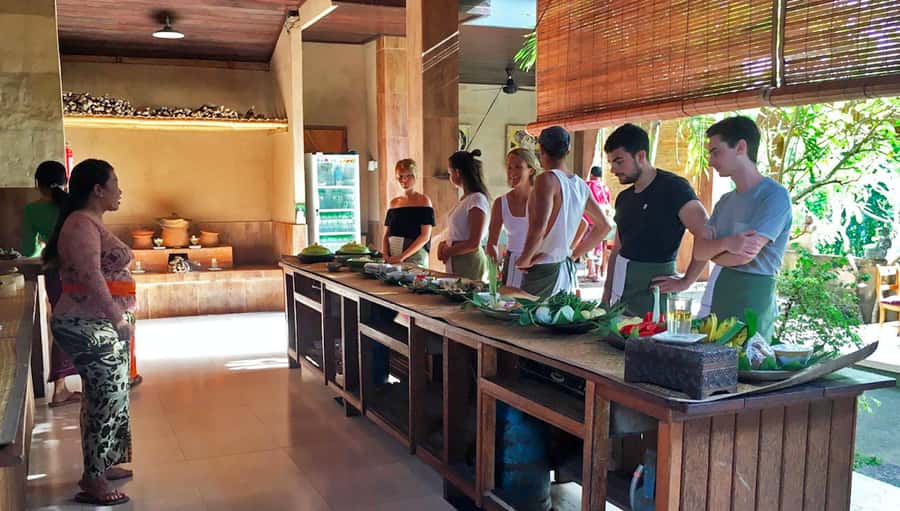
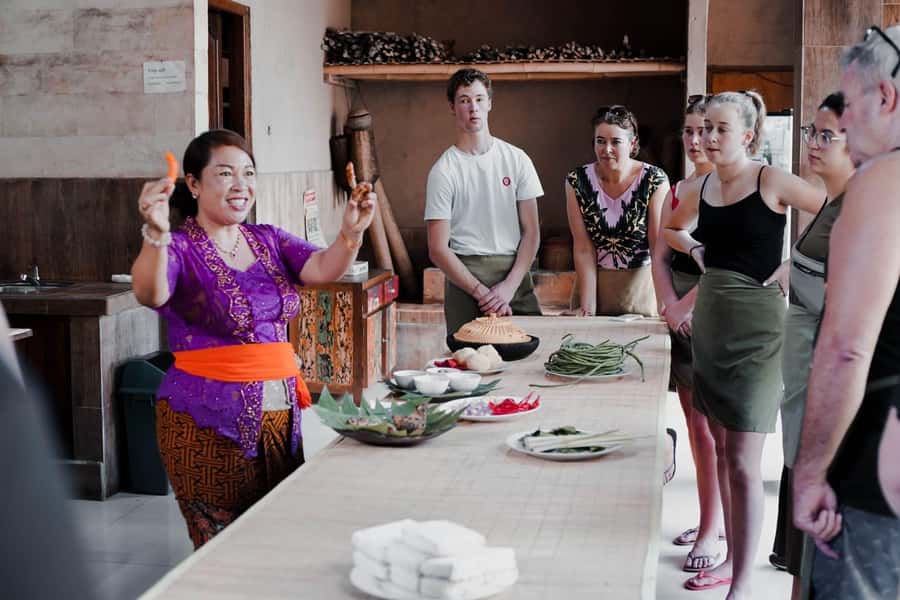
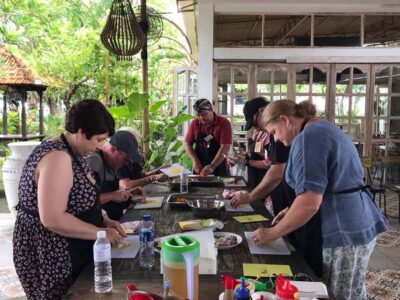
Now the main event, the hands-on cooking. The class is designed so you’re actively involved, not standing at the edge. You’ll work on multiple courses, typically 3 starters, 4 main courses, and 1 authentic dessert.
You’ll be guided step by step while working through kitchen stations. Expect a lot of real tasks: chopping, pounding, mixing, and cooking. The pacing is structured so each person gets chances to participate across dishes, which is a common weak point in cooking classes. Here, the activity flow is strong enough that you don’t feel stuck waiting.
Also, you get a choice of meat or vegetarian dishes. That’s a practical advantage for mixed groups or for anyone who already knows how they want to eat. It keeps the cooking session aligned with your preference from the start, instead of forcing you into a watered-down substitute menu.
The host energy is another standout. The team includes the owner and chefs who are known for keeping things fun while still being clear. If you like humor with your instructions, you’ll probably enjoy the vibe. If you want direct, hands-on coaching, you’ll also get it, because the staff checks in while you cook.
What You Learn That Actually Transfers Home
Recipes help, but technique matters more. This class teaches you the building blocks behind Balinese dishes, like how ingredients get combined and how flavors develop through cooking. When you cook later at home, you can lean on that logic even if the exact herb or spice isn’t identical.
You also receive recipes and notes that you can take home. So you’re not guessing what you made six hours later, which is exactly the problem with many “fun” cooking classes.
If you have allergies, this is worth highlighting. Multiple classes have been adapted for dietary needs such as capsicum allergy and restrictions around garlic or onion. In those situations, the team has been described as adjusting recipes and using separate cooking to avoid mixing. If you need special handling, tell the team in advance so they can set it up properly.
Lunch at the End: Eating Your Work, Without Waiting in Line
When you finish cooking, you sit down together for the meal and eat what you made. This matters more than it sounds. Cooking classes often end with a quick sample and a goodbye. Here, you get to enjoy the feast as a group, which makes it feel like a complete experience.
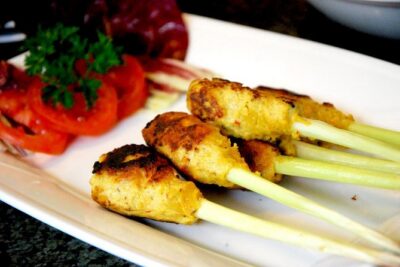
Lunch includes what you created from the starters and mains you cooked during the class. You’ll also enjoy your dessert. Add in included Balinese tea and coffee, and the meal becomes part celebration, part reward.
One of the real benefits of the final meal is learning by tasting. You can compare your version with the overall dish outcome and understand where the flavor came from. It’s the simplest way to turn cooking notes into real skill.
Price and Value: Why About $35 Can Be a Smart Use of a Half-Day
At $35 per person, this class sits in a reasonable middle zone for Bali. The price makes more sense when you look at what’s included and what you’re doing with your time.
You get:
- hotel pickup and drop off in Ubud
- a guided market tour for morning sessions
- a rice plantation visit
- the cooking lesson with all ingredients
- lunch
- Balinese tea and coffee
- recipes and notes to take home, plus a certificate
That’s a lot for one coordinated half-day. The key value isn’t just the meal. It’s the combination of ingredient selection, technique coaching, and a small group setup. With classes that cost more but keep you at the sidelines, you end up paying for watching. Here, you’re paying for cooking.
Transportation quality is another small value driver. The transfer has a strong track record, with many reviewers giving high scores for the transport experience. That helps your day feel smooth instead of stressful.
Who Should Book This Class in Ubud (And Who Might Skip It)
I think this is a great fit if you want:
- hands-on cooking skills, not just photos
- a cultural day tied to ingredients and everyday food
- a small group with time to participate
- options like meat or vegetarian dishes
It’s also a strong choice for people traveling solo or in friend groups, because the class format naturally mixes participants as you work through dishes.
You might want to choose carefully if:
- you only want a short activity and hate active tasks, because you’ll be cooking most of the time
- you mainly want the market experience, in which case you should choose the morning session since the afternoon does not include the market tour
If you’re shopping for a “do one thing in Ubud besides temples” experience, this is one of the better bets. You leave with food skills you can actually use.
Tips to Get the Most Out of Your 4-Hour Class
A few practical ideas will make your day smoother.
- Pick the morning session if you care about the market stop. Ingredient awareness is a major part of the value.
- If you have allergies or dietary restrictions, communicate them early. The team has shown it can adapt recipes and take care with ingredient substitutions.
- Wear comfortable clothes you can cook in, since you will chop and cook.
- Bring a positive attitude. The class has a social, family-like vibe, and the humor and warmth are part of why people come back.
Finally, plan your next day with a light schedule. Even though it’s only half-day length, you’ll come away energized and a bit food-happy, and you’ll probably want time to rest.
Should You Book Paon Bali Cooking Class in Ubud?
Book it if you want a real cooking lesson with local ingredients, not just a meal on a tour. For around $35, the combination of market or rice plantation context, hands-on cooking across multiple dishes, lunch, and take-home recipes is strong value. The small group size and the way the staff supports participation are major reasons this class rates so highly.
I’d skip or reconsider if you want a very relaxed sightseeing day, or if you need a market tour specifically and you’re considering the afternoon option. Choose morning for the market, afternoon for a quicker cooking focus.
If you’re craving something practical and genuinely Balinese, this is the kind of activity that turns into your next home-cooking night, not just another photo album.
FAQ
How long is the cooking class?
The experience runs about 210 minutes to 4 hours, depending on the starting time and whether you book the morning or afternoon session.
Do you get hotel pickup in Ubud?
Yes. Pickup and drop off are included for hotels in the Ubud area.
Is the market tour included?
The fresh market tour is included for the morning class only. The afternoon class is shorter and does not include the market stop.
What dishes will we cook?
You’ll prepare 3 starters, 4 main courses, and 1 authentic dessert.
Can I choose vegetarian dishes?
Yes. You have a choice of meat or vegetarian dishes.
How big is the group?
It is a small group, limited to 15 participants.
What language is the guide?
The tour includes a live guide in English.
What is included in the price?
Pickup and drop off, the cooking lesson, all ingredients, Balinese tea and coffee, lunch, and a certificate are included. The fresh market tour is included for morning classes.
Do I take recipes home?
Yes. Recipes and notes are supplied for you to keep.
Is there free cancellation?
Yes. You can cancel up to 24 hours in advance for a full refund.
Just added around Bali
- Bali: 3-Day Private Gili Islands Snorkel Tour with Hotel★ 4.2 · 44 reviews
- Bali: 2-Day Sunset and Sunrise Camping at Mt. Batur★ 4.6 · 124 reviews
- Private Full-Day Tour to the Real Bali Swing and Ubud★ 4.5 · 9 reviews
- Ubud: Rice Terrace, Holy Water Temple & Waterfalls Trek Tour★ 4.9 · 115 reviews
- Sanur Village E-bike Tour: Family-Friendly Adventure★ 4.6 · 85 reviews
- Sanur: Horse Riding at the Bali Beach 30 minute ride★ 4.6 · 8 reviews
- Private Sekumpul Waterfall Hiking Tour★ 4.9 · 116 reviews
- Nusa Penida and Nusa Lembongan Island Tour★ 4.7 · 24 reviews
Cooking Classes, compared.
Cooking Class with Transfers and Optional Market Visit
Read our review →
PRIVATE Authentic Balinese Cooking Class in Ubud at Putu’s Home
Read our review →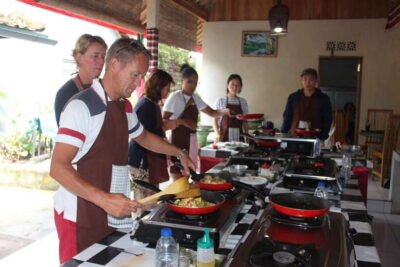
Browse the lists this tour appears in