
REVIEW · COOKING CLASSES
Balinese Cooking Class in Seminyak
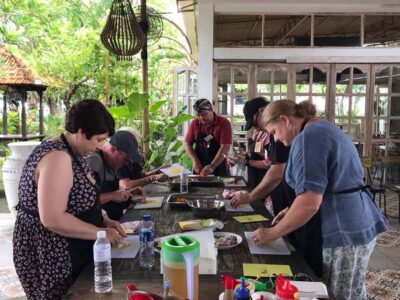
Balinese cooking gets real when you handle the ingredients, not just watch. This Seminyak class is built around making a 3-course meal with an expert local chef, plus optional shopping at the Jimbaran fish market. You get hands-on time, then you eat what you cooked.
I especially like the clear, practical teaching style. Chef Putu and the team at Amala (including helpers like Manik and Evi, depending on the session) make it easy to follow along while still explaining the why behind Balinese flavors.
One thing to plan for: the class can be very ingredient-prep focused, so if you hate chopping and measuring, you might feel it more than you expect. Also, the meal you eat is sometimes not served piping hot, so come hungry and relaxed, not picky.
In This Review
- Key things to know before you go
- What you’ll cook: 3 courses that show Balinese flavors
- Where the class happens: Amala in Seminyak, and why that matters
- The itinerary in real life: morning or afternoon flow
- The Jimbaran fish market option: what you gain besides seafood
- Cooking hands-on: what the chef actually teaches
- Eating what you made: lunch or dinner, and portion reality
- The menus feel authentic, and that is the point
- Souvenir touches: certificate, apron, and practical recipes
- Price and logistics: is it worth $66.67?
- Who this class is best for
- Who should skip or adjust expectations
- Should you book this Balinese Cooking Class in Seminyak?
- FAQ
- What is the duration of the Balinese Cooking Class in Seminyak?
- Is pickup included, and where does it operate?
- Are there morning and afternoon sessions?
- Is the Jimbaran fish market visit included?
- Is there a vegetarian menu?
- How many dishes do you cook?
- What are the menu choices?
- Do I keep anything from the class?
- Are there any minimums for the market visit?
- What is the cancellation policy?
Key things to know before you go
- Small group feel with a maximum of 10 travelers, so you get real participation time
- Pick-up and drop-off in Seminyak keeps the day simple, especially in heat
- Choose one set menu for everyone, including a full vegetarian option
- Optional Jimbaran fish market visit with the chef for ingredient insight and shopping
- Certificate and apron souvenir, so you leave with proof and something to wear at home
What you’ll cook: 3 courses that show Balinese flavors
You choose between two regular menus and a vegetarian menu, and the whole group cooks the same set. That keeps things smooth, and it also means you should pick carefully based on your favorite flavors before you arrive.
Menu 1 is built around a satisfying mix of crunch and sweetness. You’ll make Lawar salad with green beans, fresh coconut, and chicken, plus Tum ikan (steamed fish in banana leaf), and finish with Dadar gulung which is a coconut pancake with palm sugar and coconut.
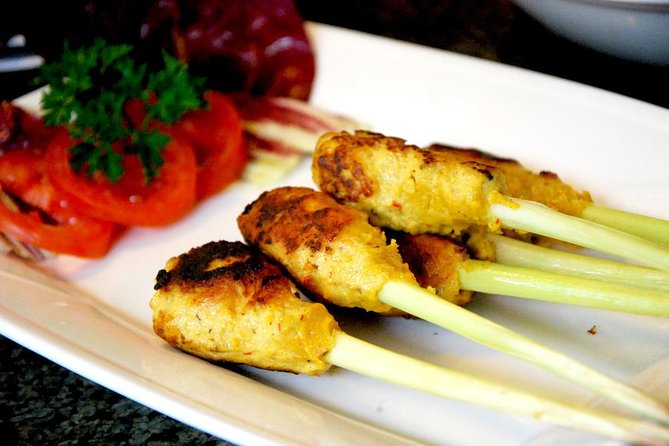
Menu 2 leans more seafood and spice-forward. You’ll cook young papaya soup with seafood (Jukut gedang mekuaH), sate lilit ayam which is chicken satay on lemongrass sticks with steamed rice, and then godoh biu, Balinese fried banana.
The vegetarian menu is a real one, not an afterthought. It includes gado-gado (vegetable salad with peanut dressing), pepes tahu (steamed bean curd in banana leaf), and bubur injin, a Balinese black rice pudding.
If you are coming with dietary needs, this is one of the easiest parts to manage because vegetarian is clearly offered. Still, because everyone follows the same menu, it pays to check you’re booking the right option for your group.
More Cooking Classes in Seminyak
- Nia Balinese Cooking Class
★ 5.0 · 202 reviews - Nia Bali Seminyak Cooking Class
★ 5.0 · 127 reviews - Cooking class in the comfort of your own personal villa. Yes, I’ll come to you!
★ 5.0 · 80 reviews
Where the class happens: Amala in Seminyak, and why that matters
The cooking happens at the Amala Boutique Retreat area in Seminyak, and you start and finish at the same meeting point. That matters because you are not spending the day lost in transfers across Bali. Hotel pick-up and drop-off are included for the Seminyak area, which makes the whole thing feel more like a planned experience than a scavenger hunt.
The setting is part of the appeal. People talk about the location at Amala as calm and beautiful, and that helps you enjoy the slower parts of cooking like mixing spices and tasting along the way.
Because the class caps at 10 people, it does not feel like you are being rushed through stations with no personal attention. I like that this setup gives the chef a chance to explain, answer questions, and still keep everyone moving.
The itinerary in real life: morning or afternoon flow
Your session timing depends on whether you book the morning or afternoon class. The overall time is about 3 hours, and you’ll be cooking, then eating the meal you make.
In the morning option, the big difference is the added market time. You’ll head out early with the chef, then return to cook. In the afternoon, you skip the market portion and focus right on ingredients and cooking.
Across both options, the day typically runs like this. You meet the chef for a quick intro to equipment and ingredients, you prep and cook together, and then you eat your final dishes as lunch or dinner depending on the session.
You also get a certificate after you finish. It’s a small detail, but it makes the experience feel complete, like a class rather than just a food tour where you get souvenir photos.
The Jimbaran fish market option: what you gain besides seafood
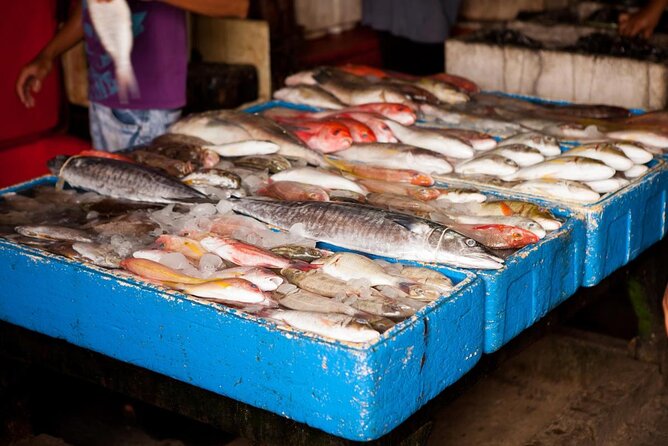
If you can add it, the Jimbaran fish market visit is one of the most useful parts of the day. Even if you are not a seafood person, it teaches you how ingredients start as raw, unbranded products before they become a dish.
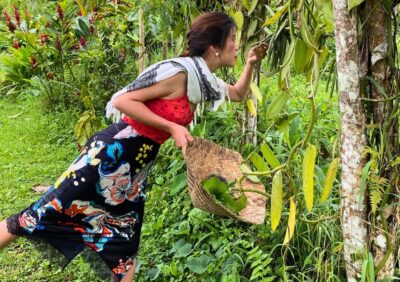
During the market stop, you shop for ingredients and spices with the chef. You also learn what to look for, including freshness cues. One chef tip that really sticks is advice on picking fish by eye quality, like how redder, better-looking eyes can signal better freshness.
This market add-on also gives you a feel for the supply chain. You see what people actually buy and how the chef thinks about matching fish to cooking methods like steaming in banana leaf.
There is one practical consideration. The market tour has a minimum of 2 persons per booking, and if you are booking as a single person for that market add-on, there’s an extra charge of Rp100,000 net. If you are traveling solo and really want this part, check how the add-on is handled before you commit.
Also, the market experience can run into other stalls beyond just fish. People have described vegetable shopping as part of the visit, so expect a mix of food sources rather than only seafood.
Another side of Indonesia:
- Bali Full-Day Traditional Village Sightseeing Trip All Inclusive
★ 5.0 · 3,069 reviews - Experts Bali Driver : Best Bali Private Driver for Tour in Bali
★ 5.0 · 1,339 reviews - Bali Hai Sunset Dinner Cruise
★ 5.0 · 1,173 reviews - Mount Batur Sunrise Trekking
★ 5.0 · 947 reviews
Cooking hands-on: what the chef actually teaches
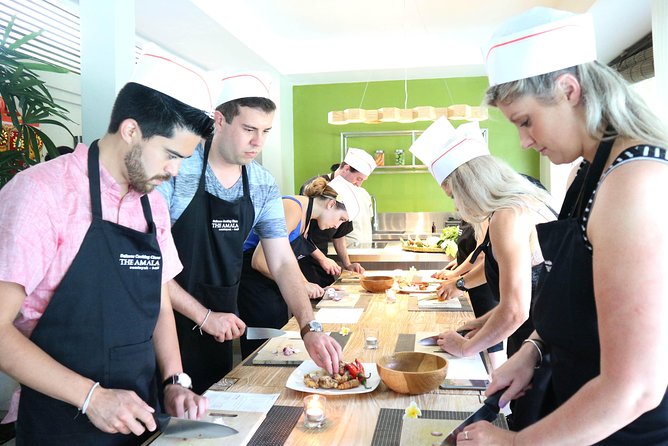
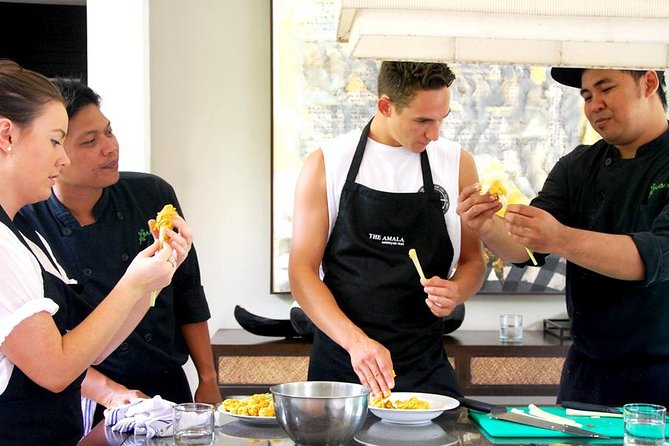
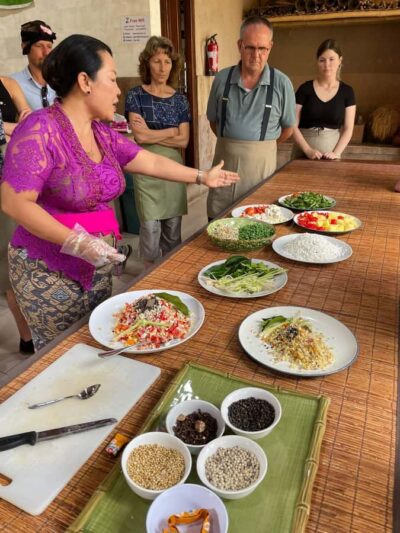
This class works because you are not stuck on the sidelines. You get turns at cutting, prepping, mixing, and cooking, so the time feels active rather than lecture-heavy.
Chef Putu is a standout example of the teaching style that makes this class work. People describe his explanations as clear, his guidance as patient, and his approach as practical, including recommendations for ingredients that might be hard to find back home.
Helpers like Manik and Evi have also been part of the teaching team at different times. When staff are involved, it usually means you are not waiting around for one person to finish one step before you can start yours.
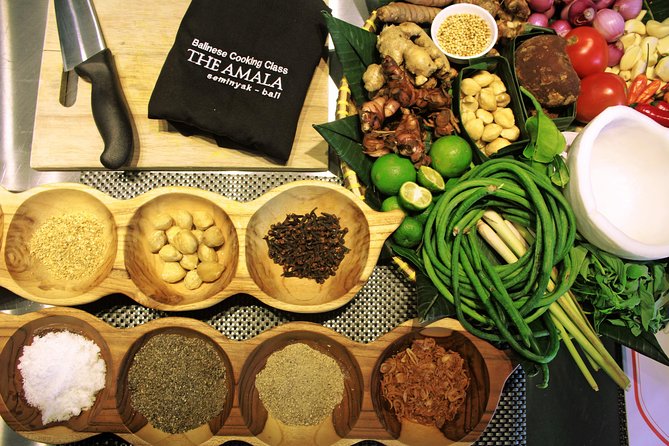
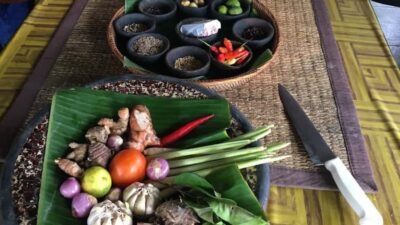
A common thread in the experience is learning how Balinese dishes are built. That includes spice blending, ingredient pairing, and balancing textures like crunchy fresh elements against warm cooked components.
That said, it can be a bit chopping-focused. Some people note that a chunk of the class is ingredient prep, which makes sense given you are making three dishes. If you want a class that feels like nonstop cooking, you may need to adjust expectations and think of it as a full cooking workflow, not a cooking show.
Eating what you made: lunch or dinner, and portion reality
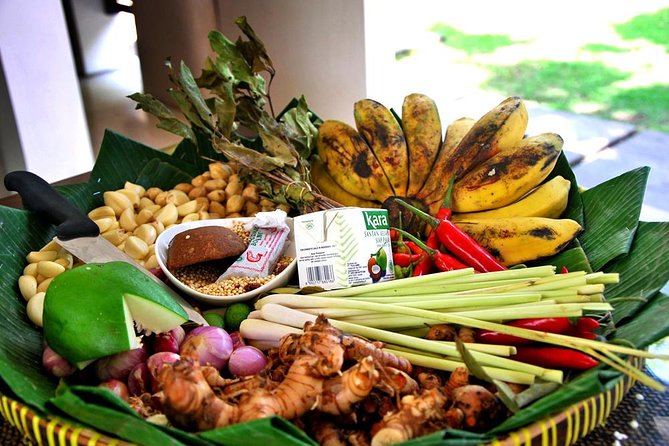
After cooking, you sit down to enjoy the meal you prepared. Because it’s a 3-course menu, you should plan on leaving full. Most people describe the food as plentiful, and the dishes are typically satisfying in a way that feels earned.
The pacing usually ends with you eating what you worked on, which is a big part of why the class feels fun instead of educational-only. You can taste the difference between ingredients you handled yourself and ingredients you simply ordered elsewhere.
One downside to flag honestly: there’s been at least one mention of the food being cold by the time it reached the table. That is not universal, but it is enough that I’d say come with the mindset of a relaxed meal rather than a high-end restaurant temperature standard.
If you are sensitive to timing, you can help by eating your course promptly as it is served.
The menus feel authentic, and that is the point
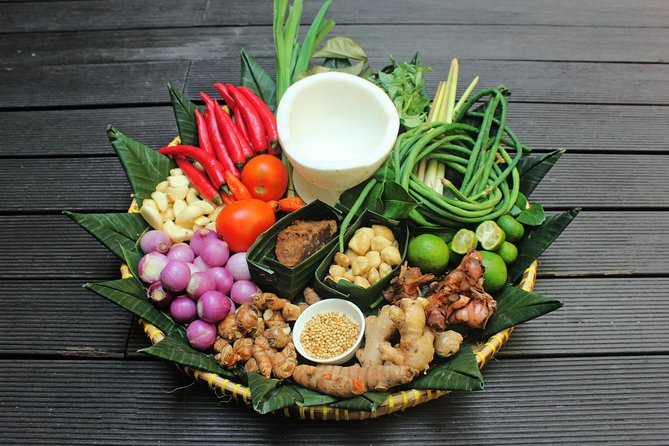
Balinese cooking has a specific logic. It is not just about spice heat, it’s about freshness, aromatic bases, and cooking methods that fit the ingredient.
Steamed fish in banana leaf is a good example. You are cooking in a way that protects moisture and carries aroma, not just grilling or frying. The lawar salad shows how fresh coconut and green beans get mixed with savory elements, creating a dish that feels both light and substantial.
Dessert is also part of the authenticity. Dadar gulung and the fried banana dish are not the kind of sweets you see everywhere, and they give you a fuller picture of what a Balinese meal can include.
The vegetarian menu helps too because it still relies on the same Balinese flavor principles. Peanut dressing in gado-gado, banana leaf steaming in pepes tahu, and black rice pudding show that vegetarian cooking in Bali can be structured and traditional rather than improvised.
Souvenir touches: certificate, apron, and practical recipes
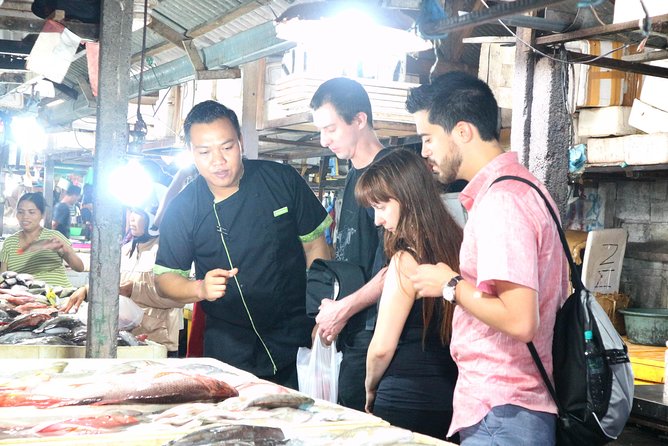
You keep your class apron as a souvenir. That’s simple, but it’s also practical. It gives you something tangible tied to the food you made, not just a photo.
You also receive a certificate from the chef team. It’s not necessary for value, but it reinforces that you are taking a real cooking class with a clear start and finish.
The most useful takeaway is the cooking know-how. People report learning techniques they can reproduce at home, and chefs often share ingredient substitutions or shopping advice for spices and items that might be harder to find outside Bali.
If you cook at home, think of this as a structure lesson. Even if you cannot get every ingredient exactly, you can still recreate the flavors by following the method and understanding what each ingredient is doing.
Price and logistics: is it worth $66.67?
At $66.67 per person, you are paying for more than a demo. You get hotel pick-up and drop-off within Seminyak, the chef instruction, and a full 3-course meal that you cook yourself.
That price makes sense when you consider the alternatives. If you try to learn Balinese cooking on your own, you still need ingredients, time, and some way to understand the spice logic. Here, the chef compresses that learning into one session, and you leave with a finished meal.
The market add-on is an extra value option, because it can teach you how chefs pick ingredients. But it also brings the minimum participant rule for the market. So for best value, I’d aim for either a group where the market add-on naturally fits, or a couple or two friends who want the same menu type.
One more logistics note: the menu is the same for everyone in your group. That keeps the class organized, but it means you might not get the dish you personally wanted most if your group choice is different. If you care a lot about the exact menu, plan your booking option carefully.
Who this class is best for
I think this is a great fit if you want a hands-on food experience without needing to be a serious home cook. The chef guidance is built for learning, not just tasting.
It is also a smart choice if you like local flavor and ingredient education. The market option adds context fast, and the class format turns that context into action.
If you are traveling with a friend or partner, the small-group size helps. You still get attention, and you can compare what you learned while you eat.
It may feel less ideal if you hate prep work. Some chopping and mixing time is part of making three dishes, so mentally treat this as a full cooking session.
Who should skip or adjust expectations
If you only want to taste Bali food and you dislike kitchen work, you might find the prep portion too much. This is not just a tasting. It is a make-and-eat class.
Also, if you are traveling solo and you want the fish market add-on, factor in the extra Rp100,000 net charge mentioned for that scenario. It’s not a deal breaker, but it changes the math.
Finally, if you have strict timing needs and cannot handle a set morning or afternoon start, pick your session based on how your other plans work. The class is designed to run in a clear block of time.
Should you book this Balinese Cooking Class in Seminyak?
Yes, I’d book it if you want a true cooking session, not a passive food tour. The combination of chef-led instruction, a 3-course menu, and the option to visit the Jimbaran fish market makes this one of the more complete ways to learn Balinese cooking during a short stay.
I’d choose it even more strongly if you enjoy learning ingredients and techniques you can use at home. The apron souvenir and certificate are nice, but the real value is that you get a structured method for Balinese flavors you can actually repeat.
The only time I’d hesitate is if you hate chopping or you are very picky about hot food. If that is you, still consider it, but go with the mindset of a friendly class and a relaxed meal.
FAQ
What is the duration of the Balinese Cooking Class in Seminyak?
It runs for about 3 hours (approximately).
Is pickup included, and where does it operate?
Yes. Round-trip private transfer is included within the Seminyak area.
Are there morning and afternoon sessions?
Yes. You can choose either a morning or an afternoon session.
Is the Jimbaran fish market visit included?
The market visit is optional. It is tied to the morning session.
Is there a vegetarian menu?
Yes. A vegetarian menu is available, alongside two non-vegetarian menu options.
How many dishes do you cook?
You cook a 3-course meal.
What are the menu choices?
Menu options include dishes such as Lawar salad, Tum ikan, Dadar gulung, Jukut gedang mekuaH, Sate lilit ayam, Godoh biu, plus vegetarian options like Gado-gado, Pepes tahu, and Bubur injin.
Do I keep anything from the class?
Yes. You can keep your class apron as a souvenir, and you receive a certificate after the class.
Are there any minimums for the market visit?
Yes. The market tour requires a minimum of 2 persons per booking. If one person is doing the market tour, an extra charge of Rp100,000 net applies.
What is the cancellation policy?
You can cancel for a full refund up to 24 hours in advance of the experience start time. The experience requires good weather, and if it is canceled due to poor weather, you will be offered a different date or a full refund.
Just added around Seminyak
- Seminyak: Relaxing Bali Spa Experience at LLuvia Spa★ 4.8 · 54 reviews
- Seminyak: Bali Spa Experience with Transfers at Lluvia Spa★ 4.7 · 10 reviews
- Bali: Balinese Cooking Class and Market Tour★ 4.8 · 19 reviews
- Bali: Balinese Full-Body Massage at your Accommodation★ 4.7 · 69 reviews
- Goa Gajah / Elephant Cave Temple And Ubud Tour – All Inclusive★ 5.0 · 12 reviews
- Bali Best Watersport Sea walker,Parasailing adventure,Jet sky★ 5.0 · 11 reviews
- Tanjung Benoa Water Sports: All Inclusive Bali Activities★ 4.5 · 17 reviews
- Bali Water Sports and Uluwatu Tour Packages★ 4.5 · 119 reviews
Cooking Classes, compared.

Cooking Class with Transfers and Optional Market Visit
Read our review →
PRIVATE Authentic Balinese Cooking Class in Ubud at Putu’s Home
Read our review →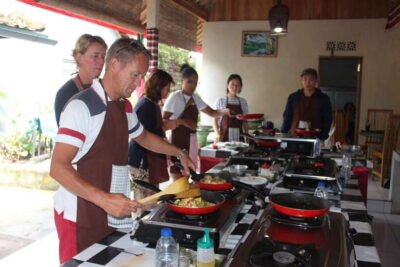

Browse the lists this tour appears in