
REVIEW · COOKING CLASSES
Ubud: Cooking Class with Transfers and Optional Market Visit
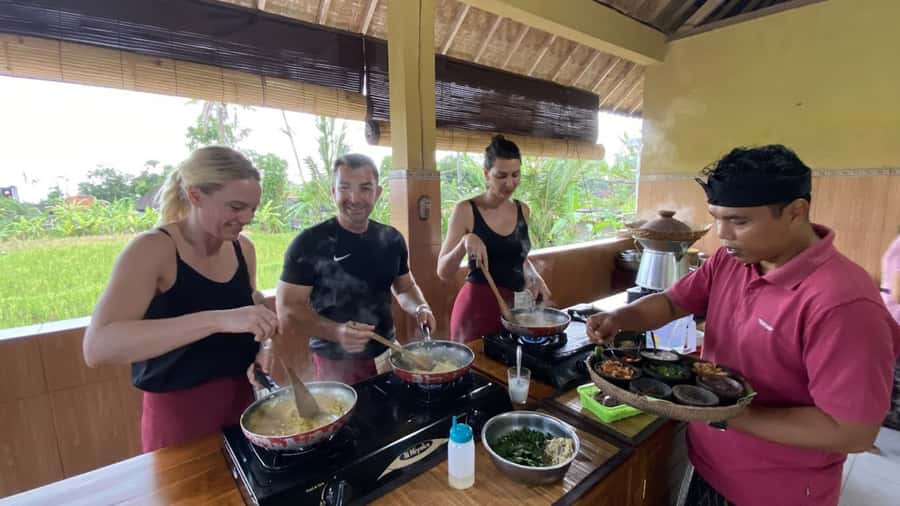
Bali does food like it matters, and this Ubud class shows why. I like the hands-on format and the small group size (up to 10), so you actually get time at the stove instead of watching from the sidelines.
I also love the option for a market tour in the morning, then heading into a kitchen surrounded by greenery to cook with local chefs and understand the meaning behind what you’re making. One heads-up, if you’re staying in the Sebali or Keliki area, there’s an extra 50,000 IDR per person and pickup details depend on your chosen option.
In This Review
- Key things to know before you go
- Ubud cooking in real kitchens: what this class teaches
- Market stop in the morning, straight to cooking in the afternoon
- Spice work and knife skills: how the class stays hands-on
- Curries, satay, and desserts: what you will make and eat
- Balinese meaning behind the food, plus small cultural rituals
- Transfers, meeting point, and practical timing tips
- Price and value at about $21, and who should book
- Should you book this Ubud cooking class?
- FAQ
- Is the market tour included?
- How long is the cooking class?
- Do I get hotel pickup and drop-off?
- Is the group size small?
- What language is the guide?
- Where do I meet the group?
- Is there an extra fee for some areas?
Key things to know before you go
- Small group, real participation (up to 10 people), with lots of chances to cut, mix, and cook.
- Morning market tour is optional, and it’s part of the experience on the morning schedule only.
- English guide plus English audio support, so you can follow along even if your kitchen skills are rusty.
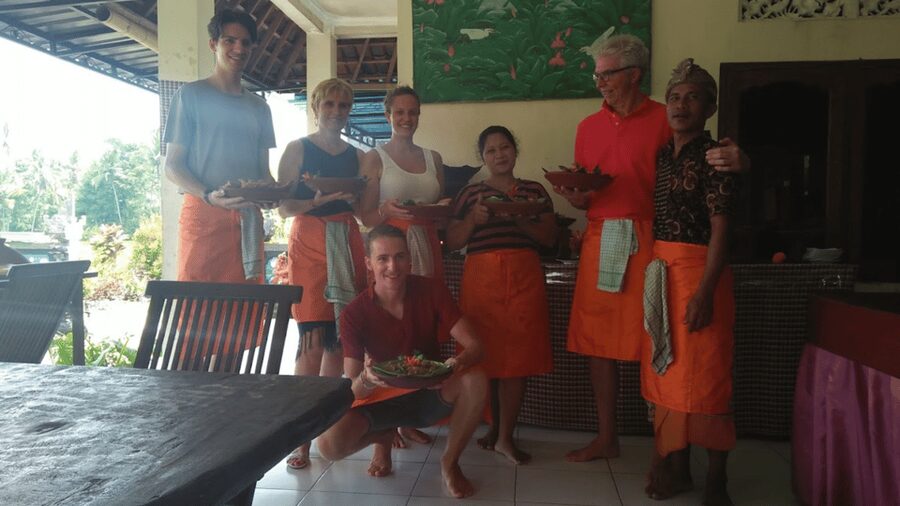
- You cook a full spread and eat what you make, with a meal that ends the class in a friendly group setting.
- Dish meaning is part of the lesson, not just recipe steps, so the food connects to Balinese life.
- Some sessions include making an offering, like a canang, which adds a cultural layer (ask your host).
Ubud cooking in real kitchens: what this class teaches
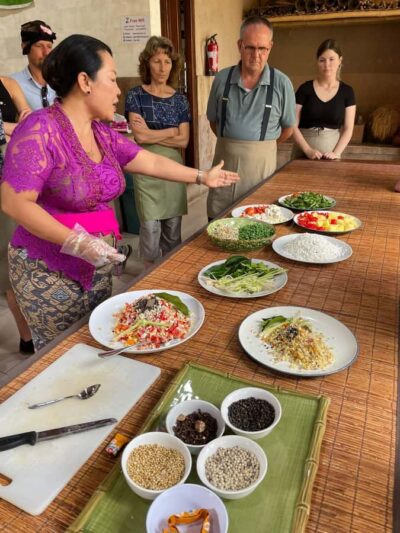
Ubud is where Bali’s food culture gets serious. This class is built around that idea: you’re not just learning recipes, you’re learning how Balinese cooks think. After pickup (for the Ubud Center options), you either start with the market or head straight to cooking, depending on which time slot you pick. Either way, the rhythm stays the same. Pick ingredients, prepare them, cook as a team, then sit down together to eat.
Two things make it feel worth your time. First, it’s hands-on from start to finish. Reviews repeatedly point out that you’re not stuck doing one small task. You get involved in prepping, spice work, and cooking steps, and your host keeps instructions clear. Second, the cooking lesson comes with context. You learn why particular dishes show up, and what they represent in everyday Balinese life.
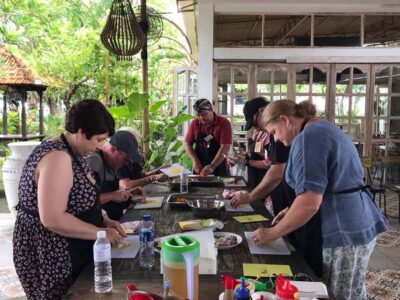
The setting also helps. Many participants mention a kitchen setup that feels like a real local compound, often with lush surroundings. It’s one of those experiences where the space itself makes it easier to slow down and pay attention.
You’ll be eating what you cook, not just sampling a tiny plate. That matters because it turns the class into a real meal and makes the skills stick in your memory.
More Cooking Classes in Ubud
- Ubud Cooking Class Bali with Balinese Chef
★ 5.0 · 1,609 reviews - PRIVATE Authentic Balinese Cooking Class in Ubud at Putu’s Home
★ 5.0 · 644 reviews - Ubud: Balinese Cooking Class and Market Tour
★ 4.8 · 531 reviews
Market stop in the morning, straight to cooking in the afternoon
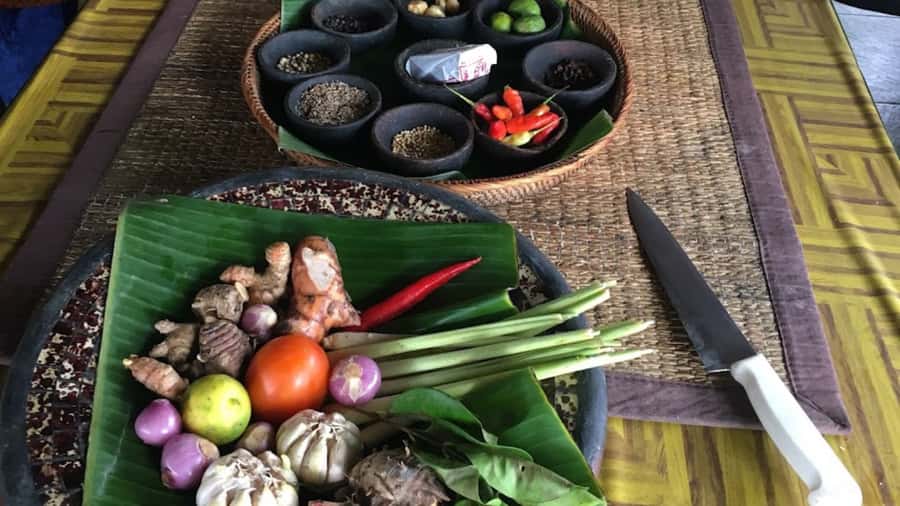
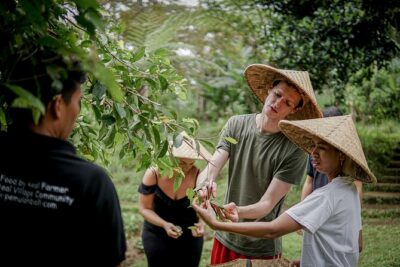
If you choose the morning option, you’ll start with a market tour in Ubud before cooking. This is one of the best parts of the experience, especially if you like understanding ingredients instead of only following steps. You’ll be guided through stalls with fresh fruits, vegetables, herbs, and spices, and you’ll learn how local cooks see and use those ingredients.
On the morning schedule, the market visit is more than sightseeing. It’s practical. You’re selecting the produce you’ll later use in class, so you leave the market with a mental map of what goes where in the dishes.
If you choose an afternoon option, you skip the market part and go directly to cooking. That’s a solid choice if:
- you want something shorter on your schedule
- you already did a market walk in Ubud
- you’re simply hungry for cooking time
In both cases, you still get the cultural layer and dish explanations. The difference is how much time you spend learning ingredients versus applying them.
Spice work and knife skills: how the class stays hands-on
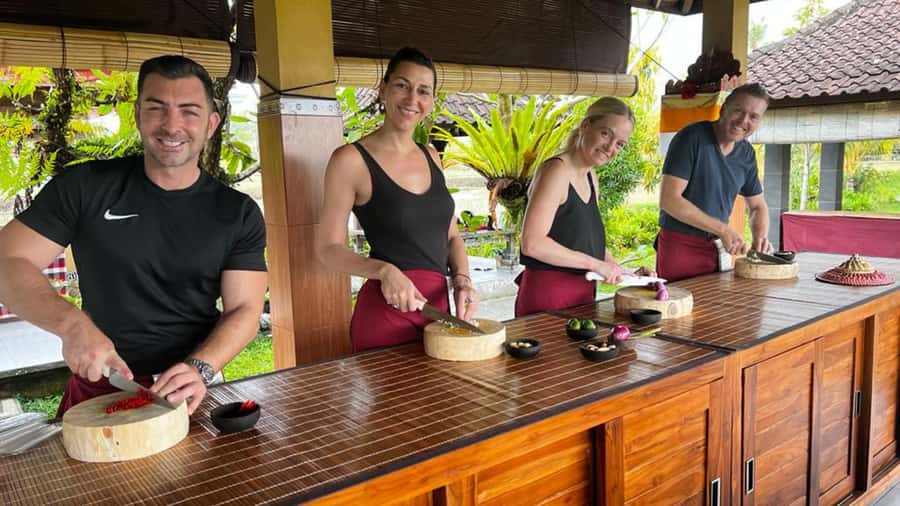
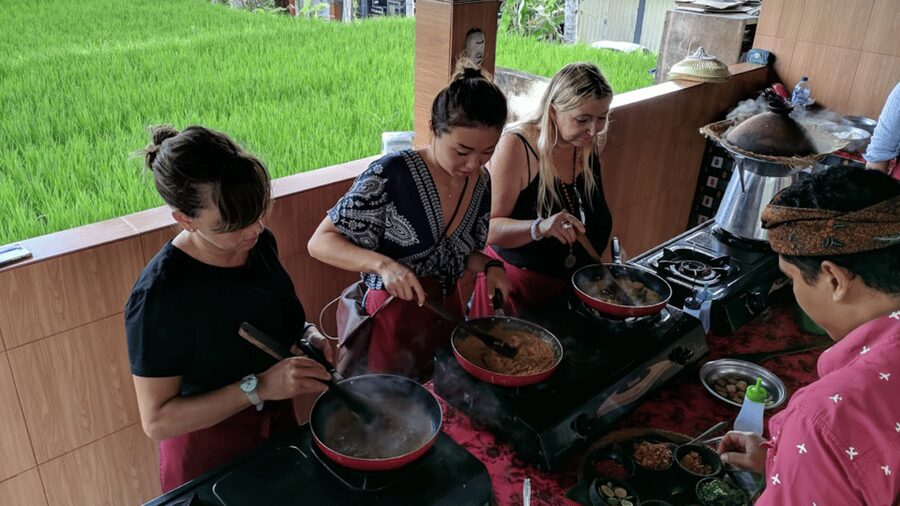
This is the kind of cooking class where you’ll likely get stuck into multiple tasks. The structure is simple, and that’s why it works. A guide leads the group, and local chefs help you with technique, timing, and safety while you prepare the food.
From the reviews, a few standout skills show up again and again:
- spice blending and grinding techniques, explained in a way that makes the flavors feel less mysterious
- chopping and prep work that isn’t rushed
- teamwork, where different people take different parts of each dish
The pace is also a big deal. Several participants mention there’s little waiting around, and that the team works together well so the cooking flows smoothly. For you, that means you’ll spend more time doing and tasting, and less time standing around.
You might also notice that some hosts add small cultural moments along the way, like learning about offerings. One review specifically mentioned making a canang offering and discussing its cultural significance. If that’s included on your date, it’s a memorable way to connect the flavors to beliefs and daily ritual.
Bottom line: you’re not just learning a recipe list. You’re learning how to move through the process like a cook.
Curries, satay, and desserts: what you will make and eat
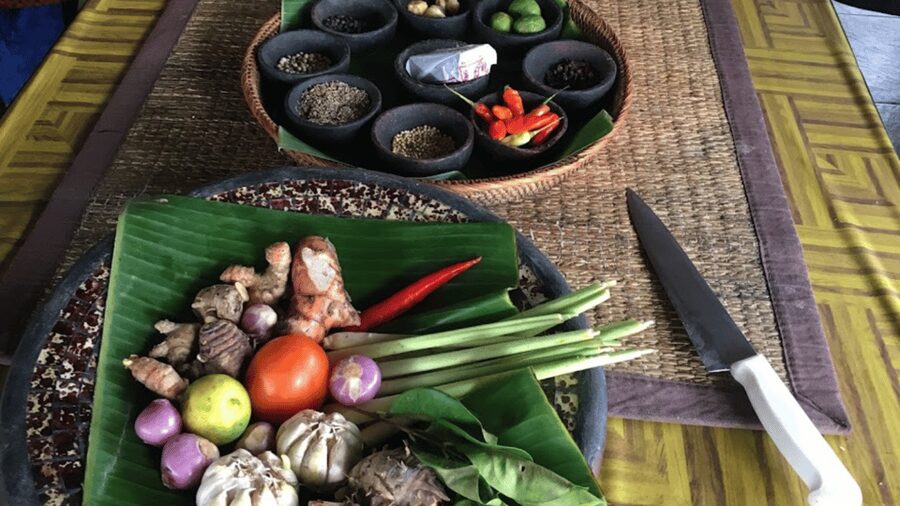
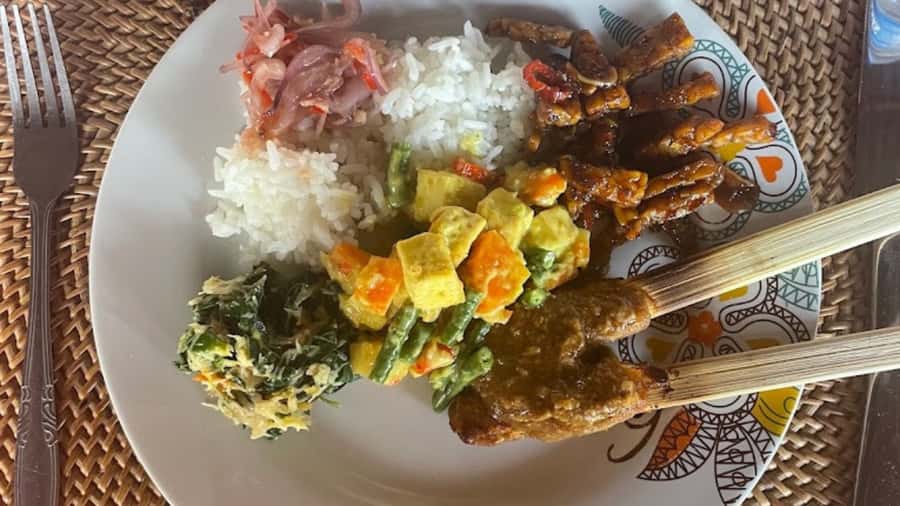
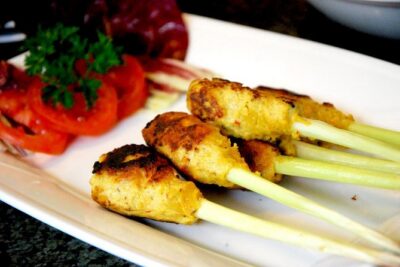
The class focuses on classic Balinese flavors. You can expect to learn dishes like fragrant curries, satays, and desserts. The exact menu can vary by session, but the consistent theme is variety: savory mains, spiced items, and a sweet finish.
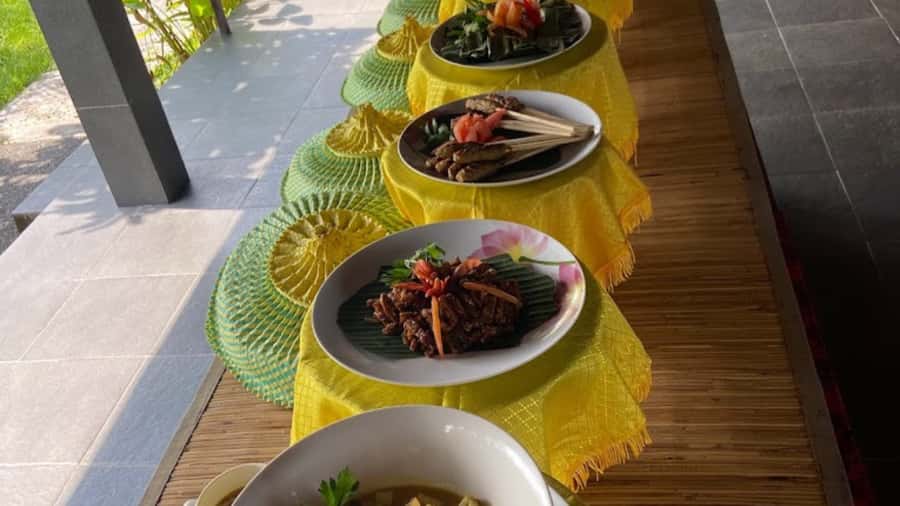
A lot of people also talk about the scale of the meal at the end. Even though the class runs about 2 to 3 hours, many reviews describe cooking enough to end up with a buffet-style spread. One common description is around 10 dishes, which is a lot for a short class. What that signals to me is that the team plans portioning and timing carefully so you don’t leave still hungry.
You’ll also likely learn flavor builders that show up across multiple dishes. Think spice blends and sauces, plus the way Balinese cooking balances richness and brightness. That’s where the cultural explanations help. When you understand how and why a flavor shows up, you’re more likely to remember the key idea later when you try cooking at home.
One small but important detail: you receive a certificate of completion at the end. It might sound minor, but it adds a sense of closure, especially if you’re collecting experiences while you’re in Bali. Some participants also mention going home with a recipe book, which is handy if you want to recreate at least part of the meal later.
And yes, you’ll eat. Not just taste. The entire point is that your work becomes your meal.
More Market Tours in Ubud
- Balinese Ubud cooking school (9 Dish Cooking and Market Tour)
★ 5.0 · 540 reviews - Balinese Cooking class with traditional morning market visit
★ 5.0 · 161 reviews - Ubud Traditional Night Market Food Tour-All Inclusive
★ 4.4 · 95 reviews - Bali Food Tour: Savor Street Food and Night Market Adventures
★ 5.0 · 46 reviews
Balinese meaning behind the food, plus small cultural rituals
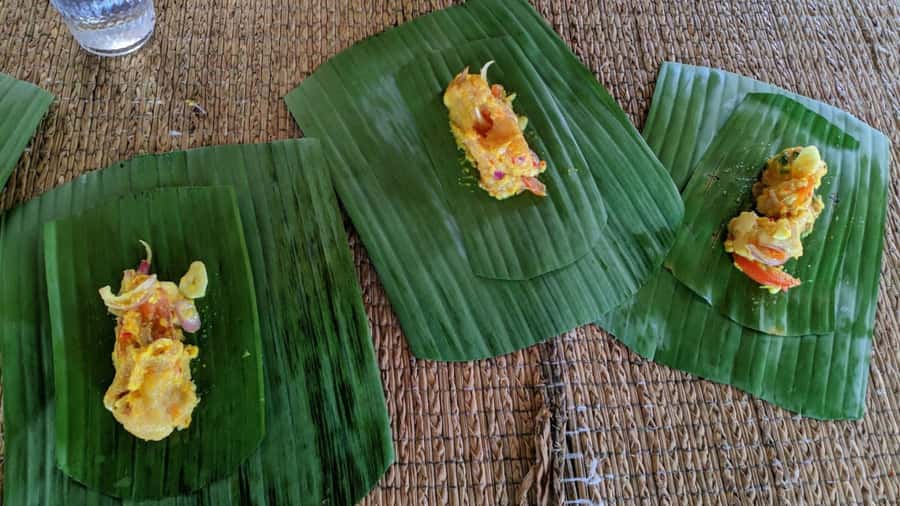
If you only want to learn cooking steps, this class can still deliver. But if you want the why, this is where it shines.
The guide explains the significance behind each dish, and you’ll hear how Balinese cuisine connects to tradition and family life. Reviews often mention that the hosts go beyond cooking into Balinese history, architecture, and daily values. That doesn’t mean the class turns into a lecture. It means the food stories land while you’re actively cooking, so the cultural points feel grounded.
You may see rituals incorporated into the experience. For example, multiple reviews reference making offerings such as a canang or an offering box, and learning their meaning tied to Balinese practice and festival culture. If your session includes this, it’s a powerful reminder that cooking is part of social and spiritual life, not only a skill.
You might meet chefs and helpers in a family setting, not just in a commercial studio. Some reviews mention being welcomed into a family home, meeting staff in a local compound, and seeing how traditional people live. That makes the class feel less like a tourist performance and more like a real slice of local routine.
Also, language support matters. The guide is English-speaking, and the activity includes English audio. If you’re worried you’ll miss details, this helps. You can focus on what your hands are doing and still catch the explanation.
Transfers, meeting point, and practical timing tips
This is where people either relax or get annoyed, depending on how prepared they are. Here’s what you can count on from the information provided.
- Hotel pickup and drop-off are included at Ubud Center if you pick the morning or afternoon option.
- Pickup is optional, so you wait in your hotel lobby if your option includes pickup.
- The meeting point is in the Parking Field, and the note says this is because night traffic can be heavy.
That last line matters. If you’re doing an evening class, plan for extra travel time and confirm your exact pickup timing. If you’re arriving on your own, the parking field meeting point can be the easiest way to find the group without hunting around Ubud’s streets.
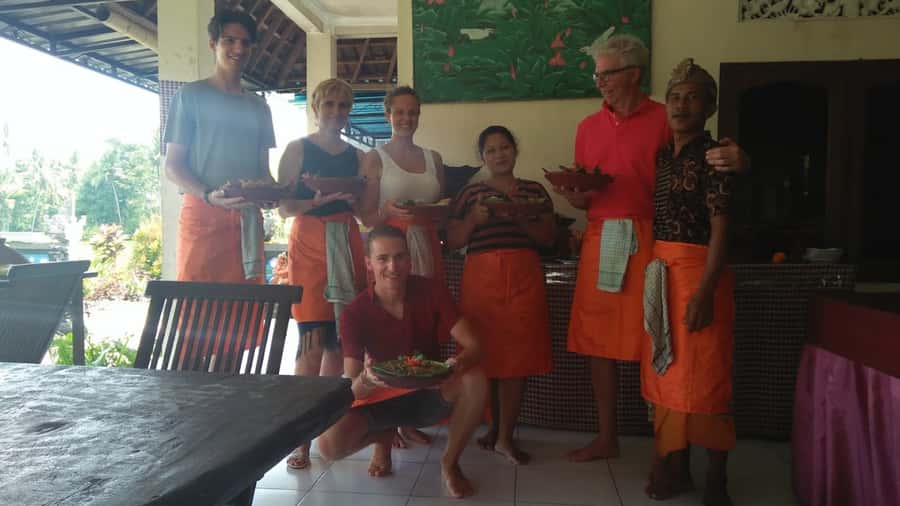
Group size helps with logistics too. With a small group limited to 10 participants, the team can manage arrival and task assignments without chaos. Reviews also mention seamless pickup, so if you are using transfers, it should be straightforward.
One more pricing note that affects planning: Sebali or Keliki area has an extra 50,000 IDR per person. If you’re staying outside central Ubud, check this early so there are no surprises.
Price and value at about $21, and who should book
At around $21 per person for a 2 to 3 hour small-group class with transfers (on the Ubud Center options), a meal, a guide, and optional market time, the value is strong. The price makes sense because you’re paying for more than cooking instruction. You’re paying for:
- guided market time (if morning)
- ingredient selection support
- chef-led hands-on cooking
- a full meal afterward
- cultural explanations, plus a certificate
In other words, you’re not just buying a demo. You’re buying participation plus dinner.
This class is a great fit if you:
- want a practical cooking skill you can use again at home
- like learning about ingredient sourcing, not only end results
- prefer small groups over big tour buses
- want a relaxed evening or half-day activity that still feels meaningful
It’s also a solid family-friendly option. One review specifically mentions attending with teenage children, and everyone had a good time. If you’re bringing younger cooks, the hands-on teamwork angle is often what keeps them engaged.
Who might feel less thrilled? If you only want a quick taste of Balinese food and you hate doing prep work, you may find cooking classes take more energy than eating out. But if you’re okay with chopping, mixing, and cooking as part of the deal, this one lands well.
Should you book this Ubud cooking class?
Yes, I’d book it if your goal is to leave Ubud with both food memories and real kitchen confidence. The combination of market choice, hands-on cooking, and cultural meaning behind the dishes is the sweet spot. Just double-check your pickup option and whether your location falls under the Sebali or Keliki extra charge, and you’ll set yourself up for a smooth, well-paced experience.
FAQ
Is the market tour included?
It’s included if you choose the morning option. The market tour is not listed as part of the afternoon option.
How long is the cooking class?
The duration is listed as 2 to 3 hours. Your starting time depends on availability.
Do I get hotel pickup and drop-off?
Yes, hotel pickup and drop-off at Ubud Center are included if you select the morning or afternoon option.
Is the group size small?
Yes. The class is limited to 10 participants.
What language is the guide?
The live tour guide is English, and the audio guide is also in English.
Where do I meet the group?
The meeting point is in the Parking Field, with a note that this is because night traffic can be heavy.
Is there an extra fee for some areas?
Yes. If your location is in the Sebali or Keliki area, there is an extra 50,000 per person charge.
More Markets in Ubud
- Bali: Ubud Monkey Forest, Coffee Plantation, and Market Tour
★ 5.0 · 5 reviews - Active Volcano, Rice Field, Hot Spring, Fruit market, Tea Plantation with Lunch
★ 5.0 · 513 reviews - Seminyak: Balinese Cooking Class & Market Tour
★ 4.9 · 458 reviews - Ubud Experience ; Swing, Waterfalls, Art Market, Rice Terrace
★ 5.0 · 56 reviews
More Shopping Tours in Ubud
- Jambangan bali cooking class with morning market tour
★ 5.0 · 35 reviews - Bali – Ubud Night Market Food Tour
★ 3.8 · 14 reviews - Balinese cooking class/Go shopping at the market, cook, eat
★ 5.0 · 12 reviews - Bali: Safari Zoo and Ubud Palace and Market Day Tour
★ 4.7 · 6 reviews
Just added around Ubud
- Sunrise Café and Morning Yoga Class★ 5.0 · 5 reviews
- Quad Bike Bali With Tunnel & Waterfall Tour★ 4.2 · 8 reviews
- Puppy Yoga in Bali, Ubud & Uluwatu★ 4.7 · 93 reviews
- Private Ubud Tour With Professional Photographer with Edit★ 5.0 · 53 reviews
- Ubud : PRIVATE Bike Tour inside Rice Field with meal & pool★ 5.0 · 5 reviews
- Ubud: Organic Farm Harvest, Bali Cooking Class by Pemulan★ 4.8 · 12 reviews
- Outskirts of Ubud, Gianyar: Pottery Class★ 5.0 · 9 reviews
- packages cooking class and romantic dinner in a local home★ 5.0 · 4 reviews
Cooking Classes, compared.

PRIVATE Authentic Balinese Cooking Class in Ubud at Putu’s Home
Read our review →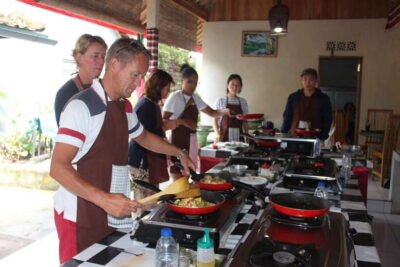
Browse the lists this tour appears in