
REVIEW · COOKING CLASSES
Jambangan bali cooking class with morning market tour
Spices start the day, at eye level. This Jambangan Bali experience pairs a morning market tour with a hands-on cooking class in a real Balinese home, so you learn food and culture in one smooth flow. You also get English guidance from Balinese chefs, which keeps the whole day clear and easy to follow.
Two things I like a lot are how you shop for ingredients first, then cook with what you chose, and how warmly Putu and his family make the whole day feel personal. You also spend real time seeing village life, including temples and a school stop, before you head into the kitchen.
One consideration: you should be ready for an early start and some time outdoors around the market and rice-growing areas. Bring water habits with you, even if plenty is provided, and plan to move at a relaxed pace.
In This Review
- Key Things You’ll Notice Right Away
- Why This Bali Cooking Class Feels More Like a Family Day Than a Show
- The Morning Setup: Pickup in Ubud, Then You’re Off
- Market Tour in the Morning: Herbs, Spices, and Real Ingredient Choices
- Kelabang Moding Village Stops: Temples, School, and Everyday Rhythm
- Coconut Oil Processing and Daily Offerings: Why These Steps Matter
- Inside the Balinese Home: The Setting That Makes Cooking Stick
- The Cooking Session: Traditional Techniques, You in Charge, You in Control
- Lunch and Dinner in the Warung and Garden: Eat What You Made
- What You Leave With: Recipes, Certificate, and Practical Confidence
- Price and Value: What $27 Buys You in Real Terms
- Who This Works Best For (and Who Should Skip It)
- Booking Sense Check: Should You Book Jambangan Bali Cooking Class?
- FAQ
- Is the cooking class in English?
- Does the price include hotel pickup and drop-off?
- How long is the experience?
- What should I bring?
- Is there a market tour?
- What is not included in the activity?
Key Things You’ll Notice Right Away
- Morning market sourcing: herbs, spices, vegetables, and meat choices you can actually understand.
- English-first guidance from Balinese chefs who know both cuisine and culture.
- Village context in Kelabang Moding: temples, school, and everyday life.
- Hands-on Balinese kitchen skills using traditional methods, not just watching.
- Offerings and coconut oil processing that explain why ingredients matter.
- Small-group feel with a friendly, attentive atmosphere.
Why This Bali Cooking Class Feels More Like a Family Day Than a Show
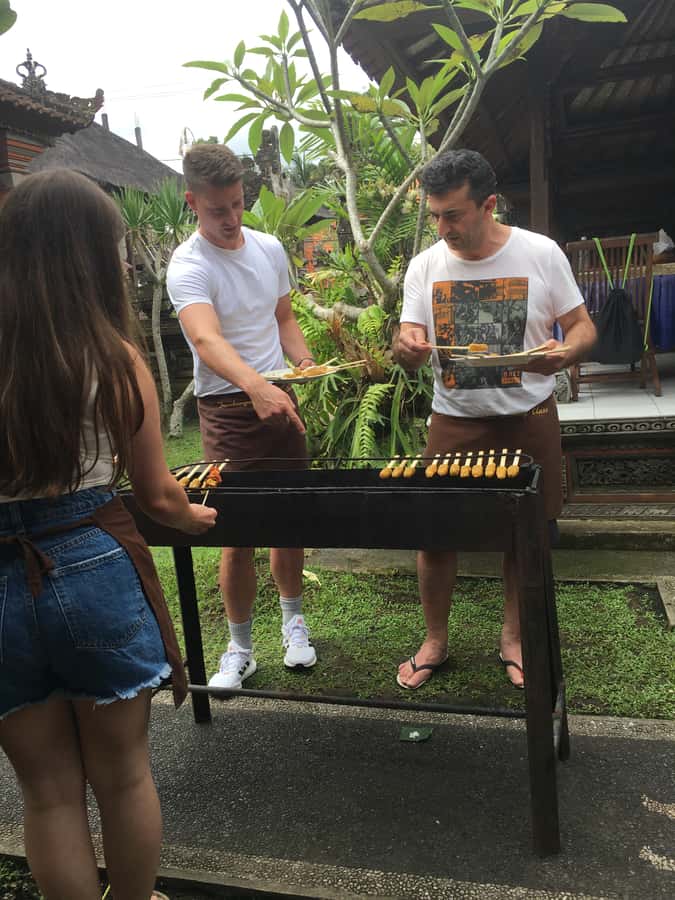
If you only do cooking classes where everything is prepped for you, you miss the point. This one starts earlier, at a market, so you see how Balinese people choose ingredients day to day. It also ends with you eating what you made, in a warung and garden setting, which makes it feel like a complete meal journey, not a demo.
The standout is the human side. Putu and his family welcome you into their home and keep things warm and organized. You get explanations as you go, so you understand what you are cooking and why it belongs in the Balinese table.
More Cooking Classes in Ubud
- Ubud Cooking Class Bali with Balinese Chef
★ 5.0 · 1,609 reviews - Ubud: Cooking Class with Transfers and Optional Market Visit
★ 4.9 · 824 reviews - PRIVATE Authentic Balinese Cooking Class in Ubud at Putu’s Home
★ 5.0 · 644 reviews
The Morning Setup: Pickup in Ubud, Then You’re Off
The day starts with pickup from your hotel in the Ubud area. The transfer is included only for hotels in that zone, so if you’re staying outside Ubud you may need extra transport cost depending on location. This matters because it keeps the experience simple if you are based in central Ubud.
Once you are collected, you are on the clock for a 270-minute morning session. That is about four and a half hours, which is long enough to shop, tour a few village stops, cook, and eat, without turning the day into an all-day slog.
You’ll also want to plan for basic essentials. Bring a camera for the sights and a bit of cash for any personal needs that come up during the market part of the day.
Market Tour in the Morning: Herbs, Spices, and Real Ingredient Choices
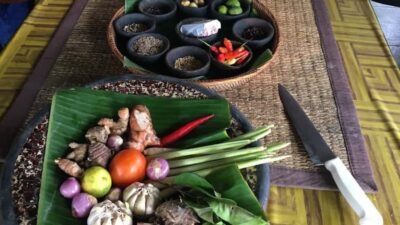
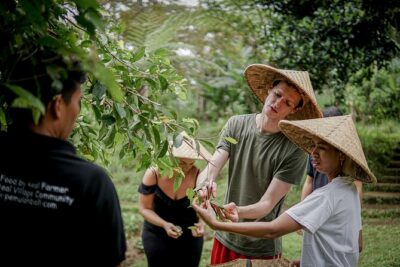
The market portion is the real ignition. You start by picking fresh herbs and spices, crisp vegetables, and choice cuts of meat. This is one of the best ways to avoid the most common cooking-class trap, where you learn recipes but never learn ingredient logic.
What makes this market tour valuable is the way it connects to cooking. When you pick aromatics in person, you start to recognize them later when they show up in paste and seasoning. You also get a chance to chat with local farmers and learn how food ties into daily work, including seeing a rice farmer doing their routine activities.
Practical tip: go in ready to ask simple questions. If you want to recreate the flavors later, ask what each ingredient is used for and what you can swap if you cannot find the same spice at home.
Kelabang Moding Village Stops: Temples, School, and Everyday Rhythm
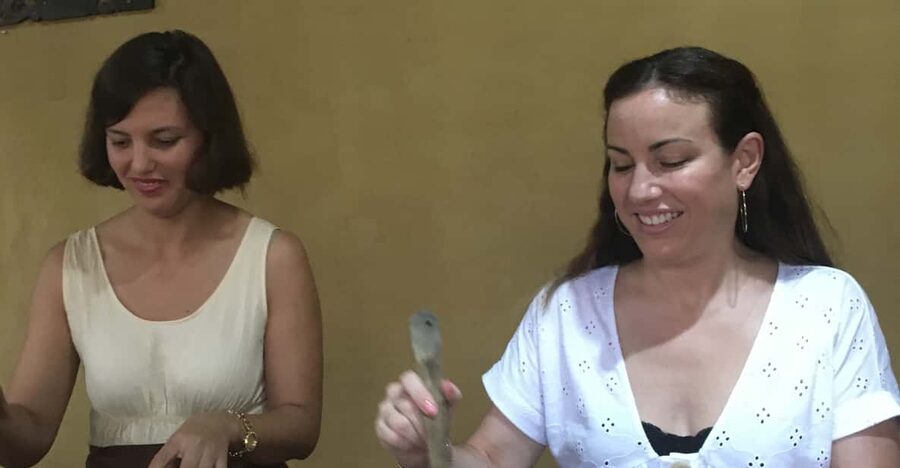
After the market, you head to Kelabang Moding village. This is where the day stops feeling like only food. You’ll see village temples, a school, and parts of traditional Balinese life and culture.
These stops aren’t just for photos. They help you understand how offerings, family routines, and community spaces shape everyday choices. In Bali, cooking is not isolated from daily practice, and seeing the village context helps the kitchen instruction make more sense.
One practical note: village visiting means you may be on pathways and outdoor areas. Wear comfortable footwear and keep your pace relaxed, especially if it is warm.
More Market Tours in Ubud
- Balinese Ubud cooking school (9 Dish Cooking and Market Tour)
★ 5.0 · 540 reviews - Ubud: Balinese Cooking Class and Market Tour
★ 4.8 · 531 reviews - Balinese Cooking class with traditional morning market visit
★ 5.0 · 161 reviews - Ubud Traditional Night Market Food Tour-All Inclusive
★ 4.4 · 95 reviews
Coconut Oil Processing and Daily Offerings: Why These Steps Matter
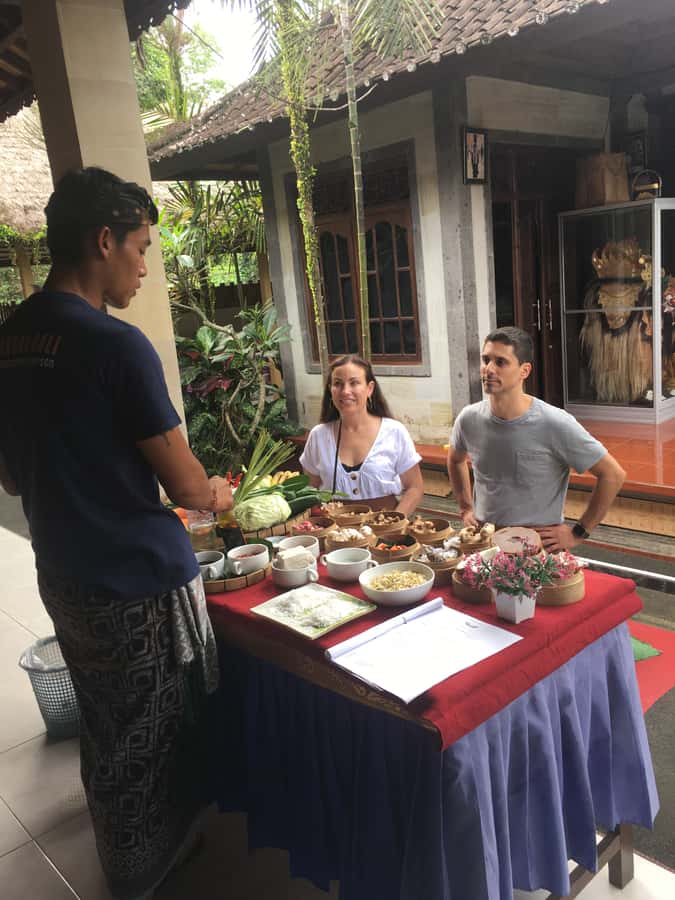
You then get a look at coconut oil processing, followed by making a daily offering. These two parts are easy to treat as side activities, but they actually change how you cook and taste.
Coconut oil processing matters because coconut is one of the most used ingredients in Balinese cooking and daily life. Even if you think you already know coconut flavor, seeing the process helps you appreciate the base behind many recipes. You also get a clearer idea of how ingredients come from local work rather than a store shelf.
Then comes the daily offering. Making an offering teaches you the rhythm behind Balinese ceremonies and everyday devotion. Even if you are not participating in religious practice, you still gain cultural insight by seeing how food, flowers, and careful arrangement work together. It also gives your day a grounded feeling, because you are not just collecting flavors, you are learning meaning.
Inside the Balinese Home: The Setting That Makes Cooking Stick
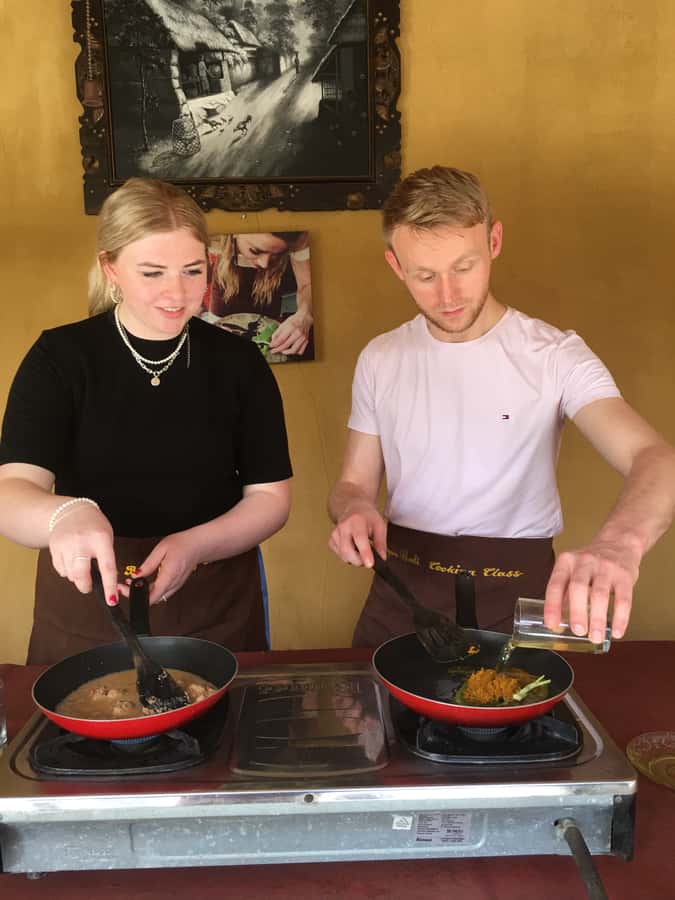
When you return, you are welcomed into a Balinese house with a beautiful setting. This is one of the most important value points of the experience. Cooking in a home changes your mindset, from watching a class to joining a real meal.
You also get consistent language support. All classes are conducted in English by Balinese chefs who are fully conversant with Balinese cuisine and culture. That combination matters. You are not just learning steps, you are learning the cultural logic behind the steps.
In my view, this is a big reason people remember the food for years, not just the taste. When a chef explains the role of ingredients and techniques in context, the recipes become easier to repeat.
The Cooking Session: Traditional Techniques, You in Charge, You in Control
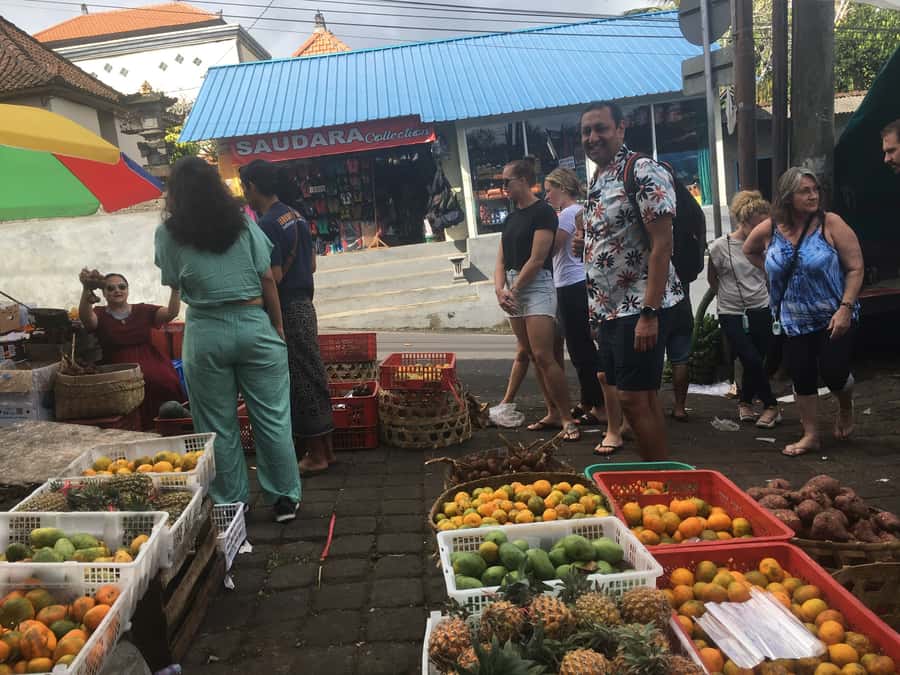
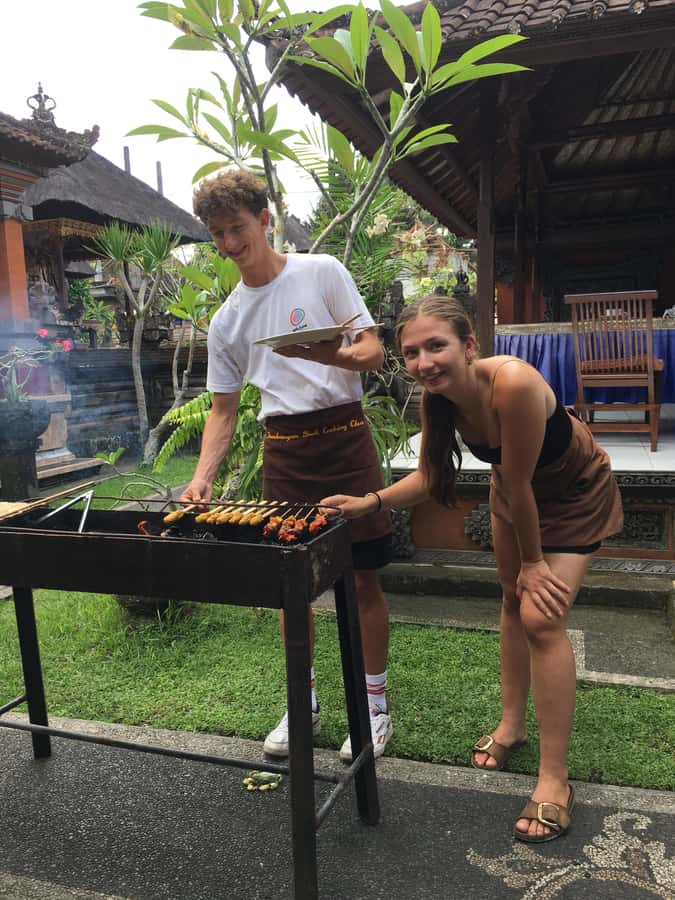
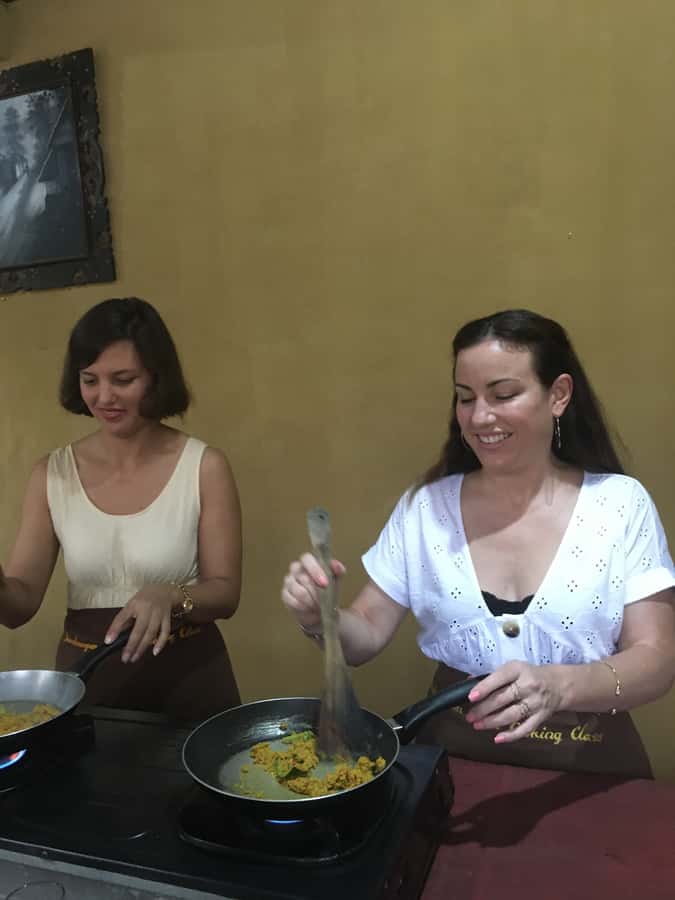
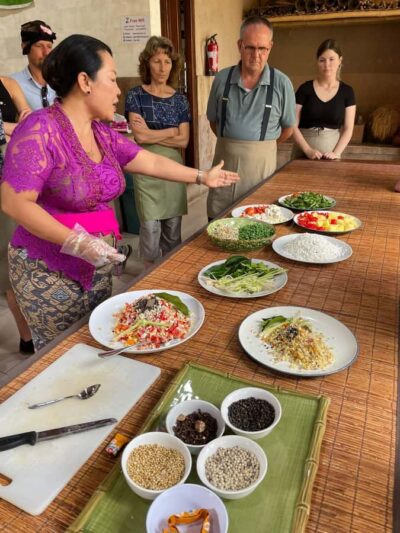
This is a hands-on cooking day. You make the recipes yourself, using traditional techniques taught by the chefs. The goal is that you can leave knowing what to do, not just knowing what to eat.
Because the instruction is in English, you are less likely to miss key details like how paste texture should look or how flavors should be layered. You get guided work from the beginning, including prep that may include pounding or blending aromatics, assembling spice mixes, and cooking the components that become the final dishes.
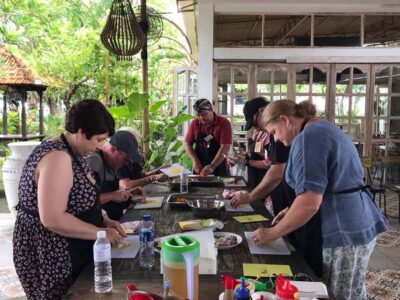
Small-group format helps here. With fewer people, you are more likely to get direct attention if you are unsure about a step, and it becomes easier to ask follow-up questions. That kind of feedback makes the difference between a satisfying class and a class you can actually cook again later.
Lunch and Dinner in the Warung and Garden: Eat What You Made
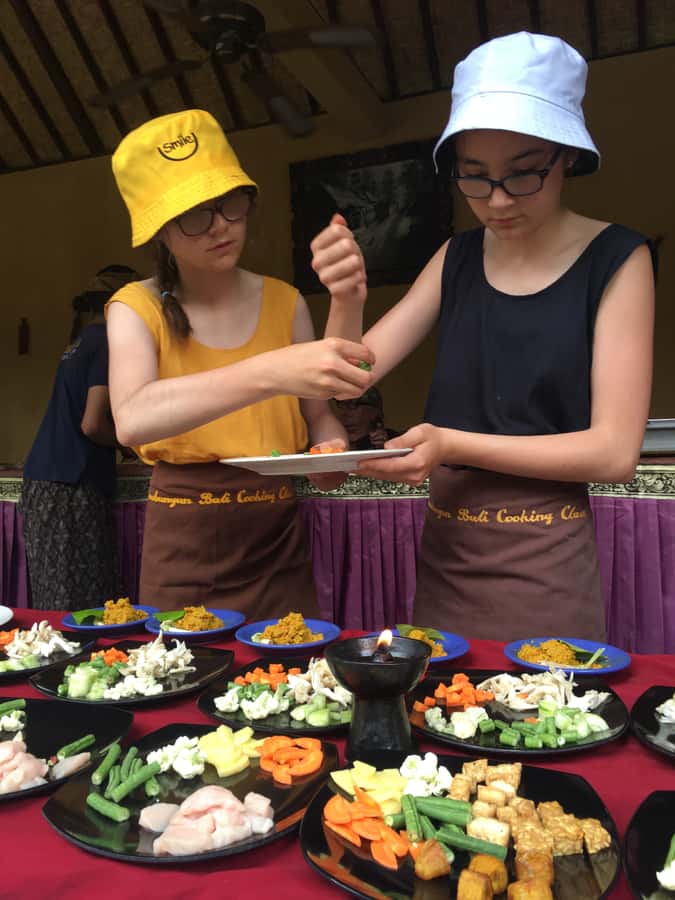
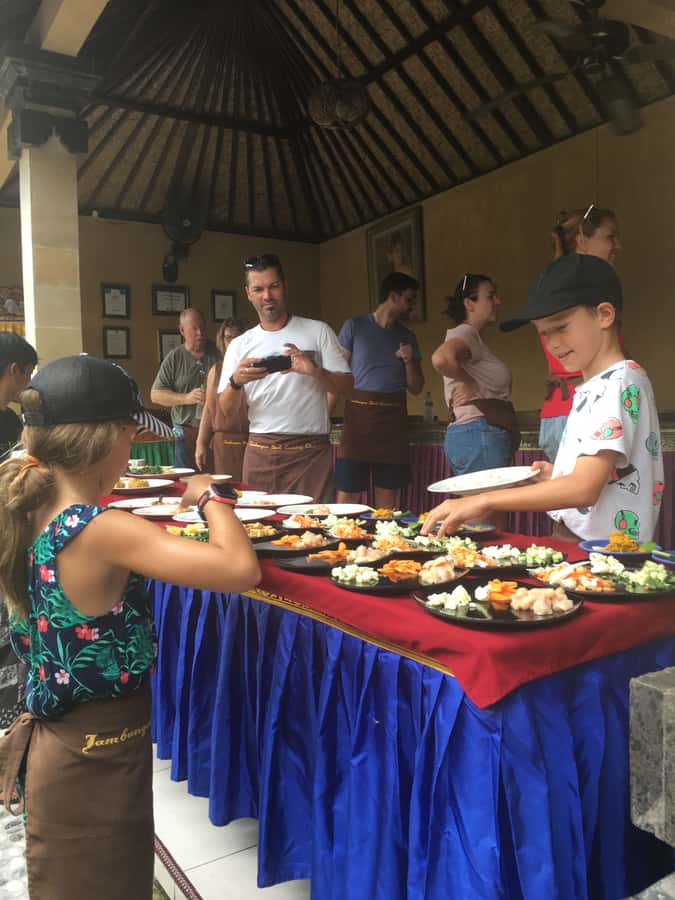
After cooking, you savor the delight you made. Your meal includes the dishes you prepare for lunch and dinner, served in a warung and garden setting.
This part is more than good food, even though it is. Eating what you cooked right away gives you immediate feedback. You taste the balance while it is fresh in your mind, so you can pinpoint what worked and what you might adjust next time.
If you love trying new flavors, this meal is the payoff. You get to see how the market choices and home techniques come together into something that feels truly Balinese.
What You Leave With: Recipes, Certificate, and Practical Confidence
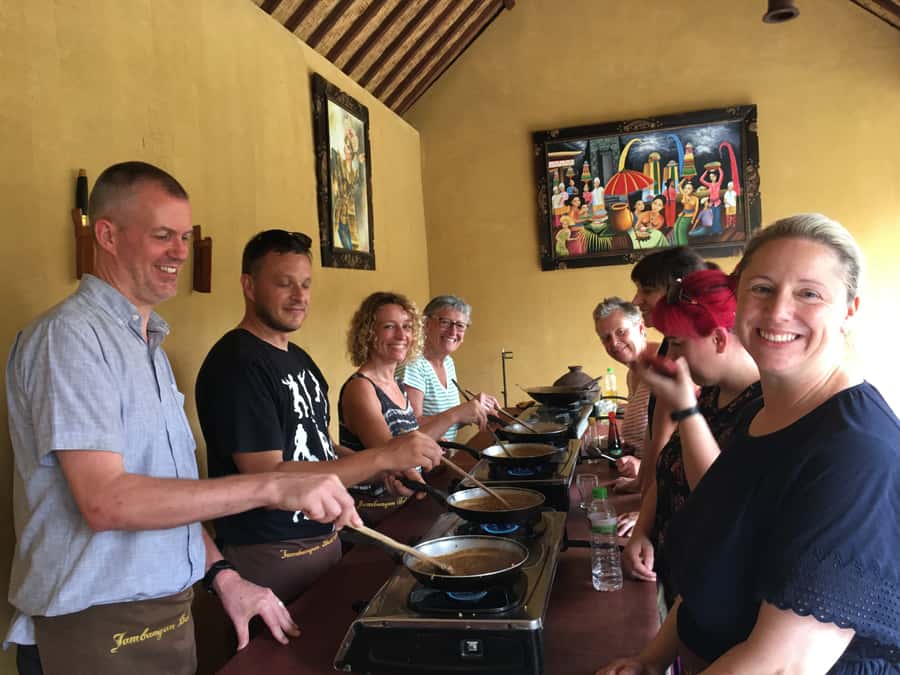
At the end, you take home your recipes and a certificate. That might sound like a neat souvenir, but it’s useful too. Recipes help you reproduce the dishes later, and a certificate gives a sense of completion, especially if you are collecting cooking skills during your trip.
The real win, though, is confidence. By shopping for ingredients, practicing offerings and coconut oil knowledge, and cooking yourself, you learn how the pieces fit. Next time you cook something Balinese-inspired, you will know why those spices, aromatics, and techniques matter, not just which ingredients go into a dish.
Price and Value: What $27 Buys You in Real Terms
At $27 per person for about 270 minutes, this is strong value for Bali. Why? Because the cost covers far more than kitchen instruction. You also get:
- Pickup and drop-off within the Ubud area
- a morning market tour
- rice fields and rice-farmer time
- village visits, including temples and a school
- coconut oil processing and daily offering making
- cooking at the Balinese home, plus lunch and dinner
- back-home recipes and a certificate
That combination is the value. Many cooking classes start you after the market, so you only learn the final steps. Here, the learning begins with selecting herbs and spices, then continues through cooking and cultural practice.
What to watch: transport outside Ubud is not included, and the listing also notes that expensive things and beer are not part of the package. If you want drinks, snacks, or add-ons, plan for that.
Who This Works Best For (and Who Should Skip It)
This experience suits you if you want more than a meal. You’ll enjoy it if you like hands-on classes, love local ingredients, and want a cultural layer that explains how food fits into daily Balinese life.
It is also a good pick if you prefer English instruction and clear guidance. If you enjoy chatting, the market and village stops make it easy to ask questions, and Putu and family bring a welcoming, attentive energy.
Practical suitability notes:
- Wheelchair accessible
- Not suitable for people with altitude sickness
- Not suitable for people over 95 years
That last point matters for planning, because age limits can affect whether the provider can safely manage the day’s activities.
Booking Sense Check: Should You Book Jambangan Bali Cooking Class?
If you are staying in Ubud and you want a morning activity that mixes market life, village culture, and real cooking, I think this is a smart booking. The price feels fair because you are getting the full arc: ingredients, context, cooking, and then eating what you made, with recipes to take home.
I would skip it if you hate early mornings or you really do not want outdoor village time. Also, if you know you cannot handle offerings or religious-cultural elements comfortably, you might feel awkward during the daily offering making.
If you do go, bring a camera and a curious attitude. Ask about ingredient choices, take notes on what flavors you love, and then actually cook one of the recipes soon after you get home.
FAQ
Is the cooking class in English?
Yes. The classes are conducted in English by Balinese chefs who are fully conversant with Balinese cuisine and culture.
Does the price include hotel pickup and drop-off?
Pickup and drop-off are included for hotels in the Ubud area only. If your hotel is outside Ubud, extra transport cost may apply depending on your location.
How long is the experience?
The duration is 270 minutes, so plan for about four and a half hours for the full morning session.
What should I bring?
Bring a camera and cash.
Is there a market tour?
Yes, there is a market tour included in the morning class. The market tour focuses on picking fresh herbs, spices, vegetables, and meat.
What is not included in the activity?
Extra transport outside the Ubud area is not included, as well as expensive things and beer.
More Markets in Ubud
- Bali: Ubud Monkey Forest, Coffee Plantation, and Market Tour
★ 5.0 · 5 reviews - Active Volcano, Rice Field, Hot Spring, Fruit market, Tea Plantation with Lunch
★ 5.0 · 513 reviews - Seminyak: Balinese Cooking Class & Market Tour
★ 4.9 · 458 reviews - Ubud Experience ; Swing, Waterfalls, Art Market, Rice Terrace
★ 5.0 · 56 reviews
More Shopping Tours in Ubud
- Bali Food Tour: Savor Street Food and Night Market Adventures
★ 5.0 · 46 reviews - Bali – Ubud Night Market Food Tour
★ 3.8 · 14 reviews - Balinese cooking class/Go shopping at the market, cook, eat
★ 5.0 · 12 reviews - Bali: Safari Zoo and Ubud Palace and Market Day Tour
★ 4.7 · 6 reviews
Just added around Ubud
- Sunrise Café and Morning Yoga Class★ 5.0 · 5 reviews
- Quad Bike Bali With Tunnel & Waterfall Tour★ 4.2 · 8 reviews
- Puppy Yoga in Bali, Ubud & Uluwatu★ 4.7 · 93 reviews
- Private Ubud Tour With Professional Photographer with Edit★ 5.0 · 53 reviews
- Ubud : PRIVATE Bike Tour inside Rice Field with meal & pool★ 5.0 · 5 reviews
- Ubud: Organic Farm Harvest, Bali Cooking Class by Pemulan★ 4.8 · 12 reviews
- Outskirts of Ubud, Gianyar: Pottery Class★ 5.0 · 9 reviews
- packages cooking class and romantic dinner in a local home★ 5.0 · 4 reviews
Cooking Classes, compared.
Cooking Class with Transfers and Optional Market Visit
Read our review →
PRIVATE Authentic Balinese Cooking Class in Ubud at Putu’s Home
Read our review →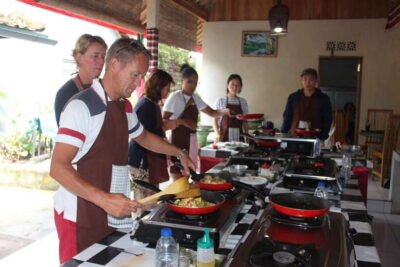
Browse the lists this tour appears in