
REVIEW · COOKING CLASSES
Ubud: Balinese Cooking Class at an Organic Farm
This Ubud cooking class feels grounded, not touristy, because it begins with real food shopping and ends at an organic farm table. I love that you get a hands-on cooking workflow, not a stand-and-watch demo, and you start by picking ingredients that will actually end up on your plate.
Two more things I like: the teaching focuses on core Balinese building blocks, like Base Gede spice paste, and the class structure keeps the group small, max 14 people, so you are not lost in the shuffle. One possible drawback is the farm is a bit of a drive from Ubud, so you should expect traffic time, and the shared stations (two people per station) mean you will cook side-by-side instead of solo.
In This Review
- Key Highlights You Should Care About
- How the Day Works, From Ubud Pickup to Morning Market
- Market Tour: The Part That Makes the Cooking Click
- Arriving at the Organic Farm Kitchen, Where Daily Life Shows Up
- Harvesting Ingredients: Why Picking Your Own Food Changes Everything
- Welcome Coffee or Tea, Plus a Light Breakfast You Actually Enjoy
- Meet Your Chef and Get Your Bearings in a Shared Station Setup
- The Teaching Style: Balinese Techniques, Not Just Random Steps
- Regular Menu: Build from Base Gede to a Full Balinese Spread
- Vegetarian Menu and Vegan Sate Lilit: Still a Real Balinese Meal
- Eating What You Made: Timing That Keeps You from Getting Too Full, Too Soon
- The Recipe Book and PDF: Your Souvenir That Works in Your Kitchen
- Price and Value: What $32 Gets You in Real Terms
- Logistics and Practical Considerations (The Stuff That Actually Matters)
- Who This Ubud Cooking Class Is Best For
- Should You Book It or Skip It?
- FAQ
- Is there a market tour included?
- How many meals will I cook?
- What is included in the class price?
- Do they offer a vegetarian menu?
- How big is the group?
- Is the farm cooking experience wheelchair accessible?
Key Highlights You Should Care About
- Early market tour (morning only) where you see how the day’s produce is chosen and sold
- Harvesting vegetables on an organic farm so your ingredients taste like they were picked for you
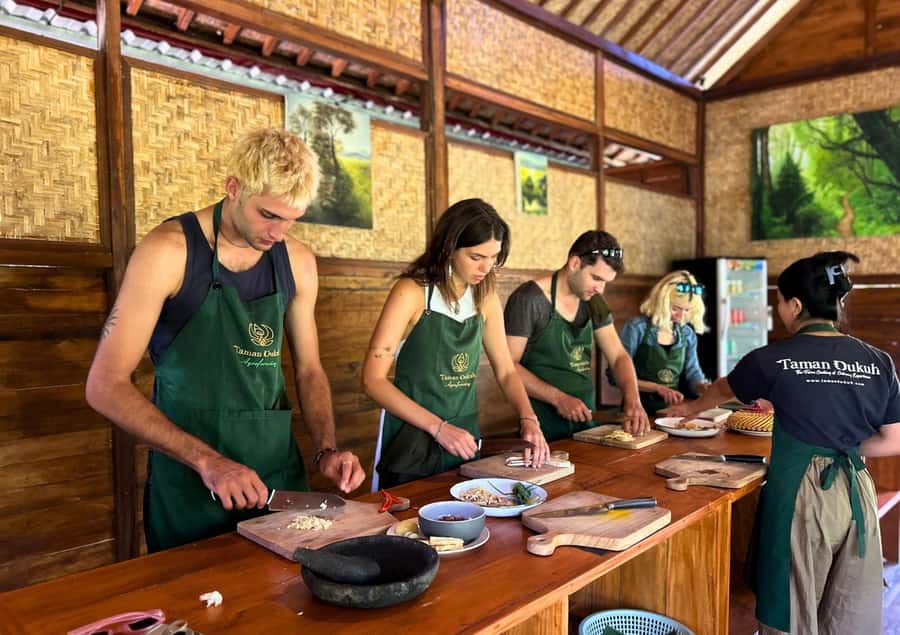
- Small-group pace with a maximum of 14 people, and shared kitchen stations for guided teamwork
- Six cooked dishes per person, covering starters, mains, and dessert on both regular and vegetarian menus
- Clear instruction with real recipes you keep, plus a downloadable PDF of the latest versions
How the Day Works, From Ubud Pickup to Morning Market
Most people start in Ubud and get shuttled from a meeting point included with the class. This matters because Bali traffic can be unpredictable, and having transport built in keeps the day from turning into a logistics headache.
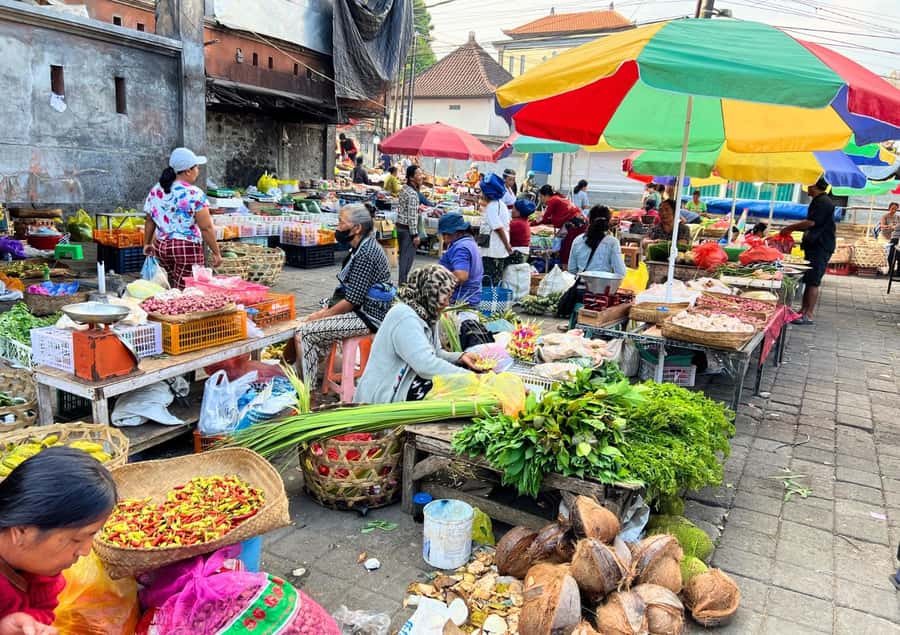
If you book the morning class, you also get a local market tour before heading to the farm. One guest specifically called out a 7:15am class as a great choice because it gives you time to experience the market at the start of the day, when the fruit and vegetables are being bought and sold fresh.
More Cooking classes in Bali:
- From Ubud: Authentic Cooking Class in a Local Village
★ 4.9 · 1,325 reviews - Seminyak: Balinese Cooking Class & Market Tour
★ 4.9 · 458 reviews - Bali: Private Balinese Cooking Class in a Family Home
★ 4.8 · 87 reviews
Market Tour: The Part That Makes the Cooking Click
The market visit is not just a stroll. It is guided with English-speaking support, and you get explanations about local produce, including fruits and vegetables you might not see in Western supermarkets.
You will also get to taste some local fruits during the day. That tiny moment is more important than it sounds, because it helps you connect flavors and textures to what you will cook later.
Arriving at the Organic Farm Kitchen, Where Daily Life Shows Up
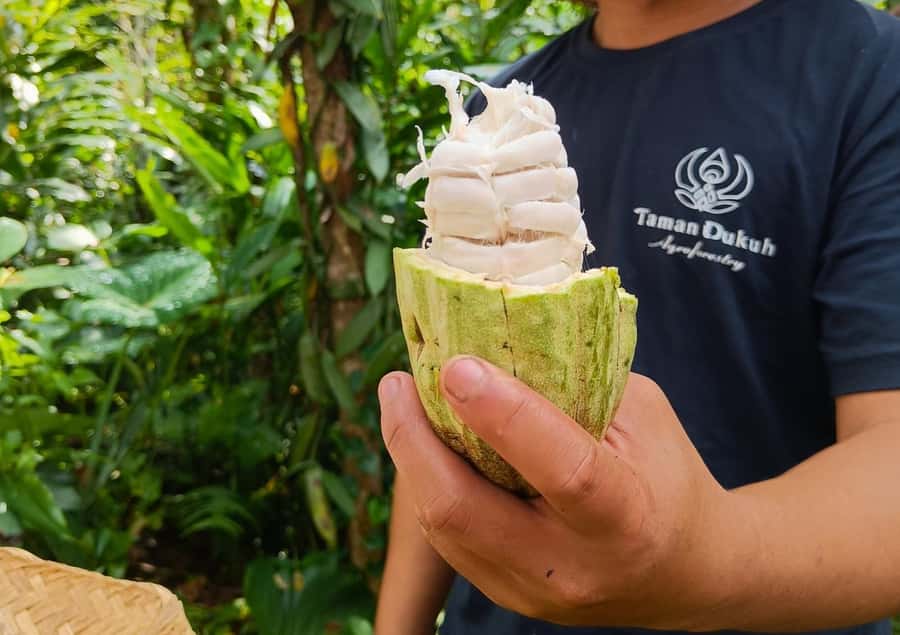
After the market, you travel to an organic farm location. The farm tour introduces you to how the hosts use natural resources around them, which helps you understand why certain ingredients are emphasized and how farming supports the kitchen.
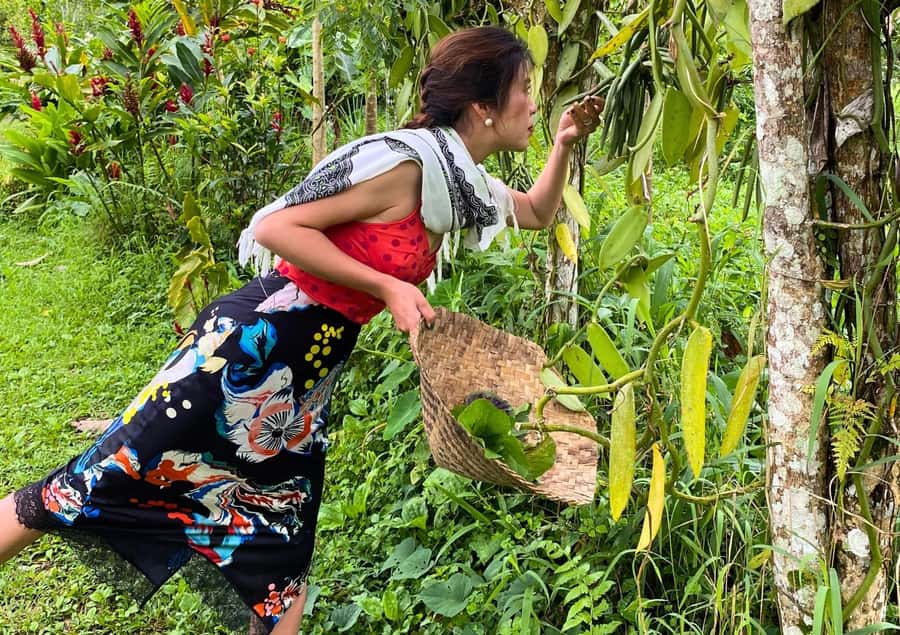
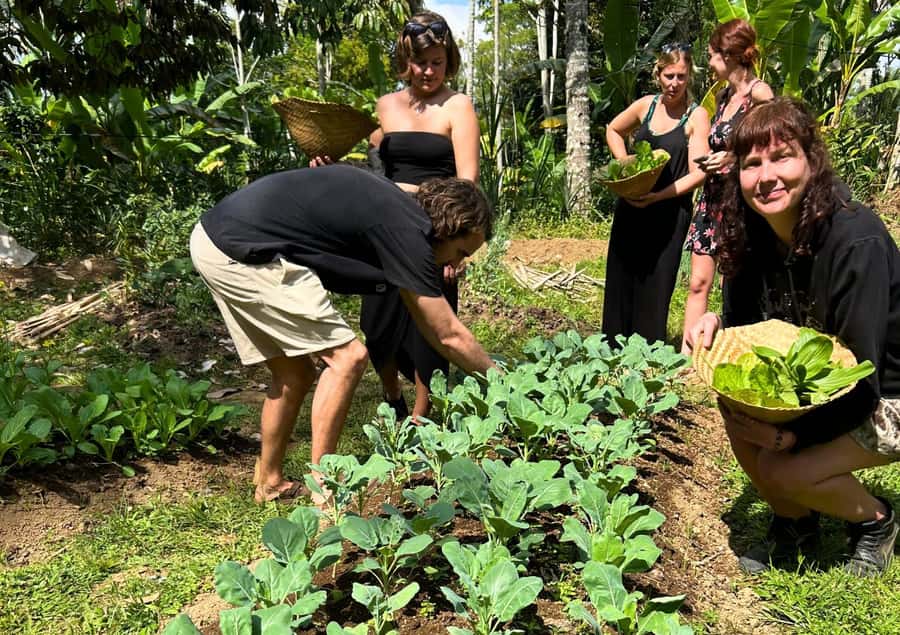
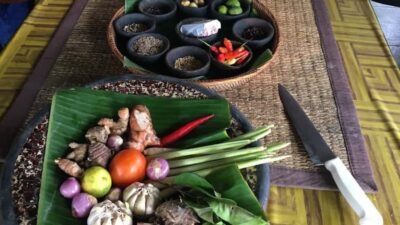
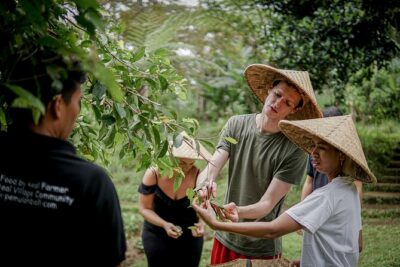
In the garden space, you are not just a spectator. You typically walk the premises, see what is growing, and then collect vegetables for the cooking class.
Harvesting Ingredients: Why Picking Your Own Food Changes Everything
Harvesting is one of the biggest reasons this works as a whole day experience instead of a quick cooking workshop. When you pick vegetables yourself, you pay attention to leaf textures, maturity, and what ingredients look like at the exact point of harvest.
You also leave with a better sense of what “organic” means in practice. Reviews repeatedly mention the farm tour and the produce growing there, so you get the feeling of a working place, not a staged set.
A few more Bali trips to compare
- Balinese Farm Cooking Class by Pemulan Bali
★ 5.0 · 410 reviews - Bali: Traditional Villages, Salt Farm & Tirta Gangga Tour
★ 4.9 · 31 reviews - Ubud: Organic Farm Harvest, Bali Cooking Class by Pemulan
★ 4.8 · 12 reviews - Safari Lagoi & Eco Farm Bintan
★ 3.0 · 7 reviews
Welcome Coffee or Tea, Plus a Light Breakfast You Actually Enjoy
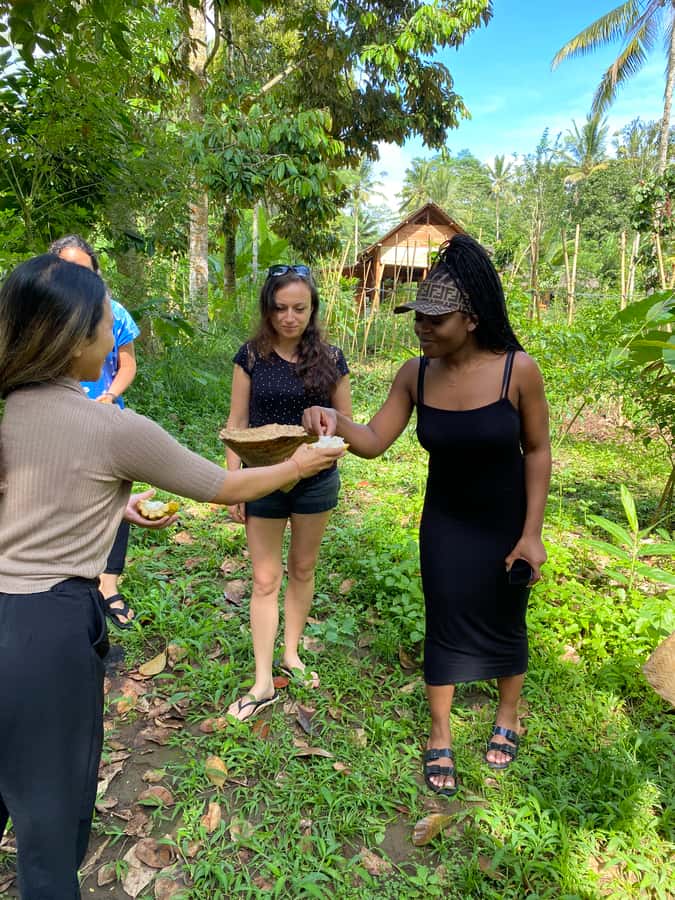
On arrival, the class includes a welcome coffee or tea plus a light breakfast. Expect something in the style of fresh fruit, and one review mentioned fruit and cake as part of the morning arrival meal.
If it rains, you are not left hanging. Umbrellas were provided during at least one rainy day, which is a nice detail because the farm and kitchen spaces are outdoors.
Meet Your Chef and Get Your Bearings in a Shared Station Setup
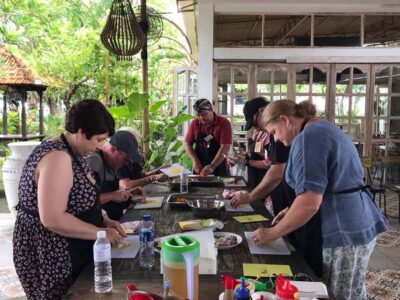
This is a small-group experience with a maximum of 14 people. At the farm, there can be two or three groups running during the same session, and each cooking station is shared between two people.
That shared-station setup is practical, but it also means you should be comfortable cooking at close range. You will work with someone next to you, and the pace is designed so the instructor can guide everyone without rushing.
The Teaching Style: Balinese Techniques, Not Just Random Steps
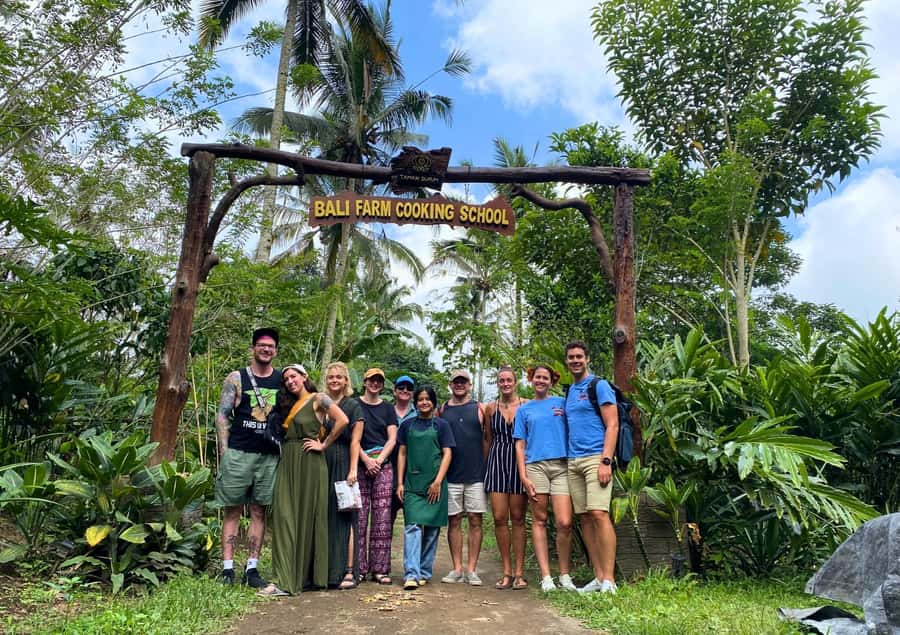
The class includes an introduction to your chef and ongoing support throughout. Reviews highlight instructors like Chef Buda, plus guides such as Depi, and they were repeatedly praised for clear explanations and friendly energy.
What you learn is more useful than a list of recipes. Instead of memorizing a single dish, you learn the logic behind a Balinese spice base and how that base shows up across multiple meals.
Regular Menu: Build from Base Gede to a Full Balinese Spread
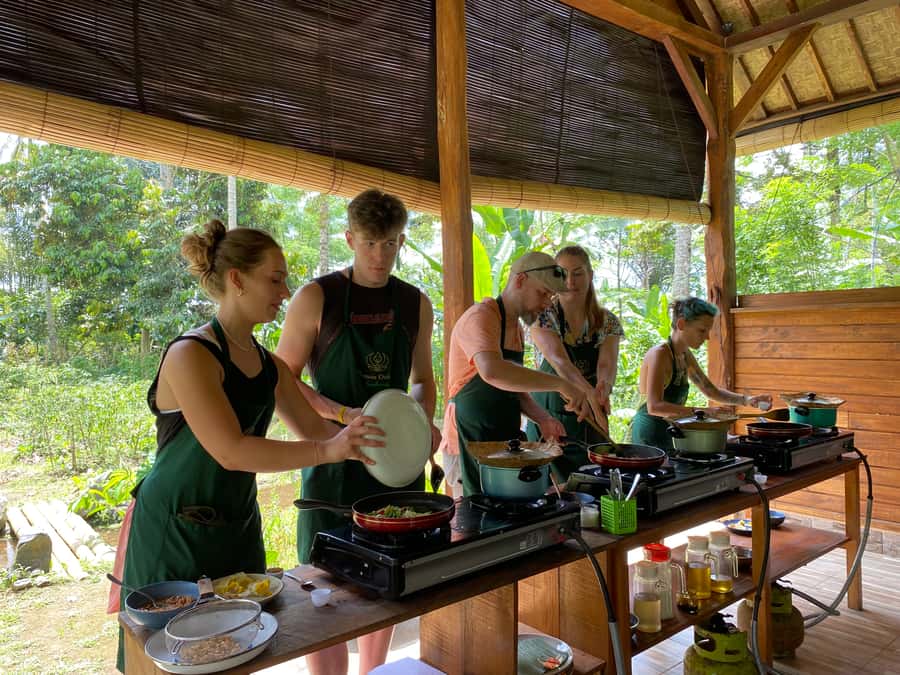
You will cook about six authentic Balinese meals on the regular menu. The course sequence is built to teach you ingredients in context, so you are not just grinding spices for one dish and moving on.
Here is the regular flow:
- Base Gede (traditional spice paste)
- Sayur Urab, a mixed green salad with coconut and spices
- Opor Ayam, Balinese chicken curry, with the “secrets” explained as you go
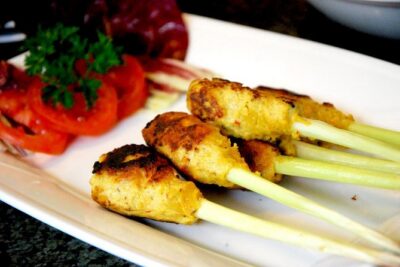
- Sate lilit, traditional kebab made with meat, coconut, and spice paste
- Pindang base tomat, fish with tomato sauce
- Tempe asam manis, sweet sour tempe
- Dessert: pisang goreng or bubur injin (black rice pudding)
One smart element here is that Base Gede becomes a foundation. You see how one spice paste can show up across flavors, which makes it easier to recreate dishes later.
Vegetarian Menu and Vegan Sate Lilit: Still a Real Balinese Meal
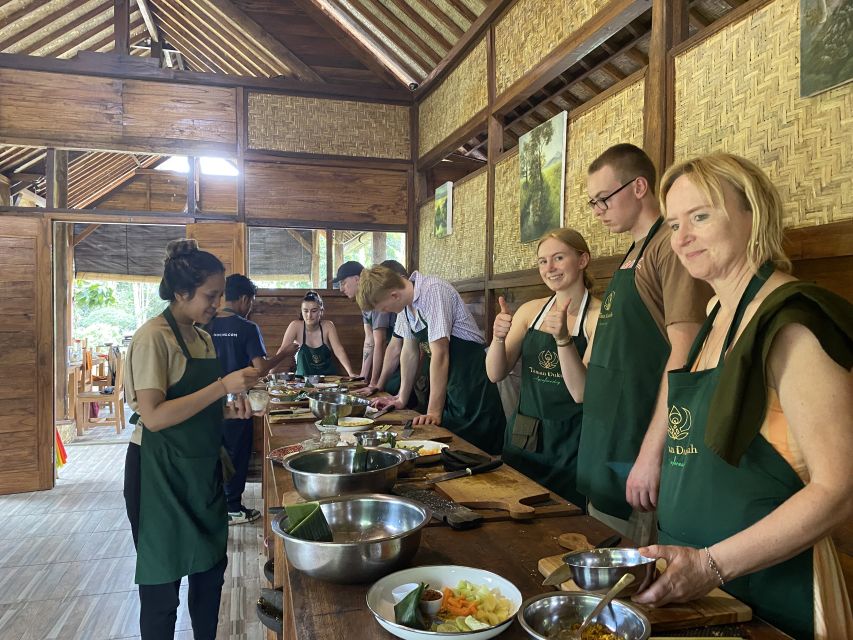
If you choose the vegetarian menu, you still cook from a Balinese base and still get a full meal sequence. The vegetarian list includes Base Gede, then:
- Gado gado, blanched vegetables with peanut sauce
- Opor Tempe, a tempe curry
- Bergedel, fried corn with Balinese spices
- Tempe asam manis, sweet and sour tempe
- Vegan sate lilit, using jackfruit and spice paste
- Dessert: pisang goreng or bubur injin
One detail that stood out in feedback: non-vegetarian dishes may be handled separately for groups with different dietary needs. That is a big plus if you are vegetarian or vegan and want your cooking setup respected.
Eating What You Made: Timing That Keeps You from Getting Too Full, Too Soon
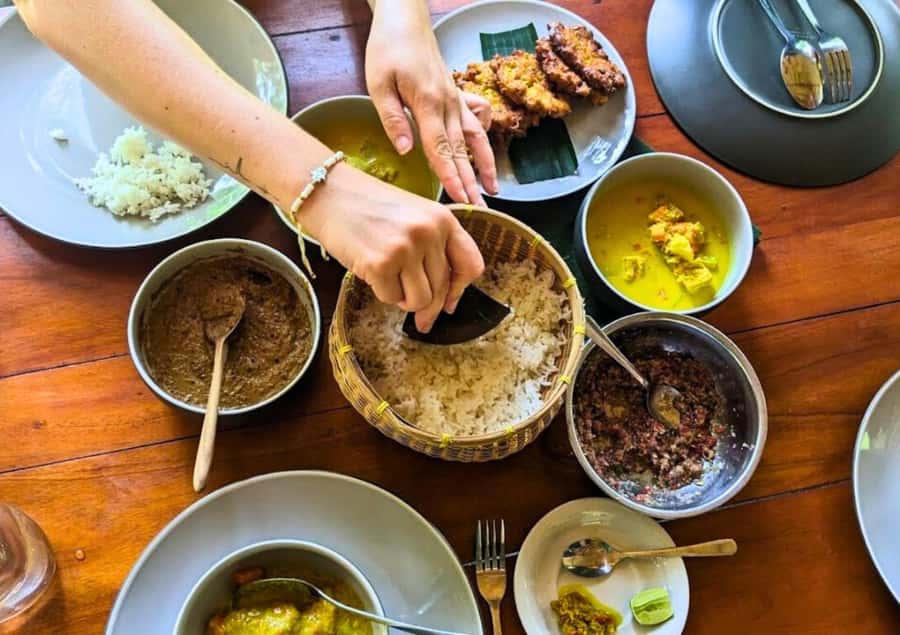
After cooking, you enjoy the meals you made. Several reviews point out that the structure gives you time to enjoy food throughout the session, not only at the very end.
Expect a filling amount of food for the day. Multiple people mentioned feeling very full after the meal, which makes sense because six cooked dishes plus dessert is a serious lunch and dinner combo in one go.
The Recipe Book and PDF: Your Souvenir That Works in Your Kitchen
You get to keep a recipe book at the end. You also receive a downloadable PDF of the latest recipes, which is useful if you want to cook again without guessing what you did last time.
This is where the class turns from an activity into a skill you can keep. If you are the kind of person who tries to recreate travel meals at home, having recipes in hand is the difference between a nice memory and an actual repeatable dinner.
Price and Value: What $32 Gets You in Real Terms
At about $32 per person for the full experience, the value comes from three places. First, transport from Ubud is included via shuttle. Second, the class includes meals you cook, plus mineral water and coffee or tea during the session.
Third, you get an ingredient-driven day, with market context and farm harvesting, not just cooking in a classroom. When the activity includes six dishes, both regular and vegetarian options, plus a recipe book, it stops feeling like a hobby and starts feeling like a full-day food education.
Logistics and Practical Considerations (The Stuff That Actually Matters)
A couple of practical points show up in the experience details. The farm is roughly an hour drive from Ubud according to one review, so factor in traffic on the way back and plan your next activity with buffer time.
Wheelchair access is noted as not suitable. Pets are not allowed. If you need special seating or mobility help, you should check your fit with the shared outdoor kitchen setup before booking.
Who This Ubud Cooking Class Is Best For
This is a great pick if you want more than a meal. You get the market visit, farm tour, ingredient harvesting, and then actual cooking with guidance, so it fits people who like their food travel to have a story attached.
It is also a strong choice for beginners because the class is hands-on and guided. At the same time, cooks who already know spices may appreciate how the base paste and ingredient logic are taught step-by-step.
Should You Book It or Skip It?
Book it if you want a full-day Balinese food experience with real farm inputs and a recipe book you can keep. The small group size, praised instructors like Chef Buda and Depi, and the mix of market, harvest, cooking, and eating make it a solid value at around $32.
Skip it only if you know you hate shared cooking stations, you cannot handle an outdoor farm environment, or you need wheelchair accessibility. If your goal is a memorable, practical cooking lesson in Ubud, this is the kind of day that gives you more than photos, it gives you dinner skills.
FAQ
Is there a market tour included?
Yes, the market tour is included, and it is for the morning class only.
How many meals will I cook?
You will cook 6 authentic Balinese meals. The exact dishes depend on whether you choose the regular or vegetarian menu.
What is included in the class price?
The class includes shuttle from the Ubud meeting point, the market tour (morning only), organic farm tour, harvesting fresh ingredients, the hands-on cooking class, recipe book (plus a downloadable PDF of the latest recipes), mineral water plus coffee or tea during the class, and the meals you cook.
Do they offer a vegetarian menu?
Yes. There is a vegetarian menu, which includes dishes like gado gado, opor tempe, bergedel, tempe asam manis, vegan sate lilit, and dessert options.
How big is the group?
It is a small group experience with a maximum of 14 people per group.
Is the farm cooking experience wheelchair accessible?
No, it is not suitable for wheelchair users.
Just added around Bali
- Bali: 3-Day Private Gili Islands Snorkel Tour with Hotel★ 4.2 · 44 reviews
- Bali: 2-Day Sunset and Sunrise Camping at Mt. Batur★ 4.6 · 124 reviews
- Private Full-Day Tour to the Real Bali Swing and Ubud★ 4.5 · 9 reviews
- Ubud: Rice Terrace, Holy Water Temple & Waterfalls Trek Tour★ 4.9 · 115 reviews
- Sanur Village E-bike Tour: Family-Friendly Adventure★ 4.6 · 85 reviews
- Sanur: Horse Riding at the Bali Beach 30 minute ride★ 4.6 · 8 reviews
- Private Sekumpul Waterfall Hiking Tour★ 4.9 · 116 reviews
- Nusa Penida and Nusa Lembongan Island Tour★ 4.7 · 24 reviews
Cooking Classes, compared.
Cooking Class with Transfers and Optional Market Visit
Read our review →
PRIVATE Authentic Balinese Cooking Class in Ubud at Putu’s Home
Read our review →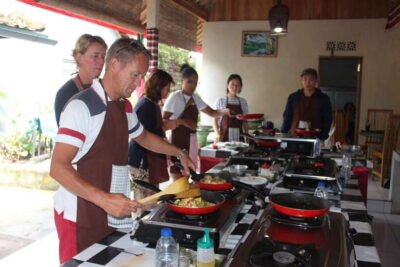
Browse the lists this tour appears in