
REVIEW · COOKING CLASSES
Balinese Authentic Cooking Class in Ubud
Fall in love with Balinese flavors.
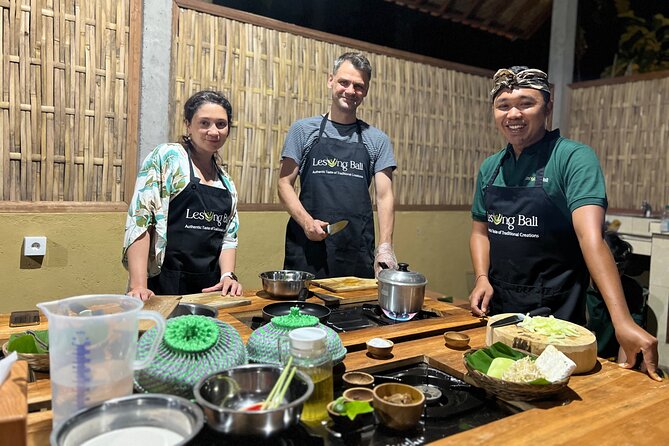
This small-group half-day class in Ubud turns cooking into a culture walk, from a traditional market and a Balinese home visit to a farm where you help harvest spices. I especially like the hands-on technique focus, including pounding and chopping spices using a lesung mortar and pestle, plus the relaxed, personal pace. One thing to consider is that the day runs on a schedule, so even though you cook actively, some steps (like certain sides) may be handled by the staff depending on the menu and instructor.
If you want good food with context, this is a strong pick. You start in the west side of Ubud in a countryside-style setting, and you finish with a meal you actually cooked, often with more than you expect. My only caution: if you prefer very detailed step-by-step explanations for every tiny spice addition, plan to ask questions during the class, since the teaching style can vary by chef.
In This Review
- Key highlights worth knowing
- Half-Day Balancing Act: Why $39.71 Feels Fair
- Market Tour and Spice Shopping: Morning Option Only
- Traditional Balinese House Visit: More Than a Photo Stop
- Farm Harvesting: Picking Ingredients Before You Cook Them
- Hands-On Cooking With Lesung: The Real Skill You Take Home
- What You’ll Cook: Regular, Vegetarian, and Vegan Menus
- Eating What You Made: Portion Size and Timing
- Group Size, Transport, and How the Day Actually Moves
- Who This Class Fits Best (And Who Might Feel It’s Not for Them)
- What Makes the Teaching Stand Out: The Role of the Chef
- Tips to Make Your Day Smoother
- Should You Book This Balinese Cooking Class in Ubud?
- FAQ
- How long is the Balinese cooking class?
- Where does the experience take place?
- What time options are available?
- Is the traditional market visit included?
- Can I choose a vegetarian or vegan menu?
- How many people are in a group?
- Is pickup included?
- What transportation and food are included?
- What is the weather policy?
- What is the cancellation policy?
Key highlights worth knowing
- Market tour in the morning option includes a traditional ingredient walk and spice buying
- Traditional house visit explains daily life and how Balinese compounds are set up
- Farm harvesting lets you pick fresh ingredients before the cooking starts
- Lesung mortar and pestle practice gives you the feel for Balinese spice work
- Diet flexibility with regular, vegetarian, and vegan menu choices
- Max 15 travelers keeps the class small and easier to get help
Half-Day Balancing Act: Why $39.71 Feels Fair
At about $39.71 per person, the value here is not just the cooking part. You are paying for a full half-day arc, with transportation within Ubud, included drinks and snacks, and a structured sequence: market (morning only), home visit, farm, then a hands-on class and meal.
The duration is around 5 hours, which is a sweet spot in Bali. You get morning energy or afternoon recovery time without committing to an all-day tour. And because the group is capped at 15 travelers, it stays more like a workshop than a factory line.
Included basics matter too. You get mineral water, coffee and/or tea, and a Balinese cake. Add air-conditioned transport and a free shuttle in the Ubud area, and the day feels smoother than many “just show up at a kitchen” experiences.
More Cooking Classes in Ubud
- Ubud Cooking Class Bali with Balinese Chef
★ 5.0 · 1,609 reviews - Ubud: Cooking Class with Transfers and Optional Market Visit
★ 4.9 · 824 reviews - PRIVATE Authentic Balinese Cooking Class in Ubud at Putu’s Home
★ 5.0 · 644 reviews
Market Tour and Spice Shopping: Morning Option Only
If you book the morning class, the first real sensory hit comes fast. You visit a traditional morning market and learn how key ingredients fit into Balinese cooking. The market segment includes time to buy spices locally, so you can connect what you learned to what you use later during cooking.
Why this matters: Balinese flavors start with spice mixtures and how ingredients are handled. Watching ingredients being selected, then tasting them, and then using them yourself builds a memory you can recreate later at home. You also get exposure to local produce and fruit that may not show up on a typical restaurant menu.
A small practical note. The market tour is only for the morning schedule. If you pick afternoon or evening, your day starts elsewhere in the farm-to-cooking flow, so you may miss the spice shopping portion.
Traditional Balinese House Visit: More Than a Photo Stop
After the market, you visit a local Balinese house to understand culture and lifestyle. This part is specifically about how homes are arranged and how daily life works within the compound setup. You get a calmer, human-scale look at Balinese living before the day shifts into cooking mode.
In the feedback I’ve seen reflected in many experiences with this operator, this stop is often the moment people feel the most “grounded.” You are not just learning recipes. You are getting the background that helps the recipes make sense, like why certain ingredients and methods show up again and again.
Even when the house visit is not about walking through every room in detail, it still gives you context. It also helps you slow down. That matters because the rest of the day involves work in the kitchen and moving between locations.
Farm Harvesting: Picking Ingredients Before You Cook Them
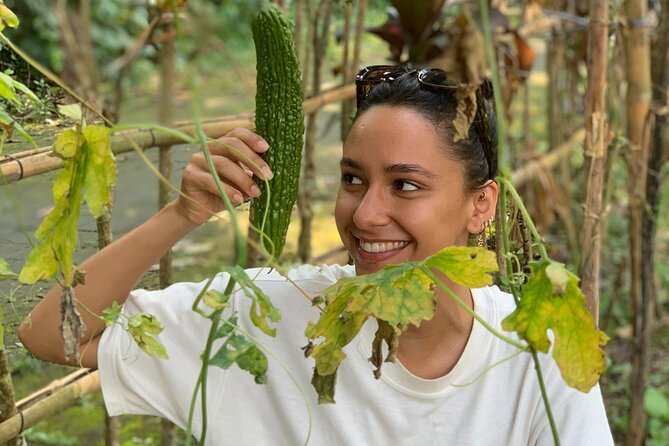
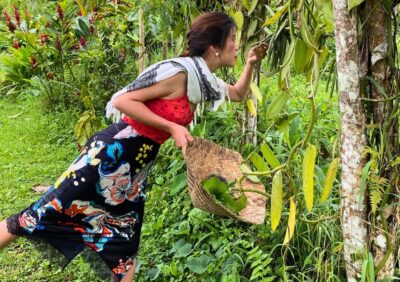
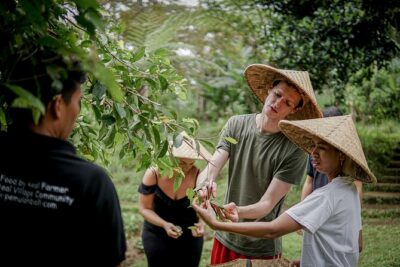
Next comes the farm. This is where the experience turns from educational to tactile. After you decide your menu, you explore the farm and help harvest the spices and ingredients you will use during class.
This step is valuable for two reasons. First, it forces attention to freshness. Second, it gives you a “how it grows and how it’s used” connection. You start to see ingredients as living things, not just grocery items.
The setting is described as countryside-like, with green surroundings and a calmer atmosphere than central Ubud. You also get a change of rhythm. Market energy can be quick and loud, but the farm part is more about looking, picking, and preparing.
Another side of Indonesia:
- All-Inclusive Ubud Private Tour
★ 5.0 · 14,344 reviews - Best of Ubud Full-Day Tour with Jungle Swing
★ 5.0 · 8,571 reviews - Ubud: Monkey Forest, Jungle Swing, Rice Terrace, and Water Temple
★ 5.0 · 7,160 reviews - Ubud: Waterfalls, Water Temple & Rice Terraces Private Tour
★ 5.0 · 5,484 reviews
Hands-On Cooking With Lesung: The Real Skill You Take Home
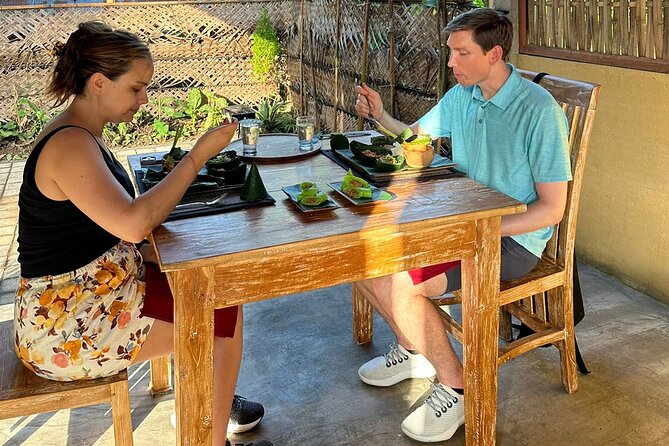
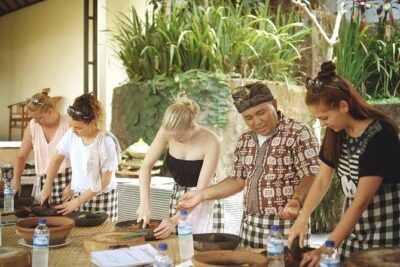
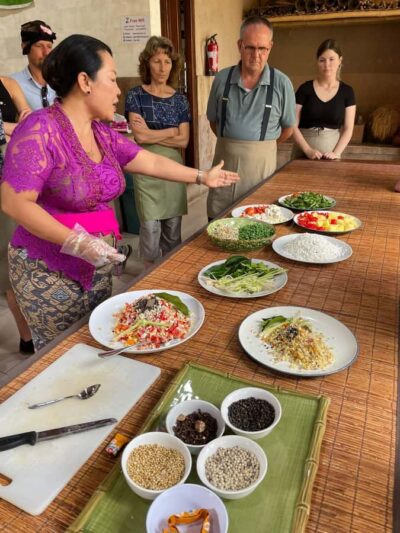
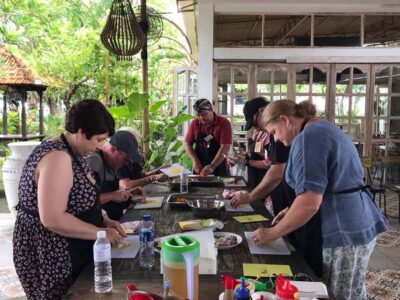
The cooking class itself is where you earn your money back, hands down. A Balinese chef guides the process using fresh ingredients selected earlier from the farm and market.
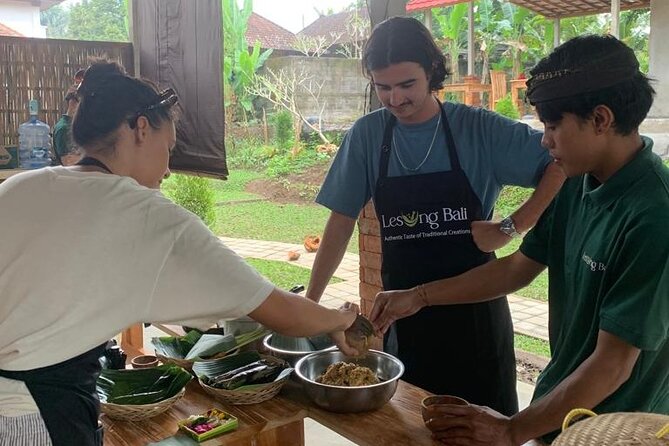
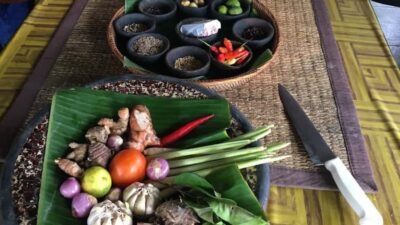
You learn traditional techniques including chopping and pounding spices with a lesung (mortar and pestle). That specific tool matters because it shapes texture and flavor. When spices are ground and worked correctly, the aromas bloom differently than with pre-ground powders.
A typical flow goes like this: choose your menu, cook multiple dishes, and learn the role of key ingredients along the way. The chef explains what goes into each recipe and how to manage the steps based on the menu you picked. Some parts are very hands-on, like grinding and mixing, while others are more guided so the meal lands correctly at the end.
If you are a total beginner, you should feel comfortable. The teaching style is often described as patient and supportive, with time for questions. One caution from experience shared by others: if you want extra clarification for every single spice addition, speak up during the process. Teaching pace can vary by chef, and you do not want to assume you missed an explanation.
What You’ll Cook: Regular, Vegetarian, and Vegan Menus
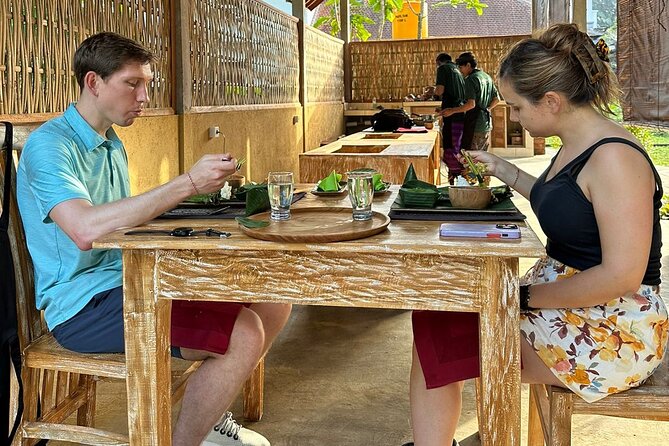
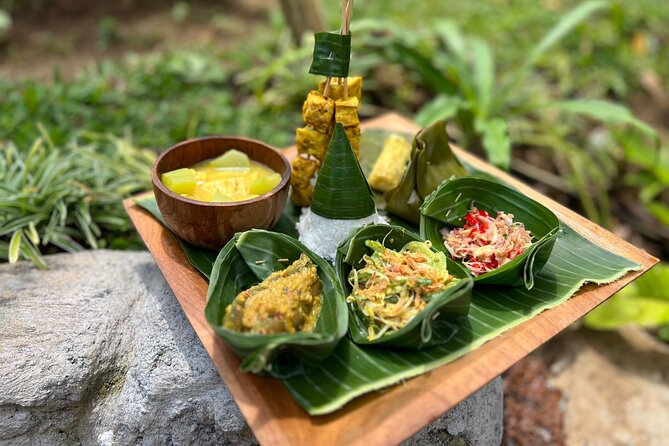
One of the strongest practical features is menu choice. You can select regular, vegetarian, or vegan options during the class. That is not just a courtesy. It affects which ingredients you harvest and which dishes you end up learning.
Balinese cooking often balances herbs, aromatics, spice blends, and cooking liquids. So even if two menus share certain base flavors, you may see different combinations in final dishes. The class generally teaches a set of dishes that you can then recognize as part of the Balinese lineup.
Diet flexibility is especially helpful in Bali, where many “local food” experiences default to meat or seafood. Here, you can build a meal that matches your preferences while still learning the core techniques behind the cuisine.
Eating What You Made: Portion Size and Timing
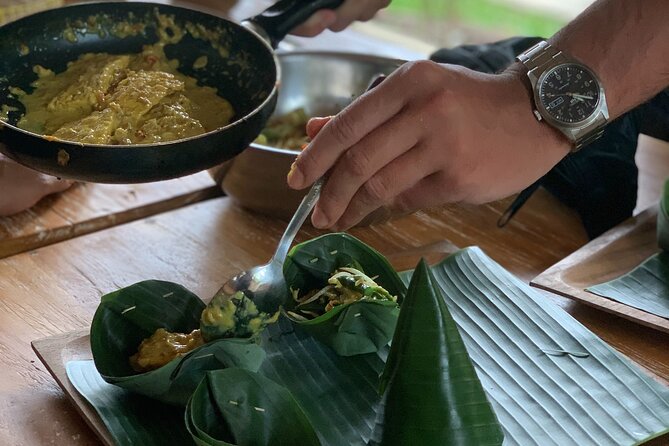
At the end, you eat what you cooked. And there is a good chance you will leave full. Multiple experiences described the final meal as plentiful, sometimes more than you can comfortably finish.
That is a real tip: come with an appetite. You do enough work during the cooking portion that an empty stomach tends to turn into a satisfied one by the end.
Also, the day is structured so you have coffee and/or tea and snacks earlier. You might get Balinese cake included with the package. So even if you arrive hungry, you are still likely to manage the pace well.
Timing can vary a bit depending on class schedule and menu, but the experience is designed to end after you’ve made and tasted your dishes. It is not “watch and sample a bite.” It is cooking, then eating.
Group Size, Transport, and How the Day Actually Moves
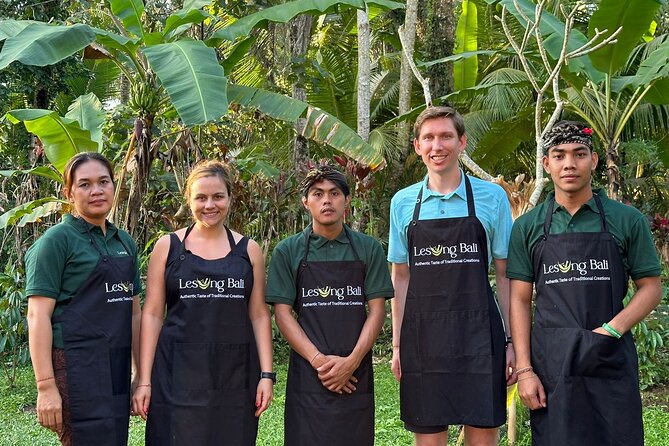
The experience runs with a small group and a maximum of 15 travelers. That size is the difference between getting real attention and simply receiving instructions from a distance.
Pickup is offered, with a free shuttle service within the Ubud area. If you are staying outside central Ubud, there are extra transportation fees by area:
- Nusa Dua and Jimbaran: IDR 500,000 per car
- Uluwatu: IDR 550,000 per car
- Kuta, Seminyak, Sanur, and Canggu: IDR 450,000 per car
Two practical things to keep in mind:
1) If you want the smoothest start, confirm whether your pickup is truly included for your hotel area.
2) You may be asked to meet a driver or shuttle at the start point depending on your location.
You also get an air-conditioned vehicle for transfers, mineral water during the experience, and a mobile ticket. Confirmation is received at booking time.
Who This Class Fits Best (And Who Might Feel It’s Not for Them)
This cooking class is ideal if you want culture plus cooking, not just a meal. The market and home visit give you context for the food, and the farm ties it to ingredients you actually harvested.
It also suits:
- couples who want a shared activity that is not stiff or overly touristy
- solo travelers who like small groups and a good host
- people who cook at home sometimes, and want technique not just recipes
- beginners who need patient instruction and hands-on guidance
You might be less thrilled if:
- you want a silent, step-by-step “master class” with perfect explanation for every micro-step
- you hate schedule-based tours, since the day has multiple stops and a planned menu choice
- you are expecting to cook everything from scratch in every dish, because some parts may be led by staff to keep the class on time
What Makes the Teaching Stand Out: The Role of the Chef
The operator, Lesung Bali, works with different chefs and guides. Names that come up include Putri, Ron, Don, Gustie, and Begul.
What people consistently value is the combination of cooking skill and friendly coaching. In many experiences, the chef works patiently, helps you feel comfortable at the stove, and keeps it light with humor. You also get a chance to ask questions, and the day does not feel like a lecture.
If your cooking style is hands-on, you will probably feel right at home grinding spices and working through the steps yourself. If your cooking style is more observation-first, just know you will still end up cooking multiple dishes, because that is the point of this format.
Tips to Make Your Day Smoother
A few practical moves can improve your experience immediately:
- Wear shoes you do not mind getting a little dusty, since the farm setting can involve ground surfaces.
- Bring a light layer. Even in Bali, air-conditioned rides and shaded areas can feel cooler than you expect.
- Come hungry, because the class often ends with a generous meal.
- If you have dietary needs, pick your vegetarian or vegan option clearly during the class menu decision.
- Ask questions while you cook. If a chef adds small spices or details quickly, you can get clarification on the spot.
One more tip: the experience requires good weather. If conditions are poor, you may be offered another date or a full refund. Flexibility helps.
Should You Book This Balinese Cooking Class in Ubud?
Yes, if you want a half-day that feels like real Ubud life, not just a cookbook session. The value is strong because you get market context, a Balinese home explanation, farm harvesting, and hands-on technique with traditional tools like the lesung mortar and pestle. With regular, vegetarian, and vegan menu choices, you can build a meal that fits your needs.
Book it especially if you enjoy:
- learning by doing
- small-group attention
- food stories with cultural meaning
Skip it only if you want a fast, purely practical cooking lesson with no cultural stops, or if you want perfectly slow pacing and fully detailed explanations at every step. For most people, the balance here is exactly right.
FAQ
How long is the Balinese cooking class?
The class runs for about 5 hours (approx.).
Where does the experience take place?
It takes place in Ubud, Indonesia, with the class located on the west side of Ubud in a countryside-style area.
What time options are available?
You can choose a morning, afternoon, or evening class.
Is the traditional market visit included?
The traditional morning market tour is included for the morning class only.
Can I choose a vegetarian or vegan menu?
Yes. The class offers regular, vegetarian, and vegan options, and you can choose the menu during the experience.
How many people are in a group?
The experience has a maximum of 15 travelers.
Is pickup included?
Pickup is offered, and there is a free shuttle service in the Ubud area only. Pickup outside Ubud may cost extra depending on where you are staying.
What transportation and food are included?
Included items are coffee and/or tea, air-conditioned vehicle, mineral water, Balinese cake, and all fees and taxes, plus the free shuttle in the Ubud area.
What is the weather policy?
This experience requires good weather. If it is canceled due to poor weather, you will be offered a different date or a full refund.
What is the cancellation policy?
You can cancel for a full refund up to 24 hours in advance. If you cancel less than 24 hours before the start time, the amount paid is not refunded.
Just added around Ubud
- Sunrise Café and Morning Yoga Class★ 5.0 · 5 reviews
- Quad Bike Bali With Tunnel & Waterfall Tour★ 4.2 · 8 reviews
- Puppy Yoga in Bali, Ubud & Uluwatu★ 4.7 · 93 reviews
- Private Ubud Tour With Professional Photographer with Edit★ 5.0 · 53 reviews
- Ubud : PRIVATE Bike Tour inside Rice Field with meal & pool★ 5.0 · 5 reviews
- Ubud: Organic Farm Harvest, Bali Cooking Class by Pemulan★ 4.8 · 12 reviews
- Outskirts of Ubud, Gianyar: Pottery Class★ 5.0 · 9 reviews
- packages cooking class and romantic dinner in a local home★ 5.0 · 4 reviews
Cooking Classes, compared.
Cooking Class with Transfers and Optional Market Visit
Read our review →
PRIVATE Authentic Balinese Cooking Class in Ubud at Putu’s Home
Read our review →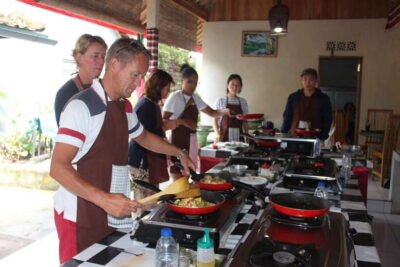
Browse the lists this tour appears in