
REVIEW · RINJANI TREKKING
Mount Rinjani 2 Days 1 Night Senaru Crater Rim
A volcano wake-up call is one of Lombok’s best travel moments. This Mount Rinjani 2 Days 1 Night Senaru Crater Rim trek is a smart way in, with a guided route through forest, then camp on the crater rim for jaw-dropping views.
I love that the plan mixes real hiking with real recovery. You get full board meals during the trek, plus camping equipment handled for you, including setup and pack-down by the team.
One drawback to consider is that the trail gets steep and long. If you are very new to hiking, you can still do it, but you’ll want to take pacing seriously and expect some grind.
In This Review
- Key things to know before you go
- Why the Senaru Crater Rim route is a great first-time Rinjani option
- Day 1 from Senaru to the crater rim: forest shade to steep grassland
- The trail rhythm: Pos 1, Pos 2, then Pos 3 for lunch
- The climb gets steeper after lunch
- Arriving at Senaru Crater Rim and settling in
- Camp life on the rim: what you get and how it feels
- Your base camp setup is handled for you
- Meals are included, and they matter more than you think
- The one detail to keep your expectations realistic
- Day 2 sunrise and the return trek back to Senaru
- The morning is calmer, but do not get lazy
- Stops on the way back, including Pos 2 for lunch
- Back to Senaru by early afternoon
- Price and value: what $165 covers, and what costs extra
- Who this trek suits best, and how to prepare
- Physical expectations
- Packing you can’t skip
- Set yourself up for comfort on the rim
- What I’d watch for in real-world conditions
- Should you book this Senaru Crater Rim trek?
- FAQ
- What time does the trek start?
- Where does the trek start and end?
- What is included in the $165 price?
- What is not included?
- How much is the national park fee?
- How long is the trek, and when do we return?
- What happens if weather is bad or the minimum group size is not met?
Key things to know before you go
- Forest start, crater rim finish: Day 1 shifts from dense tropical forest to open grassland as you climb.
- Camp with real gear: You get a double camping tent, mattress, sleeping bag, pillow, and camp table and chair.
- Guides and porters focus on safety: Reviews repeatedly highlight careful guidance and strong porter support for setup and logistics.
- Big views, big weather impact: Sunrise and sunset are a highlight, but this trek needs good weather to work well.
- National park fee is extra: Budget for IDR 250,000 per person per day (total IDR 500,000).
- Finish time matters: You return to Senaru around 1 pm on day 2.
Why the Senaru Crater Rim route is a great first-time Rinjani option
If you are curious about Rinjani but worried about going in too deep too fast, this Senaru Crater Rim itinerary is built for beginners. The experience is still a true volcano trek, but the pacing and structure are designed to keep you moving, fed, and supported.
The biggest draw is the payoff: you camp on the rim and watch sunrise and sunset with views toward Bali’s Mount Agung and the Gili Islands. That means you are not just hiking for a summit photo, you are also hiking for the atmosphere of crater-edge camping.
I also like how the trip splits into two manageable days. Day 1 is the climb and camp setup, and Day 2 is a sunrise and then the return down, so you always know what kind of effort is coming next.
More Evening Tours in Lombok
- Lombok : Sharing Whale Shark Tour 2 Day 1 Night Sumbawa
★ 3.9 · 53 reviews - Mount Rinjani Hiking to summit( 2 Days 1 Night )
★ 5.0 · 50 reviews - 2 Days Hike to Summit with full view of Sunrise and Sunset
★ 5.0 · 49 reviews
Day 1 from Senaru to the crater rim: forest shade to steep grassland
The adventure starts in Senaru with an early breakfast, then registration at the Rinjani Trek Centre before you hit the trail. Meeting time is 7:00 am, and this timing matters, because cooler temperatures help you hike comfortably and you gain time for the ascent.
The trail rhythm: Pos 1, Pos 2, then Pos 3 for lunch
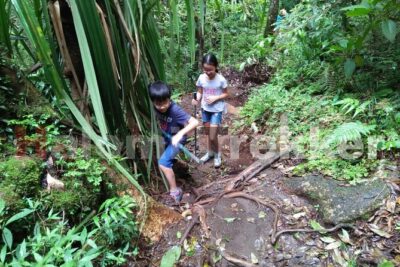
Your route begins through dense tropical forest. That first stretch feels like a gentle warm-up compared with what comes higher up, and the shade helps if the weather turns hot.
You’ll stop at Pos 1 and Pos 2 for rest breaks and snacks. These stops are not just pauses for your legs. They are where the guide keeps the group moving in a steady way, and where you can adjust your pace without losing the whole day.
At Pos 3 you take a longer break for lunch. This is a good moment to reset, especially if you came in at a faster pace during the forest portion.
The climb gets steeper after lunch
After lunch, the trail continues upward, and it changes character. Higher up, the forest gives way to grassland, and the track becomes increasingly steep. That change is a real thing on the ground. It means fewer natural cooling factors and more focus on your footing and breathing.
This is where the guide and porter team make a difference. In the reviews, multiple guides are praised for keeping people safe and organized, with names like Djordy, Eddie, Madhy, and Anci showing up across different experiences. You want that kind of oversight on the steep section, even if you are in good shape.
Other Rinjani trekking worth a look in Lombok:
- Mount Rinjani Trek 3D-2N To Summit – Lake – Hotspring
★ 4.7 · 111 reviews - Mount Rinjani 2-Day Trek to Senaru Crater Rim
★ 4.8 · 89 reviews - mount rinjani One day trek
★ 4.6 · 39 reviews - Mount Rinjani: 2D/1N Trekking To Sembalun Or Senaru Views
★ 4.8 · 24 reviews
Arriving at Senaru Crater Rim and settling in
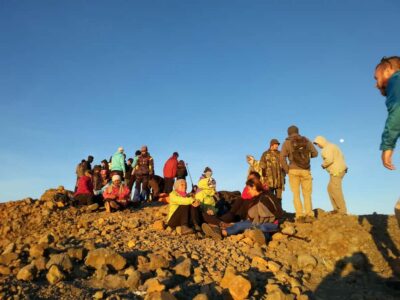
You camp on the Senaru Crater Rim. The night is where the trek earns its keep. From camp you get views of the sunset, Mount Agung in Bali, the Gili Islands, the Rinjani summit area, and the volcanic cone inside the crater.
If you like your travel photos to match what you feel, this is the part that delivers. The rim is wide open, and the sky does the heavy lifting. You are not stuck in one tight viewpoint.
Camp life on the rim: what you get and how it feels
Camping on a volcano rim sounds romantic, but the real value is practical: it puts you in the right place for sunrise and it reduces pressure on the hiking schedule.
Your base camp setup is handled for you
You receive all camping equipment, including a double-size tent, mattress, sleeping bag, pillow, and a camp table and chair. You also get a toilet tent and toilet paper.
The porter team handles logistics and camp setup and pack-up, so you can focus on being a participant instead of a camp manager. A featured review specifically praised that porters carried equipment and food and took care of tent setup and tear-down, which is exactly what you want to hear when you are paying for support.
Meals are included, and they matter more than you think
Your package includes full board meals while you trek, including breakfast, lunch, dinner, coffee or tea, snacks, and fresh fruit. When you are hiking steep terrain, food is not a side benefit. It is a big part of why the effort feels doable.
From the reviews, food quality comes up often, including comments that meals were delicious. That matters, because good camp meals keep morale up when you are tired and the weather shifts.
The one detail to keep your expectations realistic
One review mentioned a mismatch between the description and what was delivered, specifically around dining setup. So here’s my practical take: expect outdoor camp meals and basic comfort, even if you receive camping items like chairs and a table. Don’t plan your day around restaurant-style service.
Day 2 sunrise and the return trek back to Senaru
Day 2 starts with a sunrise and then a leisurely breakfast. This is one of the best parts of the schedule because it turns the rim time into something meaningful instead of just a place to sleep.
The morning is calmer, but do not get lazy
After waking up, you enjoy sunrise views from the rim. The big star is still the panorama toward Bali’s Agung and the Gili Islands, plus the crater setting.
Then you get breakfast, and you begin the return trek. Even though Day 2 feels lighter in structure, you should still respect the effort. Many people underestimate the downhill because they think it will be easy. Your legs will notice.
Stops on the way back, including Pos 2 for lunch
On the way down, you pause for several rest and snack breaks, and you stop at Pos 2 for a lunch break. These built-in moments help keep the group steady, and they also reduce the temptation to push too fast before your knees get angry.
Back to Senaru by early afternoon
You arrive in Senaru around 1 pm. That timing is useful if you have plans after the trek. It also means your day doesn’t stretch into a full travel recovery slog.
Price and value: what $165 covers, and what costs extra
This trek costs $165 per person. For that price, you are not just buying a guided walk. You are paying for the support system that makes a crater rim trek work.
Here’s the value picture based on what’s included:
- Pickup and drop-off in your hotel in the Senaru area
- Guide and porters to carry logistic and trekking equipment (not your personal bag)
- Meals: breakfast, lunch, dinner, snacks, coffee or tea, fresh fruit
- Camping equipment, including sleeping gear and camp setup items
- A toilet tent and toilet paper
- Storage for your luggage at the Lombok trekking info office during the trek
What’s not included is important for budgeting:
- Extra porters for personal items or luggage
- Small daily pack (you bring your own)
- Trekking shoes, trekking jacket, and long pants or trousers
- National park entrance fee: IDR 250,000 per person per day, total IDR 500,000
If you add up the gear, porters, and full meals, this price feels more like “service + support” than just “a guide.” If you show up without proper clothing or shoes, you’ll end up spending anyway, so it’s smart to treat this as a whole-day outdoor program, not a light stroll.
Also keep in mind the trek requires good weather. If it cancels because of poor weather, you’ll either get a different date or a full refund, depending on how the operator handles it.
Who this trek suits best, and how to prepare
This itinerary is a strong match if you want a first Rinjani trek with a clear structure: forest hike to the rim, camp with proper support, then sunrise and return.
It may be less ideal if you want an ultra-low-effort hike. Even in the reviews where people say it is not too difficult, you still see notes about it being long for inexperienced hikers. So you should be prepared for effort, not just scenery.
Physical expectations
The route includes increasing steepness after lunch on Day 1, and the return includes multiple rest and snack breaks. Think of it as moderate to challenging, with the steep section being the real test.
Packing you can’t skip
The essentials you should bring because they are not included:
- Trekking shoes
- Trekking jacket
- Long pants or trousers
- A small daily pack for your personal items
You’ll also want to bring what you personally need for comfort and safety, but the only items explicitly missing are the ones above. The better prepared you are for weather and footing, the more you enjoy the crater rim.
Set yourself up for comfort on the rim
You get sleeping gear, tent, and mattress, which helps a lot. That said, you’ll still want a sensible mindset. Your body will feel altitude and cold more than you expect at a volcanic rim at night, especially if you are used to warm beaches.
What I’d watch for in real-world conditions
Weather is the big wildcard. This experience requires good weather, because sunrise and sunset and safe trekking depend on conditions.
The other thing to watch is communication and expectation. The camp setup includes chairs and a table, but one review flagged a mismatch in how dining was described versus what happened. So keep it practical: you are camping with outdoor meals, supported by porters, not attending a catered restaurant experience.
Finally, choose your comfort with group hiking. This is a private tour for your group, which can reduce friction versus a mixed crowd. Starting at 7:00 am also means you should sleep early the night before, so you can hike with steady energy.
Should you book this Senaru Crater Rim trek?
I’d book this if you want a beginner-friendly Rinjani experience that still delivers major views. The combination of crater rim camping, sunrise and sunset over Bali’s Mount Agung and the Gili Islands, and full meals plus camp equipment makes it a strong value play for $165.
I would hesitate if you are very sensitive to steep uphill, or if you expect a polished, indoor-style dining setup at camp. Also, if you are not ready to budget for the national park entrance fee (IDR 500,000 total) and you don’t have trekking shoes or long pants, factor in those costs before you commit.
If your goal is to see Rinjani in a supported way, with a team that can keep you safe on the climb and handle camp details, this Senaru Crater Rim package is the kind of trip you will remember for the sky, not just the trail.
FAQ
What time does the trek start?
The trek starts at 7:00 am from Senaru (Bayan, North Lombok Regency).
Where does the trek start and end?
It starts in Senaru, Bayan, North Lombok Regency, West Nusa Tenggara, Indonesia, and ends back at the meeting point in Senaru.
What is included in the $165 price?
Included are hotel pickup and drop-off in Senaru, a guide and porters for trekking logistics, full board meals during the trek (breakfast, lunch, dinner, snacks, coffee or tea, fresh fruit), camping equipment (tent, mattress, sleeping bag, pillow, table and chair), a toilet tent and toilet paper, plus storage for your luggage at the Lombok trekking info office during the trek.
What is not included?
Not included are extra porters for personal luggage, trekking shoes, a trekking jacket, long pants or trousers, a small daily pack, and the national park entrance fee.
How much is the national park fee?
The entrance fee is IDR 250,000 per day per person, for a total of IDR 500,000 per person.
How long is the trek, and when do we return?
It’s 2 days, and you arrive back in Senaru at approximately 1 pm on day 2.
What happens if weather is bad or the minimum group size is not met?
The experience requires good weather. If it’s canceled due to poor weather, you’ll be offered a different date or a full refund. If the minimum number of travelers is not met, you’ll be offered a different experience or a full refund.
More Evening Experiences in Lombok
- Lombok Epic: Exclusive Surfing, Beaches, and Sunset Hills
★ 5.0 · 5 reviews - Lombok: Benang Stokel and Kelambu Falls Tour & Beach Sunset
★ 5.0 · 5 reviews - Uluwatu Sunset, Kecak Dance, and Dinner Jimbaran Beach
★ 5.0 · 3,681 reviews - Bali Sunset: Uluwatu Temple, Kecak Dance and Jimbaran Bay
★ 4.7 · 2,397 reviews
Just added around Lombok
- Mount Rinjani Summit Tour With Guide.★ 4.0 · 8 reviews
- Private Tour: Explore Lombok Culture Village & South Beaches★ 5.0 · 7 reviews
- Pink Beach and Southeast Gili Islands Full Day Private Tour★ 4.5 · 42 reviews
- North Lombok : Hidden Gems Waterfalls and Outentic Villages★ 3.8 · 4 reviews
- mount rinjani One day trek★ 4.6 · 39 reviews
- Mount Rinjani: 2D/1N Trekking To Sembalun Or Senaru Views★ 4.8 · 24 reviews
- Mount Rinjani 2-Day Trek to Senaru Crater Rim★ 4.8 · 89 reviews
- Mount Rinjani: 2D-1N Trekking Summit Sunrise Point Join Tour★ 4.8 · 9 reviews
Rinjani Trekking, compared.
Mount Rinjani Trek 3D-2N To Summit – Lake – Hotspring
Read our review →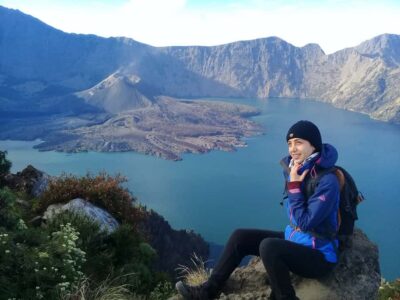
Mt Rinjani Trekking 2 Days 1 Night (Senaru Crater Rim)
Read our review →
Rinjani Trekking Three Days Two Night Summit Lake
Read our review →
Mount Rinjani Trekking 2D/1N Summit Sunrise & Sunset Views
Read our review →
Mount Rinjani Hiking to summit( 2 Days 1 Night )
Read our review →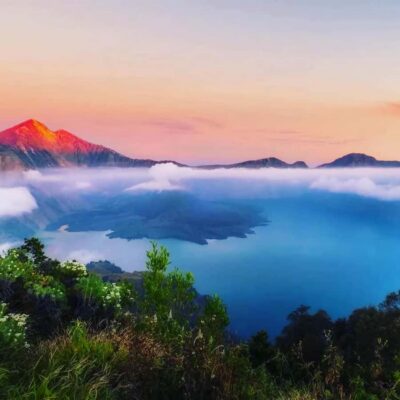
Browse the lists this tour appears in