
REVIEW · COOKING CLASSES
Spice Garden, Jamu & Cooking Class in Bali Village
Jamu and bamboo grilling in a real Bali village. I like how this isn’t just a kitchen demo, you actually make jamu (two kinds) and learn with a guide as you harvest herbs and cook on an open-air setup. I also love the structure: rice terraces and farm life in the morning, then you sit down to eat what you cooked, with dessert included. The one possible drawback is that it is an active, outdoors-heavy half-day, including a downhill trek and time in a traditional village, so you will want decent shoes and good weather.
This is run by families from the surrounding area near Mt. Batukaru, so the day feels personal instead of assembly-line. You keep the group small, up to 12 people, and you are guided step by step by an English-speaking team (with other languages available for a surcharge).
If you hate getting your hands dirty or you need a very slow, indoor-only tour, this might not be your day. Otherwise, it is a solid value for $55, especially because lunch and dessert are part of what you make, not just what you watch.
In This Review
- Key highlights at a glance
- A Village Cooking Class Near Mt. Batukaru: What Makes It Special
- From BalikaruBelulang to Rice Terraces: The Morning Walk and Herb Picking
- Rindik Bamboo Lessons and Jamu Making: Two Drinks Before Lunch
- Paon Bali Open-Air Kitchen: Cooking Nasi Campur, Sate Lilit, and Lak Lak
- Balikaru Farm Time: Animals, Trigona Stingless Beehives, and Rice Planting Help
- Belulang Hot Spring Option and the Pace of the Day
- Price and Value for $55: What You Really Get
- Logistics That Matter: Dress Code, Dietary Needs, Weather, and Group Size
- Who Should Book This Bali Village Class, and Who Might Skip It
- Should You Book Spice Garden, Jamu & Cooking Class in Bali Village?
- FAQ
- How long is the Spice Garden, Jamu & Cooking Class?
- Where does the tour start and what time does it begin?
- What is included in the $55 price?
- Is vegetarian food available?
- What is the dress code for the traditional village?
- Is it a small group?
Key highlights at a glance
- Hands-on jamu making plus fruit tasting before you even start cooking
- Learn Rindik, a bamboo instrument tied to local farming life
- Paon Bali open-air cooking where you cook your own meal
- Sate Lilit, Lak Lak, and nasi campur made with real guidance
- Balikaru farm visit with animals and Trigona stingless beehives
- Optional Belulang Hot Spring to rinse off after the day
A Village Cooking Class Near Mt. Batukaru: What Makes It Special
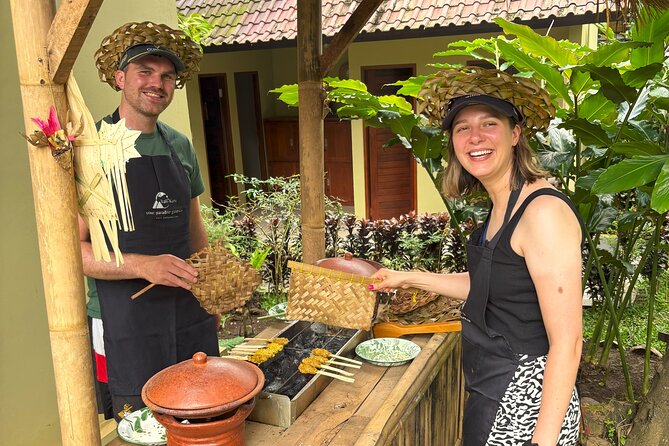
This is a Balinese cooking experience built around village life, not just a recipe list. You start in the mountains around BalikaruBelulang Bali in the Tabanan region, where the air feels cooler and the day moves at a farming pace. The total time is about 4 hours 30 minutes, beginning at 9:00 am and returning to the meeting point afterward.
What makes it different from many cooking classes is the mix. You do more than chop aromatics. You visit a herb and spice garden, you learn Rindik (a farmer’s bamboo instrument), you make jamu, and you cook on an open-air kitchen setup. Then you see farm life, including animals and stingless bees.
It also matters that the group is max 12 travelers. With that size, the team can actually help while you cook, and you are more likely to leave with confidence rather than just a photo of your food.
More Cooking classes in Bali:
- Ubud: Balinese Cooking Class at an Organic Farm
★ 5.0 · 1,786 reviews - From Ubud: Authentic Cooking Class in a Local Village
★ 4.9 · 1,325 reviews - Seminyak: Balinese Cooking Class & Market Tour
★ 4.9 · 458 reviews
From BalikaruBelulang to Rice Terraces: The Morning Walk and Herb Picking
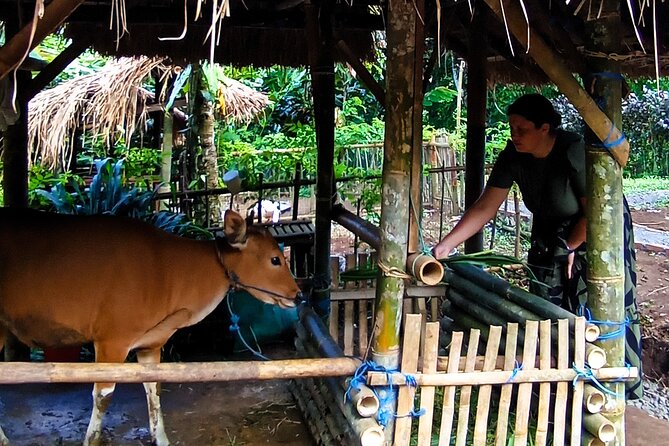
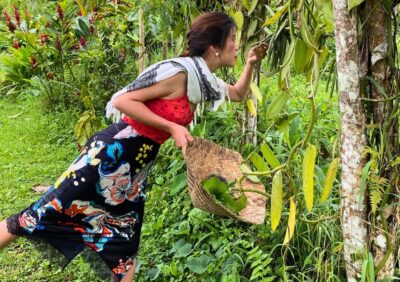
After you meet at BalikaruBelulang Bali, Mengesta (Penebel area, Tabanan), the day begins with village time. You will stroll through rice terraces and meet farmers along the way. This isn’t rushed. It is built to help you connect the food to where it comes from.
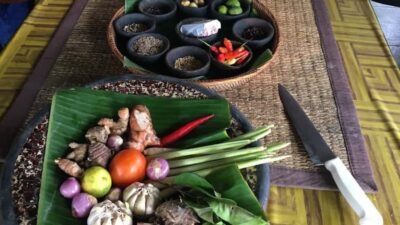
You also visit an herb and spice garden. This is where the tour earns its keep. Fresh herbs and spices change everything about Balinese flavor, and it helps to see what grows locally before you start grinding and cooking.
There is also a soft trekking portion of about 30 minutes downhill with mountain views. It is labeled “soft,” but you should still bring shoes with grip. Your knees will thank you, especially because the rest of the day is hands-on and you will be moving in and out of areas.
And yes, you get sampling. In past experiences, people were able to try Balinese fruit like mangosteen during the morning garden portion. It is a small moment, but it sets the tone for the whole day: fresh, simple, and local.
Rindik Bamboo Lessons and Jamu Making: Two Drinks Before Lunch
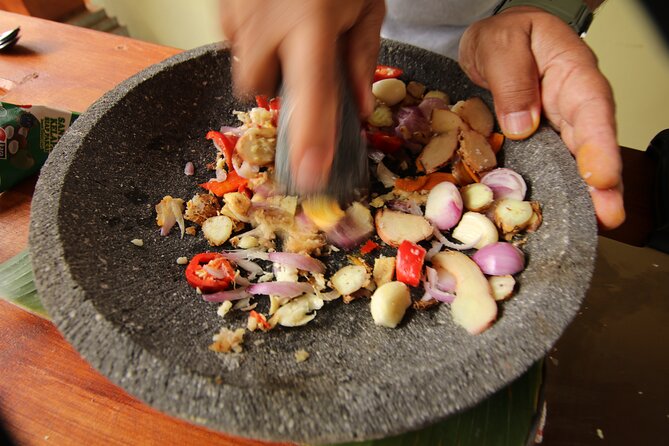
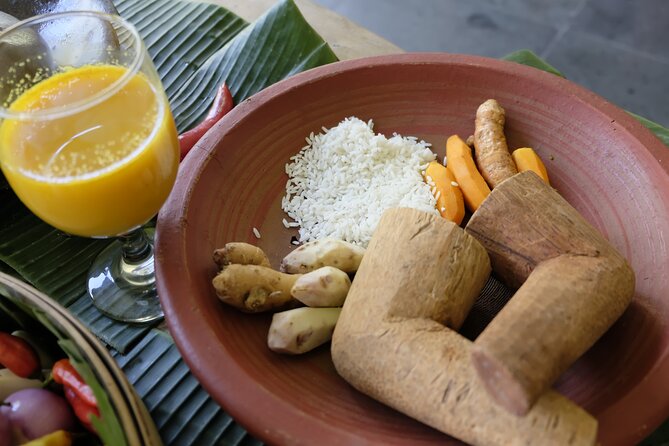
One of the most memorable parts is the jamu block. Jamu is Indonesia’s long-used herbal tradition, and here you do more than sip. You learn how it is produced, and you make two kinds of jamu yourself. Along the way, there is fruit tasting that fits right into the jamu theme.
Before you start cooking, you also get to learn Rindik, the bamboo instrument associated with farmers. Think of it as a cultural warm-up, not a music performance. You will get hands-on practice, and it helps you feel how woven local traditions are into daily farm routines.
The practical value of this section is huge. Once you understand jamu basics and the herbal ingredients, Balinese cooking makes more sense. You start noticing flavors beyond heat, like bitterness, earthiness, and that clean herbal lift.
If you enjoy learning by doing, this is one of those tours where your brain keeps working even while you are laughing. You are not stuck watching someone else work.
Paon Bali Open-Air Kitchen: Cooking Nasi Campur, Sate Lilit, and Lak Lak
Then the day shifts from garden to fire to plates.
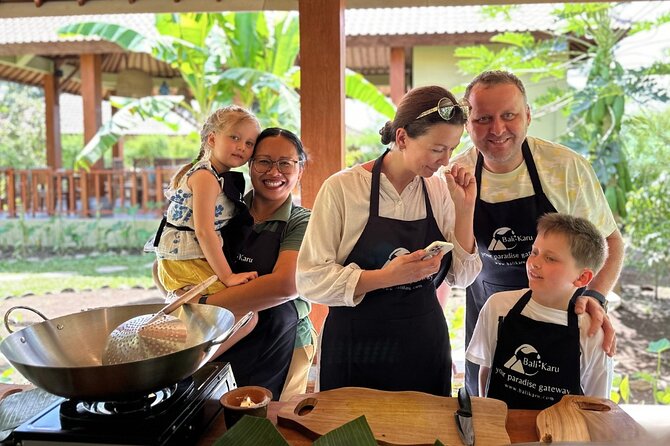
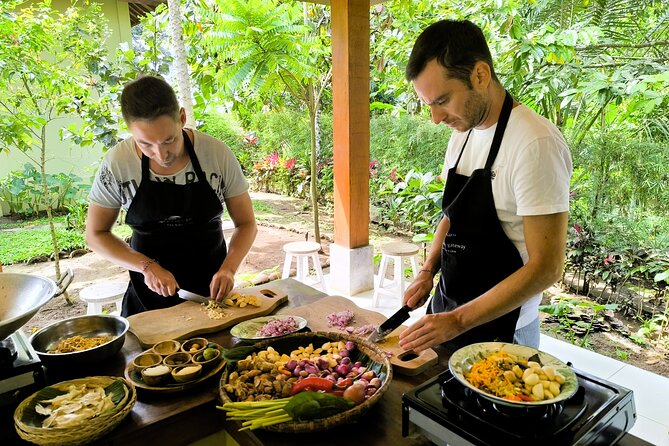
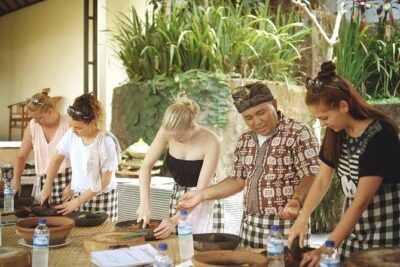
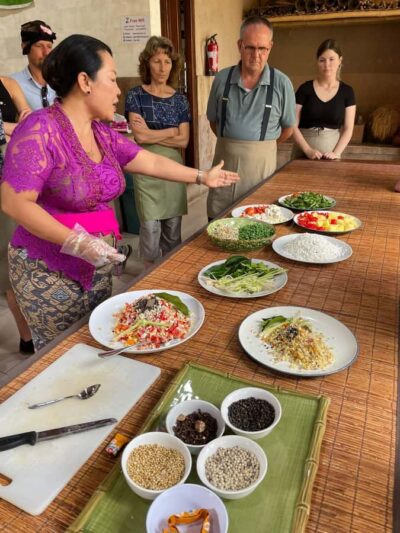
You cook in Paon Bali, an open-air kitchen guided by their chef. This is where the class becomes real cooking instruction. You are not just assembling. You are learning technique while preparing a full Balinese meal.
Your menu includes:
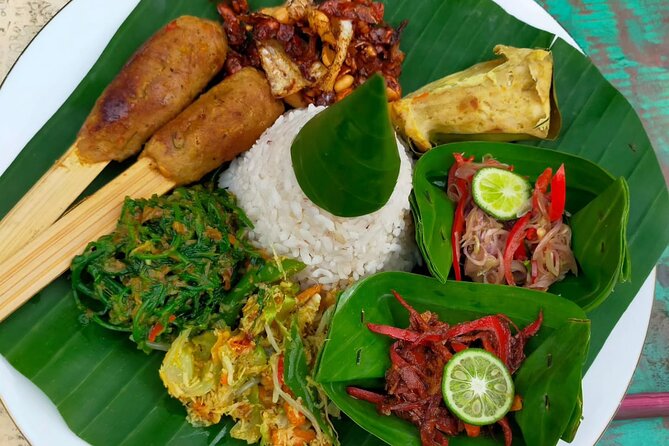
- Nasi campur tumping for lunch
- Sate lilit, grilled at their Gerobak live bamboo grill
- Lak lak, a traditional Balinese dessert cooked in a clay pot
- Dessert cooked by you during the class
A live bamboo grill is not just a gimmick. It changes the smell of the food and adds an outdoors, local feel that you just do not get in a typical studio kitchen. It also gives the cooking process a natural rhythm, which helps when you are doing a bunch of steps in one morning.
For me, the best part is that you get to eat your work soon after cooking. You do not have to wait hours for a buffet lineup somewhere else. You sit down with what you made, which makes it easier to remember what you did right and what you would tweak next time.
Also, the group stays upbeat. People describe the day as funny and informative, and that energy matters when you are learning unfamiliar flavors and tools. It is a long enough class to feel rewarding, but not so long that it turns into a chore.
A few more Bali trips to compare
- Bali: Sunrise Mount Batur Guided Hike with Breakfast
★ 4.8 · 9,660 reviews - Bali: Mount Batur Sunrise Guided Hike and Natural Hot Spring
★ 4.8 · 9,284 reviews - Bali: Full-Day Instagram Highlights Tour
★ 4.8 · 7,817 reviews - Bali/Nusa Penida: East & West Highlights Full-Day Tour
★ 4.7 · 6,263 reviews
Balikaru Farm Time: Animals, Trigona Stingless Beehives, and Rice Planting Help
After lunch, the day turns outward again. You visit an authentic Balinese compound in the mountain village area and then head to the Balikaru farm portion.
This is not just a sightseeing stop. You get to participate in small, farm-related activities:
- Give the farmer a helping hand for rice planting
- Visit the farm’s animals and the day’s working areas
- Learn about the Trigona stingless beehives
You may also be able to feed their cow named Manis. That kind of moment sounds small, but it is exactly how you get the feeling of a living place, not a staged set.
The stingless bees segment is another highlight. You can discover their beehives and learn about their rare, healthy honey, which is part of what makes this farm visit more interesting than a quick animal photo stop.
If you love food origins, this section will click. You start understanding that Balinese cuisine comes from ongoing work: rice cycles, herb growing, and even honey production. The kitchen and the farm are connected here in a way you can actually see.
Belulang Hot Spring Option and the Pace of the Day
The day can include a visit to Belulang Hot Spring, described as optional. If the weather cooperates and your schedule allows it, it is a nice way to cool down after cooking over open-fire style stations and doing that downhill trek.
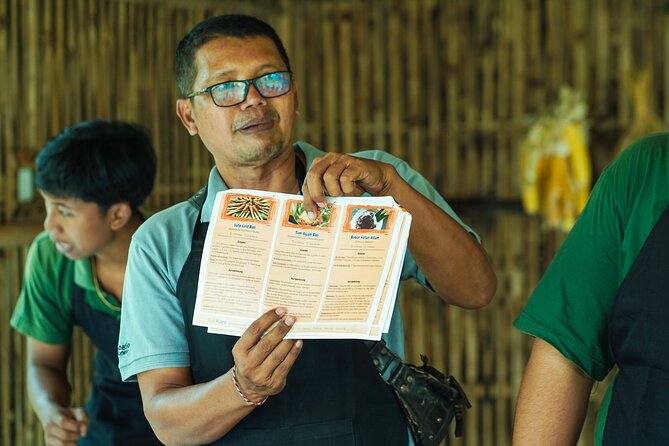
At the end, you get a farewell gift and a personal cooking class certificate. You also receive a recipe book by email after the tour, which is a practical bonus. You can try making the recipes back home without relying on memory or guessing measurements.
Pacing-wise, you should expect a day that moves through multiple environments: garden, village compound, cooking area, and farm sites. If you are the type who likes variety in one outing, you will probably enjoy how the pieces fit together.
Price and Value for $55: What You Really Get
The price is $55 per person, and on paper it sounds straightforward. In practice, it feels like better value because so much is included.
Your included items cover the whole arc:
- Welcome drink
- English-speaking guide
- Herb and spice garden tour with tasting moments
- Rindik lesson
- Jamu production (including making jamu and fruit tasting)
- Cooking class in Paon Bali guided by their chef
- Lunch (Nasi campur tumping) plus dessert cooked by you
- Farm visit with animals and Trigona beehives
- Help with rice planting
- Downhill soft trekking (about 30 minutes)
- Authentic village compound visit
- Optional Belulang Hot Spring bath
- Farewell gift, certificate, and recipe book emailed after
What is not included is also clearly stated: tip, drinks, and personal expenses.
For value, the big wins are the hands-on cooking component plus the farm and jamu sections. Many cooking classes include one main meal and a short herb talk. This one builds in multiple skill areas, so you leave with more than a full stomach. You leave with context, techniques, and flavors you can actually reuse.
They also mention group discounts and a mobile ticket. Translation: it can be easier to plan with friends, and you do not have to fuss with printouts.
One small note for your planning brain: the experience is weather-dependent. If conditions are bad, you will be offered another date or a refund.
Logistics That Matter: Dress Code, Dietary Needs, Weather, and Group Size
This tour happens in a traditional village, so the dress code is not vague. Topless or beach clothing is an offence. The guidance is to wear normal clothing like shirts, pants, and slippers. You do not need anything fancy, but you do need to be respectful and comfortable for walking.
Dietary needs are addressed. They say they can accommodate dietary needs such as vegetarian if you indicate it at booking under special requirements. If you have allergies or other restrictions, put them in early. Don’t wait until you arrive.
Language support: the guide speaks English, and other languages are available for a surcharge.
Practical pacing details:
- Expect outdoor time throughout.
- Bring shoes you trust for uneven ground and downhill sections.
- The small group size means you will get more help at the cooking stations.
Service animals are allowed, and confirmation is provided at booking time.
Finally, start time matters. The day begins at 9:00 am, so plan to be there a bit early. Mountain schedules can be flexible, but you do not want to start late, especially when the morning garden portion is part of the fun.
Who Should Book This Bali Village Class, and Who Might Skip It
This suits you if:
- You want a hands-on cooking experience, not a demo
- You care about where flavors come from (herbs, rice, honey)
- You like cultural moments that connect to daily life, like Rindik
- You are happy spending time outdoors, including a downhill walk
- You want a small group setting (up to 12)
It might not be the best fit if:
- You need a low-mobility tour. There is a trekking portion and multiple stops.
- You want a mostly indoor, kitchen-only experience.
- You dislike hot-weather cooking setups over open-air stations.
If you are somewhere between beginner and intermediate in cooking, you are in the sweet spot. The chef guidance and the step-by-step approach help you follow along, while the variety of dishes keeps it interesting.
And if you like laughing while learning, you are likely to feel comfortable. The team approach gets called out as friendly and motivated, and that matters when you are tasting and adjusting as you go.
Should You Book Spice Garden, Jamu & Cooking Class in Bali Village?
Yes, I would book it if your goal is an authentic, local-flavor day with more substance than a typical class. The best reason to choose it is the mix: jamu making, cooking in Paon Bali, live bamboo grilling, and a farm visit with Trigona stingless bees.
You are also getting a clear value package. For $55, you get guided herb and spice time, lunch plus dessert you cook, and a bunch of village and farm experiences that help the whole day feel connected.
Skip it only if you want something purely relaxing and indoor, or if the downhill trekking and village dress rules sound like a hassle. Otherwise, this is one of those rare Bali activities where you leave with recipes, flavor memory, and a real sense of how food fits into daily life.
FAQ
How long is the Spice Garden, Jamu & Cooking Class?
It runs for about 4 hours 30 minutes.
Where does the tour start and what time does it begin?
It starts at BalikaruBelulang Bali in the Penebel area (Mengesta, Tabanan Region). The start time is 9:00 am, and it ends back at the meeting point.
What is included in the $55 price?
You get a welcome drink, an English-speaking guide, an herb and spice garden tour, a Rindik lesson, jamu production (including fruit tasting), a guided cooking class in Paon Bali, lunch (nasi campur tumping) and dessert you cook, a Balikaru farm visit with animals and Trigona beehives, help with rice planting, a soft downhill trek, an authentic village compound visit, and an optional Belulang Hot Spring bath. You also receive a farewell gift, a cooking class certificate, and a recipe book by email after the tour.
Is vegetarian food available?
Yes. They can accommodate dietary needs such as vegetarian if you indicate it at booking under special requirements.
What is the dress code for the traditional village?
Topless or beach clothing is an offence. Shirts, pants, and slippers are ok.
Is it a small group?
Yes. The group is capped at a maximum of 12 travelers.
Just added around Bali
- Private Tour: Bali UNESCO World Heritage Sites★ 5.0 · 62 reviews
- Bali ATV Ride with Waterfall Dragon Cave and Lunch by Penidago★ 4.5 · 7 reviews
- The Three Temples of Bali Half Day Private Tour★ 4.0 · 5 reviews
- Foodie Tour Bali★ 5.0 · 7 reviews
- Mount Batur Jeep Sunrise by 4WD with Breakfast★ 5.0 · 18 reviews
- Mount Agung Sunrise Trekking Private Tours★ 5.0 · 11 reviews
- Private Departure Transfer: Hotel to Bali Airport★ 3.5 · 14 reviews
- Pure Bali Village Experience, Cooking & Jamu Class+VIP Transfer★ 5.0 · 16 reviews
Cooking Classes, compared.
Cooking Class with Transfers and Optional Market Visit
Read our review →
PRIVATE Authentic Balinese Cooking Class in Ubud at Putu’s Home
Read our review →
Browse the lists this tour appears in