
REVIEW · BATIK & CRAFT WORKSHOPS
Batik Master Class with Full Process
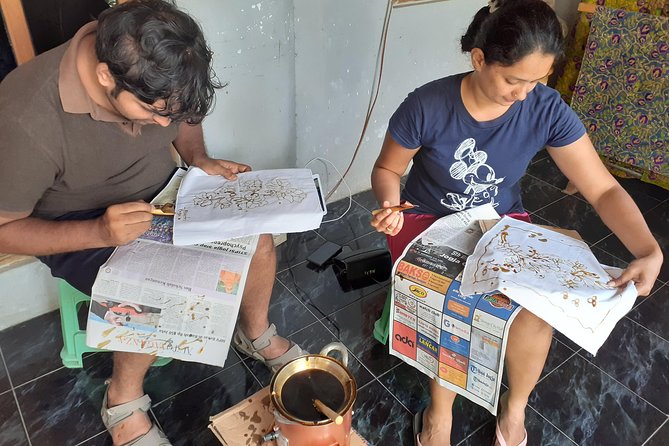
Wax, dye, and instant art lessons. This Batik Master Class in Yogyakarta pairs a creative workshop with a day in the Prambanan area, where you trace a pattern, outline it in melted wax with traditional canting tools, and dye it step by step. I like that you leave with a real, personal souvenir you made, and I like the relaxed pace that includes coffee and tea while you work. A small consideration: your piece can still be damp when you head out, so plan to dry it properly after the class.
If you are trying to make the most of a Prambanan-focused day, this feels like a smart add-on. The format is simple and hands-on, the group stays small (max 30), and you get a mobile ticket. The full experience runs about 3 hours, and it is led by a master batik teacher near the temple complex.
In This Review
- Key things to notice before you book
- Batik in the Prambanan area: the practical reason this works
- Where you meet, how long it takes, and what to expect from the schedule
- The full batik process: what you actually do in the workshop
- Tracing, canting wax lines, and dyeing in steps
- What you make and how to take it home without stress
- Snacks, coffee, and why the tone of the class matters
- Price and value: is $19.50 a good deal?
- Who this batik class is best for (and who might not love it)
- Should you book? My take on the decision
- FAQ
- How long is the batik master class?
- What will I make in the class?
- Where does the activity start and end?
- Is there food included?
- Who leads the workshop, and is instruction in English?
- What is the group size?
- What if the weather is bad?
Key things to notice before you book
- You learn the full batik workflow, not just stamping a design. Pattern, canting wax lines, dyeing sequence, and finishing steps are part of the lesson.
- Snack time is built in, with local snacks plus coffee and tea while you create.
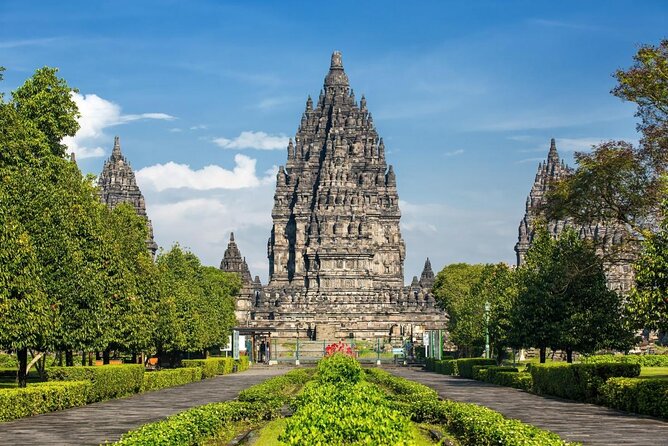
- The Prambanan area is the backdrop, with stops that include Prambanan Temples and Sojiwan Temple before or alongside your workshop time.
- You can choose your size, from a handkerchief to a tote bag option for a bit extra cost.
- You get patient guidance, including clear instruction in English with translator support when needed.
- Your batik is yours right after the process, but you may need extra drying time once you leave.
Batik in the Prambanan area: the practical reason this works
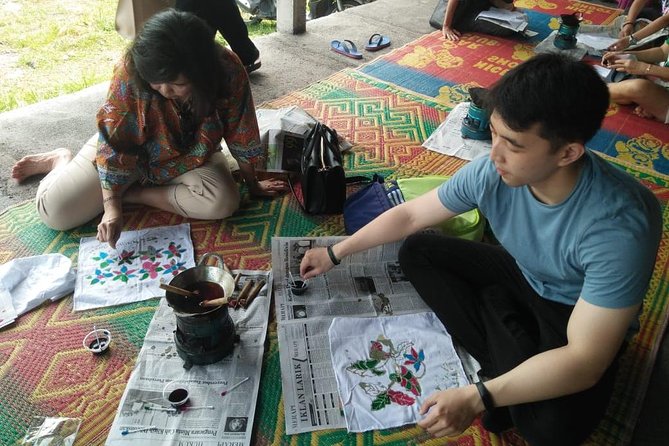
Yogyakarta is one of those places where batik is not just a craft, it is part of daily life and local identity. In simple terms, batik is cloth dyed using wax to protect certain areas. That wax resist technique is what lets your design stay crisp while the colors soak in.
What I like about doing this near Prambanan is the flow. Instead of squeezing batik into a separate, time-crunched part of the city, you pair temple viewing with a workshop that fits the same day. The class location is described as a peaceful place close to Prambanan, so you trade crowds and stone steps for something quieter where you can focus on the tools.
The day plan is built around two temple stops in the Prambanan area, Prambanan Temples and Sojiwan Temple. Then you shift into the batik process. If you are already planning a Prambanan visit, this is a natural match because both activities use the same general geography and timing.
More Craft Workshops in Yogyakarta
- Yogyakarta: 2-hour Batik Making Course with Souvenir
★ 4.9 · 304 reviews - Yogyakarta: Batik Painting Workshop
★ 4.9 · 72 reviews - Yogyakarta: Batik Making Class with Expert
★ 4.7 · 45 reviews
Where you meet, how long it takes, and what to expect from the schedule
You meet at Pasar Prambanan (Jl. Merpati No.60, Klurak Baru, Bokoharjo, Kec. Prambanan, Kabupaten Sleman, Daerah Istimewa Yogyakarta 55572, Indonesia). The activity ends back at the meeting point, which keeps the logistics clean.
The experience duration is listed as about 3 hours, and the hands-on work you are doing is drawn, waxed, and dyed in that time frame. From the way the process is described, you should expect time for drying and a finishing step (more on that below).
Two details worth planning around:
- The experience requires good weather. If weather is poor, you may be offered a different date or a full refund.
- The activity calls for moderate physical fitness. That usually means you should be comfortable moving around a temple area and getting to the workshop site, even if it is not a strenuous hike.
Also, the class has a maximum size of 30 travelers, which matters. Smaller groups make it easier for a teacher to guide you when your first line is not exactly how you imagined.
The full batik process: what you actually do in the workshop
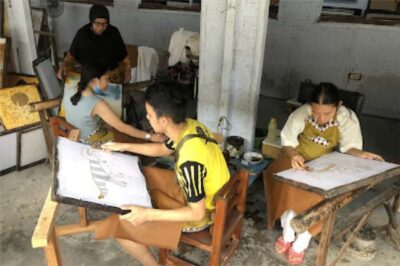
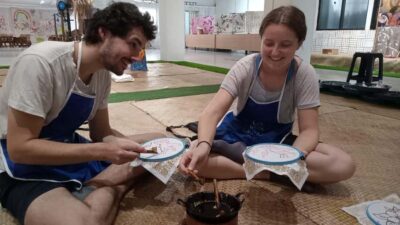
This is a true process workshop. You start with an introduction to batik and the tools you will use. Then you move into doing it, step by step.
Here is the workflow in plain language:
- Learn the tools and the proper method. You get shown how to handle the equipment and how to prepare for each step so your design works.
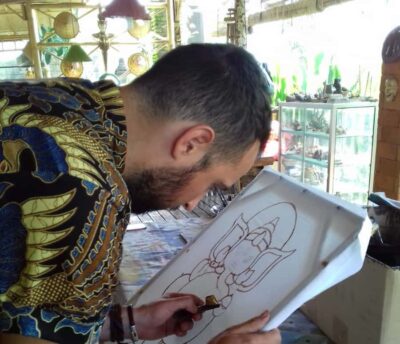
- Trace a pattern. You trace or transfer your chosen design onto your fabric.
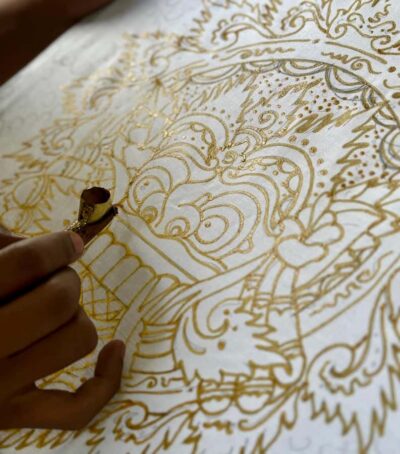
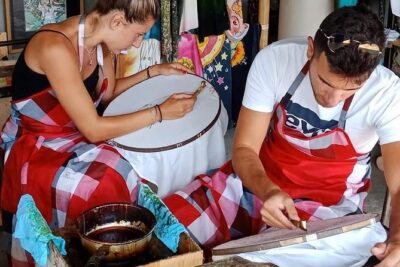
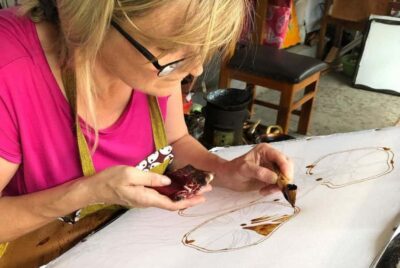
- Outline with wax using canting. You use traditional canting tools to draw melted wax lines over the areas that should resist dye.
- Dye in sequence. You apply dyes in steps, so the waxed areas stay protected while other areas change color.
- Dry and finish. After dyeing, the fabric goes through drying and a finishing sequence so the colors set. One description you may encounter is a chemical solution soak followed by water, which is part of how batik gets properly prepared.
- Take it home. Once the process is done, the finished piece is yours to bring back.
The workshop result is described as handkerchief size or tote bag, depending on what you choose. The tote bag option typically costs a bit extra, so you can decide based on whether you want something small and easy to pack, or something more useful once you get home.
Tracing, canting wax lines, and dyeing in steps
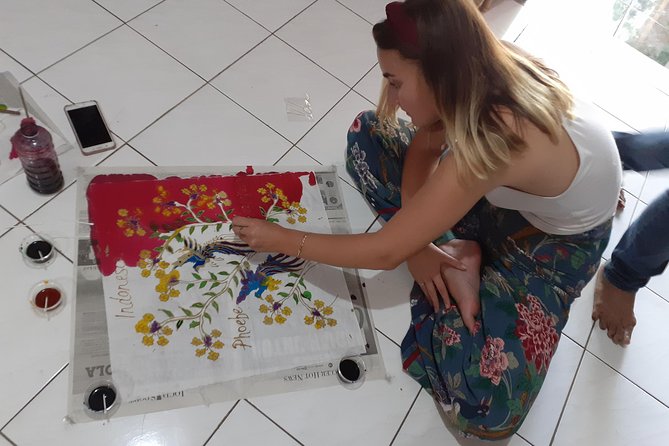
The heart of batik is the wax. If wax lines are too thick, too thin, or placed a bit off, the color boundaries can look less sharp. That is why this class focuses on instruction rather than just handing you a kit.
When you trace your design, you are not just doodling for fun. The pattern becomes the map for where wax goes and where dye can reach. Then comes the canting work. Canting tools require control, and on a first attempt it is normal if your hands feel unsteady. The teaching approach is described as supportive and patient, including encouragement even when your result is not perfect.
Then you dye in sequence. This matters because batik color design is not one-dip chaos. The colors appear in layers depending on what is waxed during each dye step. You learn how to do the order correctly so the final result actually looks like a batik pattern rather than a random mix.
One more practical point: in many batik workshops, you are guided so the process works even if you are new. The goal is a finished piece you can take home, not a technical exam.
Another side of Indonesia:
- Yogyakarta: Borobudur sunrise(guarantee climb up)& Prambanan
★ 4.9 · 1,545 reviews - Yogyakarta: Borobudur ClimbUp (sunrise option) & Prambanan
★ 4.9 · 1,260 reviews - Yogyakarta: Borobudur Climb-up and Prambanan Guide Tour
★ 4.9 · 1,031 reviews - Borobudur Sunrise from setumbu Hill , Merapi Volcano & Prambanan Full Day Tour
★ 5.0 · 1,030 reviews
What you make and how to take it home without stress
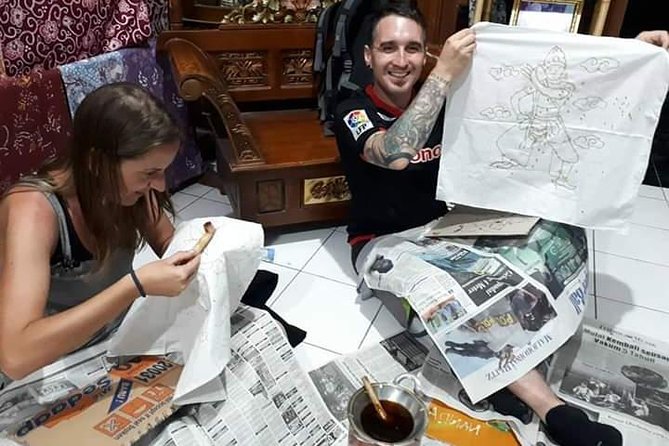
You get to take the work directly once the process is complete. The process description says it is taken home after it is dry, and that is usually what you want.
Still, one realistic consideration shows up in accounts of leaving the workshop: the fabric can be still wet when you depart. In that case, people handle it by placing it on newspaper to dry during travel and then at the hotel.
So here is my practical advice:
- Bring a plan for drying. Even if it is mostly dry, give it a little extra time once you arrive at your accommodation.
- Pack it carefully. A damp piece can transfer color if it is squished against other items.
- If you choose the tote bag option, think about folding it in a way that avoids wet creases. A handkerchief is easier to manage.
Also, remember you are working with wax and dyes. Even if the final piece ends up looking clean, you might want to plan for a little residue on your hands during the lesson.
Snacks, coffee, and why the tone of the class matters
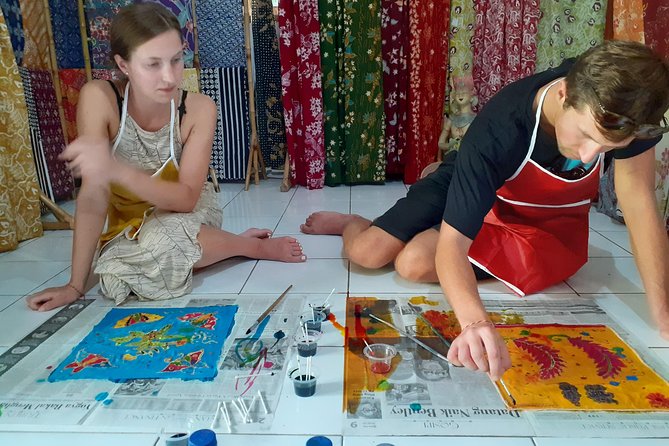
This workshop includes a break while you work: local snacks plus coffee and tea. That sounds small, but it changes the experience. You are sitting, focusing, and doing fine tool work. Food and warm drinks help you stay calm and patient through the steps.
The setting is described as peaceful and convenient for combining with Prambanan. That matters too. You do not want to rush out of temples and into a loud, chaotic market stall where you cannot concentrate on the wax line you are drawing.
The teaching style also seems to be part of what people love. The class is led by a master batik teacher in the Prambanan area, and English instruction is supported by an interpreter or translation help when needed. That combination, craft expertise plus clear communication, makes it easier for first-timers to keep up.
Price and value: is $19.50 a good deal?
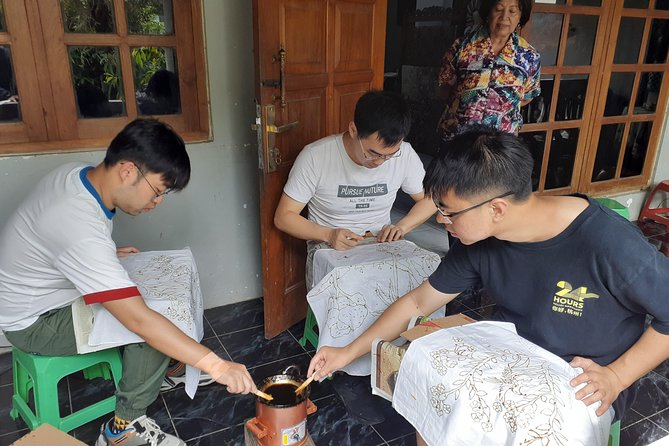
At $19.50 per person, this is priced like a real experience workshop rather than a souvenir-only stop. You are not just watching someone else make batik. You trace a pattern, do the wax outline with canting tools, and dye in steps, then take the finished result home.
A few value points you should factor in:
- You leave with an actual crafted textile you made, sized as a handkerchief or tote bag.
- The class includes instruction by a master plus snacks, coffee, and tea.
- The location is near major sightseeing, which can save time versus squeezing batik into a separate transit day.
One small booking insight: it is commonly booked about 10 days in advance. That suggests it fills up for the area, so if you have firm dates for Prambanan, you will likely feel better booking early.
Who this batik class is best for (and who might not love it)
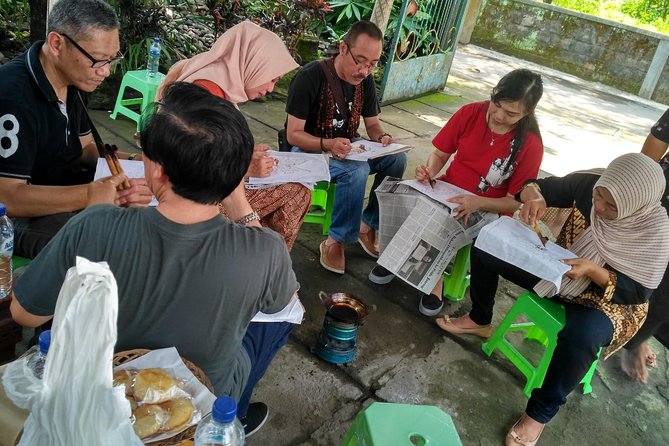
This is a great fit for you if:
- you want a hands-on souvenir that feels personal rather than store-bought
- you enjoy process-based activities, where learning the steps is part of the fun
- you are traveling in a small-group setting and want a calmer pace
- you are visiting Prambanan and want a smart add-on that stays in the same zone
It can also work well for families. The workshop has been described as a strong choice for kids, especially because coloring is part of the experience.
You might reconsider if:
- you want a quick photo stop rather than a full craft session
- you are sensitive to wax work and handling a fabric that may be damp during departure
- you need everything perfectly dry on pickup, with no drying time afterward
Should you book? My take on the decision
If your schedule includes Prambanan, I think this is worth booking because it gives you a crafted souvenir with a real technique behind it. The price is reasonable for the time and instruction, and the snack-and-coffee setup makes the workshop feel like a break, not a chore.
Book it if you want to do something cultural that is active and memorable. Skip it only if you are not interested in the wax and dye steps, or you want a totally hands-off experience.
FAQ
How long is the batik master class?
It runs about 3 hours.
What will I make in the class?
You will make batik art to take home in either a handkerchief size or a tote bag size option (the tote bag costs a bit extra).
Where does the activity start and end?
You start at Pasar Prambanan and the activity ends back at the same meeting point.
Is there food included?
Yes. The class includes authentic local snacks plus coffee and tea while you work.
Who leads the workshop, and is instruction in English?
The class is led by a master batik teacher in the Prambanan area. English instruction is supported with translation.
What is the group size?
The workshop has a maximum of 30 travelers.
What if the weather is bad?
The experience requires good weather. If it is canceled due to poor weather, you will be offered a different date or a full refund.
Just added around Yogyakarta
- Sunset at Prambanan & Ramayana Ballet (Ticket Guaranteed)★ 4.5 · 10 reviews
- Sunrise Setumbu, Borobudur structure climbing and Prambanan★ 4.7 · 4 reviews
- Sultan Palace, Water Castle & Prambanan Temple Guided Tour★ 4.6 · 4 reviews
- Yogyakarta: Jurang Tembelan, Pine Forest, and Timang Beach★ 4.5 · 20 reviews
- Prambanan Sunset (and Ramayana Ballet Option) Tour★ 3.3 · 8 reviews
- Yogyakarta: Prambanan Temple Morning Tour and Palace Tour★ 5.0 · 4 reviews
- Yogyakarta: Ramayana Show with Transfer, Entry Fee & Dinner★ 4.6 · 20 reviews
- Prambanan Temple Afternoon Tour★ 4.9 · 48 reviews
Batik & Craft Workshops, compared.
Exclusive Tetebatu: Waterfall, Rice Fields, Monkey & Weaving
Read our review →
Browse the lists this tour appears in